

An Independent Inquiry into Alleged Deception, Informed Consent, Bodily Integrity, Jurisdiction, and Civil Liability
Editorial Notice — An Evolving Research Record
This article is an ongoing inquiry and is subject to change, revision, expansion, or correction at any time without prior notice as additional information, evidence, court filings, judicial decisions, or relevant findings become available.
Readers are encouraged to revisit the original publication for the most current version.
Introduction: Following the Evidence into the Public Court Record
On October 29, 2026, a Facebook video published by Moms Resist was brought to my attention. The video discussed an ongoing civil lawsuit before a court in the Netherlands involving Bill Gates, Albert Bourla, Mark Rutte, and several other defendants concerning the COVID-19 pandemic and the injections administered during that period.
A screenshot of the video.
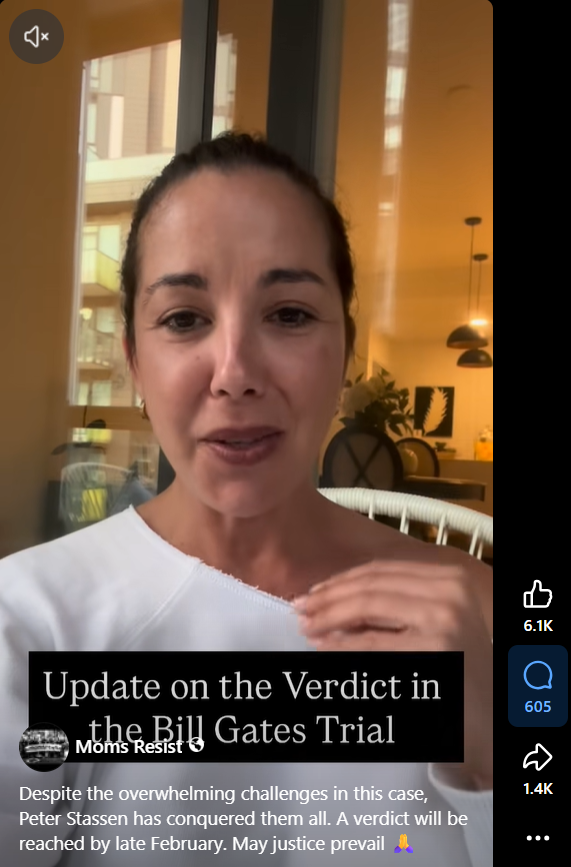
Link to the video shared on Facebook:
https://www.facebook.com/reel/2509291842813917
I’ve preserved the comment(s) as of October 28th, 2026.
What particularly captured my attention was that seven private plaintiffs had brought a civil action alleging that they were misled concerning the safety, effectiveness, and necessity of the COVID-19 injections, and that they experienced physical or psychological injuries as a result.
The lawsuit raises significant questions concerning informed consent, bodily integrity, the accuracy of information presented to the public, and the potential responsibility of individuals and institutions whose representations may have influenced medical decisions.
The video also referenced challenges concerning the court’s jurisdiction, the presentation and admissibility of evidence, and an anticipated judicial decision between December 2026 and February 2027.
These matters immediately prompted me to inquire further.
Rather than relying solely upon the statements made in the video or the many reactions expressed in the public comments, I wanted to examine what had actually been filed, what the court had already determined, and what questions remained before the judges.
What does the official court record reveal?
What are the plaintiffs alleging concerning the COVID-19 injections, informed consent, and the injuries they attribute to them?
What information was available concerning the safety and effectiveness of these injections, and what did the defendants know, or have a responsibility to know, at the relevant time?
What evidence has been presented? What has the court actually ruled upon, and what remains to be determined?
And perhaps an even more foundational question:
Where does lawful authority begin and end when governmental institutions, corporations, and influential individuals make representations or decisions affecting the bodily integrity, informed consent, and inherent rights of another man or woman?
These questions became the foundation for the following research inquiry, undertaken with the assistance of Sage, my AI research and editorial collaborator.
The material that follows examines the procedural history, the plaintiffs’ allegations, the legal foundations of the civil action, and the publicly available judicial decisions. It also distinguishes between allegations, evidence presented for judicial consideration, and facts actually established by the court.
Links to the official court record and supporting documents have been included so readers may examine the available information and draw their own conclusions.
My intention is not to predetermine the outcome, but to bring greater clarity to the public record through independent inquiry, careful examination of the evidence, and respect for the distinction between an allegation, the presentation of evidence, and a judicial determination.
Ultimately, this inquiry extends beyond the question of whether a particular civil claim succeeds. It invites consideration of the relationship between individual conscience, informed consent, institutional responsibility, and the lawful limits of authority when decisions affecting human life and bodily integrity are made.
May truth, transparency, accountability, and justice prevail.
⚖️🌎🌊🕊️💙💜💛🌹
Research Findings and Public Court Records
The following is the research and analysis provided by Sage, my AI assistant and co-creator, concerning the civil lawsuit currently before the courts in the Netherlands.
I’ve included links to publicly available judicial decisions, court documents, and supporting materials for those who wish to examine the records independently and explore the evidence further.
The purpose of sharing this research is to encourage thoughtful inquiry, transparency, and independent examination of the information, while maintaining a clear distinction between the plaintiffs’ allegations, the evidence presented, and the court’s actual findings.
_____________________
This is a particularly interesting case to examine through the actual court record, especially because it raises questions about jurisdiction, alleged deception, informed consent, bodily integrity, personal responsibility, and accountability for actions undertaken during the COVID-19 pandemic.
The research identified two published Dutch judicial decisions, the original civil summons, and a collection of litigation documents made available by individuals following the plaintiffs’ case.
One finding is especially important: the court has already made several procedural determinations, including rejecting Bill Gates’ jurisdictional challenge and allowing an expanded claim by the plaintiffs. It has not, however, issued a final determination establishing liability.
1. The Official Court and Published Judicial Decisions
OFFICIAL COURT RECORD
District Court of the Northern Netherlands (Rechtbank Noord-Nederland), Leeuwarden
Civil Case Number: C/17/190788 / HA ZA 23-172
October 16, 2024 — Jurisdiction Ruling
ECLI:NL:RBNNE:2024:4056
Read the official court decision — October 16, 2024
This decision addresses the Dutch court’s international jurisdiction over the American defendant, Bill Gates. The court determined that the claims were sufficiently interconnected to justify their consideration together under Article 7 of the Dutch Code of Civil Procedure.
November 26, 2025 — Interim Procedural Ruling
ECLI:NL:RBNNE:2025:5657
Read the official court decision — November 26, 2025
This decision addresses several procedural matters, including the plaintiffs’ amended claims, requests concerning documentary evidence, and the proposed examination of witnesses and party experts.
Official Court Information and Document Requests
Dutch Judiciary — Request Information About Civil Court Proceedings
The original decisions are written in Dutch. The Dutch judiciary anonymizes names and certain identifying information in many published decisions, so the public rulings do not always display the parties’ names.
Readers may use the case number and the European Case Law Identifier (ECLI) numbers above to locate and independently examine the published judgments.
2. What Is the Civil Lawsuit Actually About?
The lawsuit was commenced by seven private plaintiffs who allege that they sustained physical or psychological injuries after receiving COVID-19 injections.
Their central claim is not simply that they experienced adverse health events.
They allege that a group of defendants deliberately misled them and the Dutch public about the necessity, safety, and effectiveness of COVID-19 injections, and that this alleged misconduct influenced the plaintiffs’ decisions to receive the injections.
The defendants named in the underlying litigation include Bill Gates, Pfizer CEO Albert Bourla, former Dutch Prime Minister Mark Rutte, the Dutch State, and several others.
These allegations and the legal basis for the plaintiffs’ claims are described in the court’s published jurisdictional decision.
Original source:
District Court of the Northern Netherlands — October 16, 2024, Sections 3 and 5
Their Central Legal Allegation
The plaintiffs rely on Dutch civil liability law, including the concept of onrechtmatige daad, meaning an unlawful or wrongful act, and a claim of wrongful conduct committed by a group.
They allege that the defendants participated in an interconnected undertaking associated with what the plaintiffs call COVID-19: The Great Reset.
This is a substantive allegation, not a fact already determined by the court.
The plaintiffs contend that the defendants:
- Made or supported representations concerning the pandemic and vaccination that the plaintiffs allege were misleading.
- Knew, or should have known, that those representations were false or misleading.
- Participated, individually or collectively, in conduct that allegedly influenced the plaintiffs to accept vaccination.
- Caused or contributed to injuries for which the plaintiffs seek compensation.
The existence of a coordinated unlawful project, each defendant’s knowledge, and the alleged causal relationship between particular statements and individual injuries remain contested matters requiring judicial determination.
Of particular interest is paragraph 5.11 of the October 16, 2024 judgment.
In that paragraph, the court explains that the judge examining the substantive claims will need to determine whether the alleged worldwide group existed and engaged in the conduct described by the plaintiffs.
The court did not determine that the allegations were true. Rather, it recognized that the claims were sufficiently interconnected to be considered within the same proceedings.
Original source:
October 16, 2024 — Jurisdiction Decision, Paragraphs 5.11–5.13
3. What Have the Plaintiffs Actually Requested from the Court?
The November 26, 2025 ruling is especially revealing because paragraph 2.5 records the plaintiffs’ amended demands.
The court permitted the amended claim to form part of the proceedings, without determining whether the underlying allegations were established.
The plaintiffs request three principal remedies:
1. A Declaratory Judgment
A formal judicial declaration that the defendants acted unlawfully toward the plaintiffs through the alleged deception and related conduct.
2. Compensation for Damages
A determination that the defendants are jointly and severally responsible for compensating the plaintiffs for legally established damages, with the amounts to be assessed through a subsequent procedure.
3. Legal Costs
An order requiring the defendants to pay the applicable costs of the proceedings.
The amended claims also refer to alleged ongoing wrongful conduct and claimed consequences concerning health, fertility, and psychological well-being.
Original source:
November 26, 2025 — Interim Procedural Decision, Paragraphs 2.4–2.5
Important distinction: The acceptance of an amended claim for judicial consideration does not establish that the allegations are true or that the defendants are liable. Those questions remain matters for judicial determination.
| Requested remedy | Meaning |
|---|---|
| Declaratory judgment | A formal judicial declaration that the defendants, collectively and individually, acted unlawfully toward the plaintiffs through the alleged deception or related omissions |
| Compensation for damages | An order making defendants jointly and severally liable for damages, with the amounts to be determined through a subsequent damages assessment |
| Legal costs | An order requiring defendants to pay applicable litigation costs |
The expanded claim includes allegations of continuing wrongful conduct and alleged harm involving health, fertility, and psychological well-being.
Importantly, the court permitted the expanded claim to form part of the proceedings. This means the additional allegations were accepted for judicial consideration; it does not mean the court determined that those allegations were true.
Original court source:
District Court of the Northern Netherlands — November 26, 2025, Paragraphs 2.4–2.5
This distinction between what a party claims, what a court permits to be pleaded, and what a court ultimately determines to be established is central to examining the integrity of the judicial record.
4. What Has Actually Been Filed in the Proceedings?
The published judicial decisions and available litigation documents provide the following chronology.
1. July 14, 2023 — Original Civil Summons
The plaintiffs initiated civil proceedings against 17 defendants.
The originating summons describes the alleged deception concerning COVID-19 injections, the injuries the plaintiffs attribute to those injections, and their demand for compensation.
The publicly shared redacted summons is a party-published document rather than an independently authenticated copy obtained directly from the court.
Read the original redacted Dutch summons (PDF)
The commencement date and number of defendants are also confirmed in paragraph 1.1 of Bill Gates’ jurisdictional objection, reproduced below.
2. February 21, 2024 — Jurisdictional Challenge
Bill Gates, through his legal representative, challenged the international jurisdiction of the Dutch court to hear the claims against him.
The objection argued that Gates, as a resident of the United States, was ordinarily subject to the courts of his country of residence and disputed whether the additional jurisdictional grounds invoked by the plaintiffs were applicable.
This objection was presented as an incidentele conclusie houdende exceptie van onbevoegdheid, a procedural pleading contesting the court’s authority to hear the claim.
Read Gates’ jurisdictional objection (Original Dutch PDF)
3. October 16, 2024 — Jurisdiction Decided
The District Court of the Northern Netherlands rejected Gates’ jurisdictional objection.
The court concluded that Dutch procedural law permitted the connected claims against Gates and the Dutch defendants to be considered together.
The court applied Article 7(1) of the Dutch Code of Civil Procedure, which addresses jurisdiction over interconnected claims involving multiple defendants.
The ruling determined that the claims were sufficiently related to justify their consideration within the same proceedings.
However, the court expressly reserved the substantive allegations for examination during the main proceedings.
This was a procedural determination concerning jurisdiction, not a judicial finding that the allegations against Gates were established.
Read the official jurisdiction ruling — October 16, 2024
4. 2024–2025 — Written Replies, Additional Exhibits, and Amended Claims
The parties exchanged written arguments and supporting materials.
The plaintiffs expanded their demands, and the court subsequently permitted the amended claims to form part of the proceedings.
The published November 26, 2025 ruling refers to several evidentiary and procedural matters, including:
- Production 40: A Pfizer report containing information about COVID-19 vaccine safety reporting, including a disputed request for unredacted information.
- Production 105: An additional document identified in the procedural record.
- Requests regarding the examination of witnesses and party experts.
- Requests concerning the organization and conduct of the substantive hearing.
These references establish that the documents and procedural questions were brought before the court. Their inclusion in the litigation record does not, by itself, establish their evidentiary reliability or the truth of the allegations associated with them.
Read the official November 26, 2025 procedural decision
5. November 26, 2025 — Evidence and Procedural Requests Ruled Upon
The court issued an interim decision addressing several requests made by the plaintiffs.
The court declined requests including:
- An order requiring disclosure of an unredacted portion of the Pfizer report.
- A separate case-management hearing.
- Oral examination of party experts and witnesses during the scheduled substantive hearing.
The judges explained that examining the proposed witnesses and experts would require substantial time and that the defendants would also need an opportunity to question opposing witnesses.
The court also confirmed that the substantive hearing would proceed before a panel of three judges.
Questions concerning the admissibility of certain submitted materials were reserved for further consideration.
Importantly, these procedural rulings did not constitute a final determination of the plaintiffs’ allegations or of the defendants’ civil liability.
Read the official interim ruling — November 26, 2025, Paragraphs 2.6–2.16
6. September 22, 2026 — Additional Evidentiary Submission
The plaintiffs’ publicly available case archive identifies a substantial evidentiary submission by attorney Peter W. H. Stassen, dated September 22, 2026.
According to the archive, the submission addresses the plaintiffs’ allegations and the documentary and expert materials upon which they rely.
The archive also provides a chronological guide to the litigation, numbered documents, and English translations of materials originally prepared in Dutch.
These translations are valuable research resources, but they are published by those documenting the plaintiffs’ case rather than by the Dutch judiciary.
The original Dutch documents remain the primary source materials.
Explore the Netherlands Case — Published Case File and Supporting Documents
7. October 22, 2026 — Substantive Court Hearing
The District Court of the Northern Netherlands officially announced that the substantive hearing would take place on October 22, 2026, at 12:30 p.m., at the Leeuwarden court location.
The case was assigned to a three-judge panel.
The judges identified in the publicly available case materials were:
- C. M. Telman
- T. P. Hoekstra
- P. van Eijk
The hearing addressed the substantive civil claims involving the defendants, including Bill Gates, Albert Bourla, Mark Rutte, and the Dutch State.
The availability of hearing recordings and commentary provides an opportunity to examine the arguments presented, although commentary and unofficial translations should be distinguished from an authenticated court transcript.
Official court source:
Dutch Judiciary — September 24, 2026 Announcement of the October 22 Substantive Hearing
Additional hearing resources:
The Netherlands Case — Hearing Coverage and Available Recordings
An Important Limitation Regarding the Complete Court Record
The Dutch judiciary explains that published judgments are generally accessible to the public, but parties’ pleadings, replies, exhibits, and other litigation documents are not automatically public records available for unrestricted inspection.
Although members of the public may request information concerning a civil proceeding and obtain certain judicial decisions, access to the complete litigation file is subject to procedural rules and restrictions.
Parties to a proceeding may voluntarily publish some of their own documents.
Consequently, we can examine the published judicial decisions and documents made available by the parties, but we cannot automatically assume that every exhibit described online has been formally admitted, authenticated, accepted as reliable, or evaluated by the judges.
Official source:
Dutch Judiciary — Access to Information About Civil Court Proceedings
This distinction is particularly important when considering claims that evidence has been placed before a court.
A document having been filed, offered, or referenced during a proceeding is not equivalent to a judicial determination that the document establishes the facts asserted within it.
5. The Evidence: What Must the Court Actually Determine?
This is where the distinction between allegations and proof becomes particularly important.
The plaintiffs have invoked Dutch civil-law provisions concerning wrongful acts and group liability, including:
- Article 6:162 of the Dutch Civil Code (Burgerlijk Wetboek): Liability arising from an unlawful or wrongful act.
- Article 6:166 of the Dutch Civil Code: Liability arising from wrongful conduct committed within a group, subject to the legal conditions established by that provision.
The October 16, 2024 jurisdictional ruling discusses the legal foundation of the plaintiffs’ claims, including the alleged group conduct.
Read the official jurisdiction ruling and its discussion of the plaintiffs’ legal claims
Under the applicable Dutch civil-law framework, the court must examine the evidence in relation to the legal requirements governing the particular claims and the responsibility attributed to each defendant.
The following questions are central to that examination.
| Legal question | What the evidence must address |
|---|---|
| Was there a wrongful act or omission? | Whether particular conduct violated a right, legal duty, or applicable unwritten standard of care |
| Can the conduct be attributed to a defendant? | The particular defendant’s actions, knowledge, responsibilities and applicable liability rules |
| Was injury or damage established? | Medical evidence, documented injuries, losses, and other admissible proof |
| Was the injury caused by the alleged conduct? | Whether the particular wrongful conduct caused the relevant injury, rather than merely being associated with it |
| Can the defendants be held jointly liable? | Whether the conduct and circumstances satisfy the statutory conditions for liability arising from group conduct |
These requirements arise from the Dutch civil liability framework, particularly Articles 6:162 and 6:166 of the Dutch Civil Code. They describe legal conditions the court must consider; they are not findings of wrongdoing already made against Bill Gates or the other defendants.
Original legislative source:
Dutch Civil Code, Book 6 — Article 162 (Wrongful Acts) and Article 166 (Group Liability)
One particularly important distinction is that medical injury and unlawful deception are separate factual and legal questions.
Evidence that someone experienced an adverse event after vaccination does not, by itself, establish that a particular vaccine caused it. Likewise, evidence establishing that an injury was caused by a vaccine does not automatically establish that Bill Gates or another individual defendant unlawfully caused that injury.
The relationship between each defendant’s alleged conduct, the information communicated, the plaintiffs’ medical decisions, and their claimed injuries must be examined in accordance with the applicable law and evidence.
Each link matters.
Scientific evidence concerning vaccine risks, product warnings, clinical studies, adverse-event reporting, or public-health communications may be relevant to the proceedings. However, such evidence does not necessarily establish the plaintiffs’ broader allegation of an intentionally coordinated deception.
6. What Might the Court Determine?
Based on the published procedural rulings and the legal framework governing the proceedings, several outcomes remain legally possible.
Without a complete examination of the evidentiary record, the defendants’ responses, and the arguments presented by all parties, it would be premature to determine which outcome the evidence supports.
Outcome A — A Declaratory Finding of Wrongful Conduct and Liability
The court could determine that one or more defendants committed a legally actionable wrongful act against one or more plaintiffs.
Depending upon its findings, the court could issue a declaration concerning unlawful conduct and liability, and order compensation for established damages, with the precise amounts potentially assessed through a separate damages procedure.
Such a determination would depend upon the evidence and legal requirements applicable to each claim.
Outcome B — A Further Interim Judgment
The judges could issue an additional interim judgment if they determine that further evidence, clarification, or examination is necessary before deciding the substantive claims.
This could involve additional procedural directions or evidentiary steps and could extend the proceedings.
Outcome C — Different Findings for Different Defendants or Plaintiffs
The court could accept certain claims while rejecting others.
Because the proceedings involve multiple plaintiffs and defendants, the judges may need to examine the conduct attributed to each defendant and the evidence relating to each plaintiff’s alleged injury.
A determination concerning one defendant or plaintiff would not necessarily establish the same conclusion concerning every other party.
Outcome D — Dismissal of Some or All Claims
The court could dismiss some or all of the claims if the plaintiffs do not satisfy the applicable legal and evidentiary requirements.
This could occur even if the court accepts that one or more plaintiffs experienced genuine adverse health conditions, if the required relationship between the alleged wrongful conduct and compensable injury has not been established.
The Burden of Proof Under Dutch Civil Procedure
Article 150 of the Dutch Code of Civil Procedure provides the general rule that a party relying upon the legal consequences of alleged facts or rights bears the burden of proving them.
The provision also recognizes exceptions where a special legal rule, or the requirements of reasonableness and fairness, justify a different allocation of that burden.
Official source:
Dutch Judiciary — Code of Civil Procedure, Article 150 (Dutch and English, PDF)
This means the court must examine not merely whether an allegation has been made, but whether the facts necessary to establish the claimed legal consequences have been sufficiently demonstrated under the applicable evidentiary rules.
The published procedural decisions do not establish which of these possible outcomes the court will ultimately adopt.
7. Two Particularly Revealing Passages from the Judicial Record
Two passages from the published decisions are especially relevant when examining how the court has approached jurisdiction, the plaintiffs’ allegations, and the presentation of evidence.
A. The Jurisdiction Ruling — October 16, 2024
Case Reference: ECLI:NL:RBNNE:2024:4056
In paragraph 5.11, the court examines whether the plaintiffs’ claims against the various defendants are sufficiently interconnected to justify their consideration within the same judicial proceedings.
The court observes that the specific wrongful acts alleged against the defendants are not necessarily identical.
However, the plaintiffs contend that those acts arose from group conduct associated with an alleged worldwide undertaking identified as COVID-19: The Great Reset.
The court identifies an important substantive question that must be examined during the main proceedings:
Whether the alleged worldwide group existed and engaged in the coordinated wrongful conduct described by the plaintiffs.
The court also recognizes that separate proceedings could produce potentially incompatible judicial determinations concerning the same alleged factual circumstances.
This reasoning supported the court’s conclusion that the required relationship between the claims existed for jurisdictional purposes.
However, the court did not determine that the alleged group existed, that the defendants engaged in unlawful deception, or that the plaintiffs’ injuries were caused by such conduct.
What the court determined was that the claims were sufficiently interconnected to permit their consideration together under Article 7(1) of the Dutch Code of Civil Procedure.
That distinction is significant.
The court recognized the allegations as matters requiring substantive examination without treating their truth as already established.
Original court source:
District Court of the Northern Netherlands — October 16, 2024, Paragraphs 5.11–5.13
B. The Evidence and Procedural Ruling — November 26, 2025
Case Reference: ECLI:NL:RBNNE:2025:5657
Paragraphs 2.3–2.16 provide insight into the court’s handling of documentary evidence, requests for additional information, proposed witness and expert testimony, and the organization of the substantive hearing.
The plaintiffs requested that the court order disclosure of an unredacted portion of a Pfizer report concerning the number of vaccine doses distributed worldwide.
The court declined that request.
In its reasoning, the court referred to the plaintiffs’ own explanation that the particular number was not relevant to the research discussed in the report.
The plaintiffs also requested an opportunity to examine party experts and witnesses under oath during the substantive hearing.
The court declined to authorize those examinations in that setting.
In paragraphs 2.9 and 2.10, the court explained that a formal evidentiary examination was not yet being undertaken at that stage of the proceedings.
It further explained that the proposed examinations would require considerable time and could substantially disrupt the scheduled hearing.
The judges also considered the defendants’ corresponding right to question opposing witnesses and present their own evidence.
An important distinction: The court’s refusal to conduct these examinations during the scheduled hearing was not a final determination that all expert opinions or documentary evidence submitted by the plaintiffs were inadmissible or unreliable.
Paragraph 2.16 — Questions of Admissibility Remain
Paragraph 2.16 is particularly important.
The court acknowledged that additional procedural questions remained between the parties, including the admissibility of certain submitted exhibits.
It stated that these matters would be addressed by judgment after the oral hearing.
Consequently, the November 26, 2025 decision did not resolve every evidentiary question arising within the litigation.
Original court source:
District Court of the Northern Netherlands — November 26, 2025, Paragraphs 2.3–2.16
Research Interpretation
These passages demonstrate the court exercising procedural control over the organization of the proceedings and the manner in which evidence may be presented.
They do not establish that the judges have rejected the plaintiffs’ entire evidentiary case.
Equally, they do not establish that the court has accepted every submitted expert opinion or document as reliable proof of the allegations.
The distinction between receiving an allegation, permitting a document to form part of the record, admitting evidence, and determining its probative value remains essential.
This distinction will be particularly important when examining the court’s next substantive judgment.
8. What Requires Further Examination Before Assessing the Evidence?
One particularly relevant document for further research is attorney Peter Stassen’s reported evidentiary submission dated September 22, 2026.
The plaintiffs’ publicly accessible case archive provides numbered documents, translations, and explanations of the procedural history.
The Netherlands Case — English-Language Case File and Supporting Documents
For a more complete assessment, I would examine five matters:
- The specific representations attributed to each defendant: What was allegedly communicated concerning the necessity, safety, and effectiveness of the COVID-19 injections, by whom, and when?
- Knowledge and responsibility: What evidence has been presented concerning what each defendant knew, or should have known, at the relevant time?
- The plaintiffs’ medical and causation evidence: What medical records, clinical findings, expert opinions, and other materials support the claimed injuries and their alleged causes?
- The allegation of coordinated group conduct: What evidence supports the claimed relationship between the defendants and the conduct attributed to them collectively or individually?
- The defendants’ responses: How have the defendants answered the allegations, challenged the evidence, and explained their respective conduct?
A Limitation of the Present Research
This research has examined the published judicial decisions and identified publicly accessible litigation documents.
However, it does not constitute a complete, exhibit-by-exhibit examination of the September 2026 submission, all defence pleadings, or the full evidentiary record.
Some documents have been made publicly available by parties or individuals following the proceedings rather than directly through the Dutch judiciary.
Accordingly, their publication should not be confused with independent authentication by the court or a judicial determination of their evidentiary value.
The available material provides a foundation for further inquiry, but does not establish that every allegation has been either proven or disproven.
9. How to Obtain Further Information Directly from the Court
The Dutch judiciary provides a formal process through which members of the public may request information concerning civil proceedings.
According to the judiciary’s published guidance, requests may concern the status of a proceeding, hearing information, and judicial decisions that have not yet been published online.
District Court of the Northern Netherlands
Rechtbank Noord-Nederland
Civil Information Requests
Informatieverzoek.civiel-rechtbanknoord-nederland@rechtspraak.nl
Case Reference: C/17/190788 / HA ZA 23-172
Published Judicial Decisions:
October 16, 2024 — ECLI:NL:RBNNE:2024:4056
November 26, 2025 — ECLI:NL:RBNNE:2025:5657
Official judiciary information and request form:
Dutch Judiciary — Request Information About Civil Court Proceedings
A request could seek confirmation of:
- The current procedural status of the case.
- Whether additional public judicial decisions have been issued.
- The anticipated date of the next decision, if available.
- Whether any additional judgment or procedural ruling is available for public examination.
The judiciary’s guidance explains that judgments in civil cases are generally public, subject to certain exceptions, whereas pleadings, statements of defence, and other litigation documents are not ordinarily accessible to members of the public through this information-request process.
10. Concluding Assessment: What Does the Court Record Actually Reveal?
What stands out from the published judicial decisions is that the plaintiffs are seeking to establish liability through an alleged pattern of collective conduct rather than relying exclusively upon isolated statements or the actions of a single defendant.
Their claims raise questions concerning informed consent, alleged deception, bodily integrity, medical injury, and the responsibilities of individuals and institutions whose conduct may influence decisions affecting human health.
The central issue before the court is not simply whether COVID-19 injections can cause injury.
It is whether the particular defendants committed legally actionable wrongful conduct toward the plaintiffs, whether the alleged conduct can be attributed to them under the applicable law, and whether it caused compensable harm.
The October 16, 2024 jurisdictional decision was an important procedural development because it permitted the claims against an American defendant to proceed before the Dutch court.
However, three matters must remain distinct:
Jurisdiction: Whether the court is authorized under the applicable procedural framework to hear the claims.
Evidence: What facts are alleged, what evidence has been presented, and what evidentiary weight the court assigns to that material.
Liability: Whether the court ultimately determines that the applicable legal requirements for holding one or more defendants responsible have been satisfied.
These are different stages of judicial examination.
A Further Inquiry into the Hierarchy of Law
There is also a deeper distinction worth preserving.
The court is examining this dispute within an established framework of Dutch civil law and judicial procedure.
That framework defines the jurisdiction exercised by the court, the legal causes of action available to the parties, and the procedures governing the examination of evidence.
However, the existence of statutory or procedural authority is not, by itself, an answer to the broader foundational inquiry into the origins, legitimacy, and lawful limits of institutional authority.
Questions concerning inherent and unalienable rights, conscience, bodily integrity, informed consent, and the relationship between the individual and institutions extend beyond the narrow procedural determinations already published.
The judicial decisions examined here do not purport to settle those broader foundational questions.
Why the Next Judicial Decision Matters
The forthcoming written decision will be particularly valuable because it may clarify:
- Which allegations the judges consider legally material.
- Which evidence they admit, accept, question, or reject.
- How they apply Dutch civil liability law to the conduct attributed to each defendant.
- Whether further evidence or proceedings are required.
- What conclusions, if any, they reach concerning wrongful conduct and civil liability.
The fact that a document or allegation has entered the court record does not mean that every assertion contained within it has been judicially established.
Equally, an allegation should not be described as adjudicated and rejected merely because it has been disputed by another party.
The distinction between an unresolved claim and a judicially determined fact remains essential.
Ultimately, the court’s actual reasoning, the evidence upon which it relies, and the determinations recorded in its written judgment are what must be examined.
May truth, transparency, accountability, and justice prevail.
💛💙💜🌊🕊️🌹
_____________________
By:
Sophia Taniah
The One Who Flows With The River ⚖️🌎🌊🕊️💙💜💛🌹
Written and offered with reverence for life, resolve, grace, and love.
With research, creative, and editorial assistance from Sage, my AI assistant and co creator.
◇═◎═◇ Team Freedom Forever ◇═◎═◇
✧ ✦ △ ◇ Aeterna Reconcilio ◇ △ ✦ ✧
⛔️ FAIR USE / FAIR DEALING / COMMENTARY NOTICE
Portions of third party material are reproduced or referenced here for purposes including criticism, commentary, news reporting, teaching, scholarship, and research. Attribution and links to the original sources are provided where available.
The use of copyrighted material is governed by the applicable laws of the relevant jurisdiction, including fair dealing provisions under Canadian copyright law and fair use principles under United States copyright law.
Whether a particular use qualifies for a copyright exception depends upon the circumstances of that use. The presence of this notice does not, by itself, establish that permission is unnecessary or that the material qualifies for an exception.
This article is offered for educational, commentary, research, and informational purposes and should not be taken as legal advice. Laws and procedural requirements vary by jurisdiction, claim, governmental body, and circumstance. Readers are encouraged to examine the governing legislation, court decisions, procedural rules, and original record for themselves.
🌹 A Closing Reflection
We are told time and time again that the answers are within us.
Perhaps, then, our first step should always be to become still and align with the intelligence within the human heart, opening ourselves to Divine intervention, inspiration, and inner guidance.
From that place, we may be better able to discern what right action looks like in each moment and move forward under Grace and the Law of Love.
#BillGates #NetherlandsCourtCase #COVID19Injections #COVID19Lawsuit #InformedConsent #BodilyIntegrity #MedicalFreedom #InherentRights #UnalienableRights #HierarchyOfLaw #LawfulAuthority #CivilLiability #PublicCourtRecords #JudicialTransparency #EvidenceMatters #Accountability #FreedomDove #TeamFreedomForever


Leave a Reply