

An Inquiry Inspired by Natallia Ashley’s Video
November 2, 2026
Why This Video Caught My Attention
An Invitation to Examine the Records, Financial Arrangements, and
Claims of Authority Affecting Our Lives
Today, November 2, 2026, I encountered a short video published by Natallia Ashley encouraging people to request records associated with their name, including records in which their name appears in all capital letters, as well as any related financial records and any powers of attorney purportedly created, held, or exercised on their behalf.
Although the recording lasts only seventeen seconds, it raises questions central to my continuing research into lawful authority, documentary evidence, privacy, institutional accountability, and the inherent and unalienable rights of living men, women, and children.
It also relates directly to my ongoing assistance to a mother who continues seeking judicial examination of the termination of her parental rights concerning her daughter.
As I listened, I found myself reflecting upon questions I have been exploring for some time.
Who has claimed authority over our affairs? Where is that authority documented? How are the institutions and professionals exercising it financed? What information are they collecting, recording, retaining, and disclosing? What relationships exist among those involved? And what happens when their actions disregard established rights and protections?
I maintain that the existence of legislation, an institutional designation, an administrative classification, or an established procedure does not grant unlimited authority over living men, women, and children or their private affairs.
Nor does the existence of an official record establish, by itself, that everything recorded within it is accurate.
These are matters I believe deserve independent inquiry, transparent accounting, and careful documentary examination.
The Video: Natallia Ashley
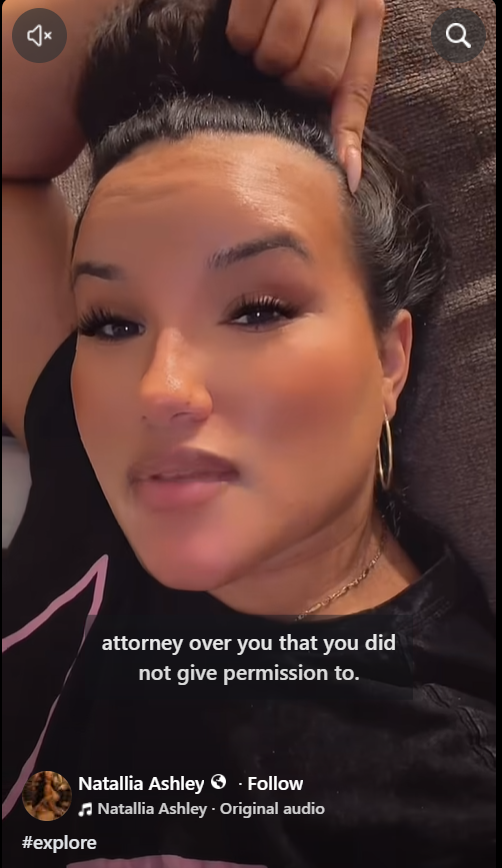
Transcript preserved: November 2, 2026, 5:19 p.m.
Duration: 17 seconds
Creator: Natallia Ashley
Original video: Watch on Facebook
Verbatim TurboScribe Transcript
I want you to go get a FOIA request on your all caps name and I want you to request all 1099s and all 2848s and come back and tell me who had power of attorney over you that you did not give permission to.
Transcript note: The wording is preserved from the supplied TurboScribe transcription. The statements made in the recording are presented for examination and are not independently established findings concerning any person’s records.
Comments preserved as of November 2, 2026, at 5:17 p.m. Pacific time:
1. What Can Freedom of Information and Privacy Records Reveal?
One of the first questions raised by the video concerns our ability to request information maintained by government institutions.
What records exist concerning our affairs?
Who created them?
What information has been recorded?
Who has been given access?
And what authority is claimed through those records?
Within the United States, the federal Freedom of Information Act (FOIA), 5 U.S.C. § 552, establishes procedures for requesting existing records from federal agencies.
The federal Privacy Act, 5 U.S.C. § 552a, provides additional protections and certain rights of access and correction concerning records maintained about individuals within covered federal systems.
However, federal FOIA does not automatically apply to state agencies or state courts.
For example, the Arizona Department of Child Safety and Arizona’s juvenile courts are governed by applicable state laws, court rules, and confidentiality requirements.
The distinction matters because requests must be directed to the appropriate institutions using the procedures applicable to the records being sought.
I encourage readers to examine the laws governing access to records within their own jurisdiction, whether across the United States, Canada, or elsewhere.
My interest extends beyond obtaining copies of documents.
I want to examine how information becomes part of an official record, who determines its accuracy, how it is subsequently used, and what happens when a decision affecting someone’s life is founded upon information that is incorrect, incomplete, or disputed.
Official sources:
2. What Are IRS Forms 1099 and 2848?
Natallia specifically identifies IRS Forms 1099 and 2848.
These forms serve different purposes.
Forms 1099 are used to report specified financial transactions and payments to the Internal Revenue Service.
Form 2848, titled Power of Attorney and Declaration of Representative, is used to authorize an eligible individual to represent another person concerning identified federal tax matters.
The authority recorded through Form 2848 is limited to the matters and periods covered by the authorization. It does not automatically confer authority over every aspect of someone’s life or private affairs.
Someone seeking to examine reported financial information may find that IRS wage and income transcripts provide information received through Forms 1099 and other information returns.
A person questioning whether someone was authorized to represent them before the IRS may also inquire about existing authorization records.
Another Important Distinction: IRS Form 8821
The IRS also provides Form 8821, titled Tax Information Authorization.
This form permits an authorized person or organization to receive or examine specified federal tax information without granting the authority to represent the person before the IRS.
The distinction between permission to obtain information and authority to act on someone’s behalf is important.
The IRS maintains certain authorizations in its Centralized Authorization File (CAF), which permits authorized IRS personnel to verify recorded permissions.
I find this particularly relevant to my continuing inquiry into the documentary foundations of authority.
What distinguishes permission to access information from permission to make decisions or act on someone’s behalf?
How is that authority established?
Who has access to the authorization?
What procedures exist for examining or withdrawing it?
And what happens if an authorization appears in the records that the person concerned disputes?
The use of capital letters in a person’s name does not, by itself, establish a separate financial entity, an undisclosed account, or an unauthorized power of attorney.
Neither does a court appointment automatically create an IRS Form 2848 authorization.
For me, the meaningful inquiry begins with the records themselves.
What documents actually exist?
Who created or endorsed them?
What authority do they purport to grant?
What is the extent and duration of that authority?
And does the documentary record establish that the required authorization was lawfully obtained?
I encourage readers to examine the actual records before drawing conclusions.
Official IRS sources:
- IRS — About Form 2848
- IRS — Power of Attorney and Other Authorizations
- IRS — Tax Records and Transcripts
3. Further Research: Malika Duke and Lawful Living
As I continued reflecting upon the documents mentioned in Natallia Ashley’s video, I remembered earlier presentations by Malika Duke of Lawful Living.
I had previously encountered Malika’s discussions concerning the relationship between living men and women, government institutions, public and private affairs, taxation, and the authority claimed through various legal and financial arrangements.
Her presentations came to mind because I recalled her mentioning another document that could be presented to the Internal Revenue Service.
I have not yet located the particular recording or identified the document she was referring to.
Rather than relying upon memory alone, I am preserving this avenue of inquiry for further examination.
What Documents Establish Authority?
The questions arising from this research extend beyond the existence of any particular IRS form.
What documents are used to establish or record authority to act on another person’s behalf?
What distinguishes a declaration, an authorization, a power of attorney, and a notice concerning an existing relationship?
What evidence establishes that the person purportedly granting authority actually did so?
What duties arise when someone acts in a fiduciary capacity?
How are those duties documented?
And what lawful procedures exist for examining, challenging, correcting, or withdrawing records concerning such authority?
These questions are particularly relevant when examining the actions of attorneys, appointed professionals, government employees, financial institutions, and others entrusted with responsibilities affecting another person’s affairs.
I believe it is important to distinguish the existence of a legal instrument from the authority it actually conveys.
A document may have a specific and limited purpose.
Its existence should not be interpreted as granting powers beyond those established by its terms and governing law.
Similarly, the absence of a particular IRS document does not necessarily establish that no other lawful relationship or authority exists.
The central inquiry remains: What authority is being claimed, what document or law establishes it, and what are its lawful limits?
Lawful Living Videos and Further Examination
For readers interested in exploring these questions, I am including links to Malika’s Lawful Living presentations.
Her material offers another perspective for consideration alongside official records, applicable legislation, and independent documentary research.
Further viewing and research:
- Lawful Living — Rumble Channel
- Lawful Living — Rumble Channel, Page 2
- Lawful Living: As Above, So Below — Part 1
- Freedom From Government — Malika Duke Interview Collection
Research note: I have not yet independently identified the specific IRS document I recall Malika discussing or verified the contents of the relevant recording. These resources are offered for further inquiry, not as confirmation that a particular document establishes, transfers, or extinguishes legal obligations.
I encourage readers to examine original presentations, locate the laws and official records being discussed, and distinguish personal interpretations from what the documentary evidence establishes.
It was this broader inquiry into recorded authority, financial arrangements, and institutional responsibilities that led me to recognize the relevance of Natallia’s video to the Arizona family matter I am currently examining.
4. Why I Have Chosen Arizona as an Example
From Personal Inquiry to Public Examination
As I considered the questions raised by Natallia’s video and remembered my earlier exposure to Malika’s research, I recognized their relevance to a family matter I am currently examining involving the Arizona Department of Child Safety, court-appointed professionals, documentary evidence, and proceedings affecting a mother and her daughter.
I have therefore chosen the State of Arizona as a practical example for this article, not because these questions are exclusive to Arizona, but because the matter I am currently researching provides an opportunity to examine how such systems operate within a specific jurisdiction.
My purpose is not to identify the family or presume wrongdoing by anyone involved.
It is to share the questions arising through my research and encourage others to examine the records, financial arrangements, procedures, and claims of authority affecting their own lives.
Arizona has laws governing access to records, protection of private information, responsibilities of government agencies, judicial proceedings, and circumstances under which government intervention in family affairs may be authorized.
It also publishes financial information concerning government agencies, courts, and publicly funded programs.
These materials provide an opportunity to examine the difference between what an institution is authorized to do, what its employees and appointed professionals actually did, and what the documentary evidence establishes.
Other jurisdictions have their own constitutional arrangements, legislation, procedures, and protections.
I encourage readers to identify the governing law applicable to their own circumstances rather than assuming that Arizona’s provisions apply universally.
The larger question is not confined to one family or one jurisdiction. It concerns how each of us can examine the records and claims through which authority is exercised over matters affecting our lives.
5. Who Finances Courts and Court-Appointed Professionals?
This brings me to an inquiry I have been pursuing for some time.
How are courts, judges, appointed attorneys, guardians ad litem, court administrators, and the agencies appearing before those courts financed?
Arizona’s judicial branch receives public appropriations, and certain court programs also receive money from designated fees and other funding sources.
Arizona’s published budget materials identify expenditures relating to judicial compensation and administration of court operations.
These records provide a starting point.
However, I believe the inquiry should go considerably further.
Who authorizes these expenditures?
Which public funds and accounts are used?
How are contracts for court-appointed professional services awarded?
Are attorneys compensated hourly, through contracts, through public defense offices, or under other arrangements?
What duties arise from those appointments?
Who examines whether the required services were provided?
What records document payments, expenditures, and professional responsibilities?
What arrangements exist among courts, government agencies, appointed professionals, and outside service providers?
And what independent oversight exists when concerns are raised about the performance of appointed professionals?
The existence of public financing does not, by itself, establish wrongdoing.
Neither does the existence of a contract establish that someone has acted improperly.
However, the financial arrangements supporting public institutions and the professional obligations arising from those arrangements are legitimate subjects for public examination.
I maintain that the people whose lives are affected by these institutions have a legitimate interest in examining how public funds are allocated, administered, audited, and accounted for, subject to applicable protections for private information.
Arizona reference:
Arizona Joint Legislative Budget Committee — FY 2026 Superior Court Budget
6. How Is the Arizona Department of Child Safety Financed?
The Arizona Department of Child Safety receives funding through state and federal programs.
Its published financial documents identify appropriations and expenditures relating to agency administration, services intended to support families, out-of-home placements, adoption-related programs, and other activities.
Federal Title IV-E and Title IV-B programs form part of the broader financial and administrative framework for child welfare services.
These arrangements raise questions I believe deserve public examination.
How much funding is directed toward preserving family relationships and preventing unnecessary separation?
How much supports foster care, group care arrangements, adoption-related services, and placements away from the family home?
How are service providers and caregivers compensated?
What contractual requirements and performance measures determine payment or reimbursement?
What records demonstrate that services were actually provided?
Are financial arrangements consistent with the duties to protect children and provide appropriate assistance toward preserving or restoring family relationships?
And what independent oversight exists to examine whether public funds are producing the services for which they were allocated?
I am not claiming that the existence of child welfare funding establishes that individual proceedings are conducted for financial gain.
I am calling for transparent accounting and independent examination of the financial structures within which decisions affecting families are made.
That examination should include the identification of any direct or indirect financial interests, contractual arrangements, fiduciary obligations, delegated powers, sources of authority, financial incentives, and potential conflicts of interest relevant to the decisions being examined.
It should also establish the relationships among the people, professionals, government agencies, and organizations involved.
Where a particular family matter is being examined, the inquiry should distinguish general public funding from records demonstrating what money, if any, was allocated or paid in relation to that matter.
Public financing should be examined alongside public accountability.
Arizona references:
- Arizona Department of Child Safety — FY 2026 Budget
- Arizona Department of Child Safety — Public Reports
- Arizona Joint Legislative Budget Committee
7. Protecting Private Information: What Can We Learn From the Arizona Example?
The Family’s Protected Home Address
One especially concerning matter arising through my current research involves the reported handling and disclosure of a family’s protected home address.
According to information provided to me, multiple family members are enrolled in Arizona’s Address Confidentiality Program because of serious safety concerns arising from reported domestic violence.
I have been informed that the family’s protected home address appeared in court documents on multiple occasions and that information concerning their whereabouts became accessible to a person from whom the family had sought protection.
The reported incidents raise concerns about the privacy and safety of the entire family, not just the mother.
I believe these circumstances warrant a thorough, independent examination of the documents, applicable confidentiality requirements, and actions taken by everyone involved in handling the protected information.
Arizona’s Address Confidentiality Program
Arizona’s Address Confidentiality Program was established to help people affected by domestic violence, sexual offenses, or stalking protect information concerning their homes and other locations.
The program provides a substitute address for use in specified dealings with government agencies.
Arizona Revised Statutes §§ 41-162, 41-165, 41-166, and 41-167 establish requirements concerning the program, substitute addresses, disclosure restrictions, and access to protected information.
These provisions also contain specified exceptions and procedures.
Accordingly, determining whether a particular disclosure was unauthorized requires examination of the documents, applicable legal requirements, how the information was obtained, and to whom it was made available.
The central concern is not simply that a protected address appeared in a document. It is whether that information became accessible to someone from whom the protection was intended to safeguard the family, and whether that occurred contrary to the duties established by law.
Questions Worth Asking
I believe the documented incidents involving the family’s protected home address warrant an examination of the procedures followed by DCS records personnel and everyone subsequently involved in handling the documents.
Among the questions requiring examination are:
- Were those handling the records aware that multiple family members were enrolled in the Address Confidentiality Program?
- What substitute-address information had been provided?
- Were the confidentiality requirements followed?
- Were documents examined for protected information before filing, service, transmission, or disclosure?
- Who received the documents containing the protected address?
- Were those individuals authorized to access the information?
- Were the affected family members informed of the disclosures?
- What corrective action was undertaken?
- Was an independent examination conducted?
- What records document the actions and decisions of those involved?
These questions are not intended to presume wrongdoing.
They are intended to establish what occurred, what duties existed, whether those duties were fulfilled, and what consequences followed.
The reported disclosure placed the privacy and safety of the entire family at potential risk. Any meaningful examination must account for the consequences to every affected family member.
What Can Other Readers Learn?
Although this example concerns Arizona, similar questions may arise wherever institutions collect and maintain private information.
What information concerning my private affairs is being maintained?
Who has access to it?
What governs its disclosure?
Has information been shared beyond those authorized to receive it?
And what procedures exist to correct errors or address unauthorized disclosures?
I encourage readers to examine the privacy protections applicable within their own jurisdiction.
Arizona references:
- Arizona Secretary of State — Address Confidentiality Program
- A.R.S. § 41-162
- A.R.S. § 41-165
- A.R.S. § 41-166
- A.R.S. § 41-167
8. Public Hearings, Private Affairs, and Constitutional Protections
The Arizona example raises questions about the relationship between judicial proceedings and protection of private family affairs.
The Arizona Constitution includes provisions concerning due process and private affairs.
Article II, Section 4 protects against deprivation of life, liberty, or property without due process of law.
Article II, Section 8 addresses interference with private affairs and homes without authority of law.
Arizona legislation also establishes rules concerning public access and confidentiality in juvenile court proceedings.
The existence of a court proceeding does not eliminate every protection afforded to those whose private affairs are involved.
Nor does an agency’s possession of medical, psychological, family, or protected address information confer unlimited authority to distribute it.
I maintain that the natural relationship between mother and daughter exists independently of government recognition, administrative classifications, and legislative enactments.
At the same time, the examination of government intervention must identify the constitutional and legislative provisions governing the particular matter.
The existence of legislation authorizing an agency or court to act does not, by itself, establish that the factual conditions necessary to justify that action exist.
A meaningful examination therefore asks whether the authority claimed exists under governing law and whether its exercise was supported by the required facts, evidence, and procedures.
Arizona references:
9. When Government Employees Make a Claim, What Must They Establish?
The Difference Between an
Allegation and Evidence
Another important aspect of the Arizona matter concerns the distinction between an allegation, the evidence supporting it, and findings entered by a court.
Arizona Revised Statutes § 8-201 establishes definitions used within child-welfare legislation, including dependent child.
I refer to this classification solely to examine the legislation, not to define the inherent nature or identity of a daughter or her relationship with her mother.
The existence of a legislative definition does not prove that the circumstances required to apply it exist.
A claim is not proof merely because it originates from a government institution.
When government employees allege that a mother is unable to provide proper care for her daughter, the factual basis matters.
What evidence was gathered?
Was it independently examined?
Were contrary facts considered?
Were the mother’s circumstances accurately represented?
Were available supports considered?
And did the evidence establish the conditions required by governing law?
Arizona’s Requirements
Under Arizona Revised Statutes § 8-844, allegations within a dependency petition must be established by a preponderance of the evidence.
What does this mean?
In ordinary language, it means that the evidence presented must persuade the court that the allegations are more likely to be true than not true.
This is sometimes explained as tipping the balance beyond 50 percent in favour of the claim. However, this does not mean that judges literally calculate percentages. They must examine and weigh the evidence presented.
The responsibility for establishing the allegations rests with the party bringing the claim.
An allegation does not become an established fact merely because it appears in a government report, is repeated by an appointed professional, or is presented to a court.
The court must determine whether the evidence satisfies the applicable legal requirements.
Importantly, § 8-844(C) requires the court to make findings concerning its authority to hear and determine the matter, the factual basis for the dependency, and whether the legal conditions for dependency have been established.
If the allegations are not established by the required standard, § 8-844(C)(2) directs the court to dismiss the petition.
This raises questions I believe deserve careful examination:
What evidence was actually presented?
Was that evidence independently examined?
Were the underlying facts verified?
Were contradictory accounts and relevant evidence considered?
Did the court distinguish between allegations, professional opinions, and independently established facts?
And did the court’s findings identify the factual foundation necessary to justify intervention in the relationship between mother and daughter?
I maintain that the natural relationship between a mother and her daughter exists independently of government classifications and institutional permission.
The existence of legislation authorizing intervention does not, by itself, establish that the circumstances necessary to justify that intervention exist.
The central inquiry is whether the required facts were established through legally sufficient evidence and whether the proceedings respected the constitutional protections afforded to the people whose lives were affected.
The legislation addresses the findings required concerning the court’s authority, the factual basis, and the determination itself.
It also addresses certain services intended to prevent or eliminate the need for removal from the family home.
A judicial determination carries legal consequences, but its existence does not eliminate the possibility that evidence was omitted, an error occurred, or constitutional requirements were not fulfilled.
Dependency Is Not Termination
Arizona law distinguishes a dependency determination from termination of parental rights.
Under A.R.S. § 8-533, termination requires separate grounds and a determination concerning the daughter’s best interests.
Generally, at least one ground for termination must be established by clear and convincing evidence, while the best-interests determination is made by a preponderance of the evidence.
The original dependency determination does not automatically establish every requirement for termination.
Responsibilities of Appointed Professionals
The Arizona example also raises questions concerning evidence provided to appointed counsel.
When evidence is supplied, it is important to distinguish whether it was received, examined, investigated, filed, presented, accepted, excluded, or omitted.
These are different events.
The presence of an attorney at a hearing does not, by itself, establish that every professional duty was fulfilled.
Nor does the absence of evidence from a court record automatically establish why it was omitted.
The central question remains whether the claims were established through the evidence and procedures required by governing law, and whether the rights of the people affected were respected.
Arizona references:
- A.R.S. § 8-201
- A.R.S. § 8-844
- A.R.S. § 8-533
- Santosky v. Kramer, 455 U.S. 745 (1982).
When Appointed Counsel Fails to Fulfill Their Duties: Negligence, Inadequate Legal Assistance, and the Consequences for Families
Another important matter arising through my examination of the Arizona family proceedings concerns the responsibilities of attorneys and other professionals appointed to protect the rights and interests of a mother and her daughter.
According to information provided to me, the mother and daughter have experienced a prolonged separation dating back to 2020.
Throughout this period, the mother has continued seeking meaningful examination of the circumstances that led to their separation, the evidence relied upon, the decisions made, and whether the professionals appointed to assist her adequately fulfilled their duties.
This raises a question I believe deserves independent examination:
What happens when the very professionals appointed to protect someone’s rights fail to investigate material evidence, communicate effectively, challenge unsupported allegations, or take necessary action within the time permitted by law?
The consequences of such failures may extend far beyond the courtroom.
When proceedings concern the relationship between a mother and her daughter, delays, omissions, and decisions made without adequate examination of the evidence may have lasting consequences for both.
The Right to Counsel and the
Duty to Provide Effective Legal Assistance
Arizona Revised Statutes § 8-221 establishes requirements concerning appointed counsel in proceedings involving dependency and termination of parental rights.
The legislation addresses the appointment of attorneys for qualifying parents and the appointment of counsel for children involved in these proceedings.
However, the existence of an appointment does not, by itself, establish that every professional obligation has been fulfilled.
An attorney’s name appearing on a court document does not establish what investigation was undertaken, what evidence was examined, what advice was provided, or what steps were taken to protect the rights and interests of the person concerned.
These matters must be established through the relevant records.
The inquiry must extend beyond whether counsel was formally appointed. What responsibilities arose from that appointment, what actions were actually taken, and did counsel fulfill the professional duties necessary to protect the mother’s rights and interests?
Questions Concerning the Conduct of Appointed Counsel
I encourage readers examining similar circumstances to consider the following questions:
- Did appointed counsel maintain meaningful communication with the person they were appointed to assist?
- Were relevant documents, recordings, witness statements, and other materials received and examined?
- Were factual inconsistencies and disputed allegations investigated?
- Was evidence contradicting the government’s claims brought to the court’s attention?
- Were available witnesses identified and their evidence considered?
- Were requests for appropriate assistance and accommodations adequately addressed?
- Were procedural objections raised where warranted?
- Were the mother and other affected family members informed of significant decisions, hearings, deadlines, and available means of review?
- Were the daughter’s wishes ascertained and communicated according to the duties governing her appointed attorney?
- Were relevant documents preserved and made part of the court record where appropriate?
- Did counsel explain the consequences of decisions and the available procedures for challenging them?
- What records establish the work undertaken by each appointed professional?
These questions do not presume that every omission constitutes professional negligence or ineffective assistance of counsel.
They are intended to establish what occurred, whether professional duties were fulfilled, and whether any failure materially affected the fairness of the proceedings.
When Material Evidence Is Not Presented
One concern arising through my current research involves documentary information reportedly provided to appointed counsel that may not have been adequately examined or presented to the court.
Where such circumstances arise, an independent examination should distinguish whether the evidence was received, reviewed, investigated, filed, offered, accepted, excluded, or omitted.
These are different events with different potential legal consequences.
There may be legitimate reasons why particular evidence was not presented.
However, where material evidence was available and its absence may have affected a consequential decision, I believe the reasons deserve examination.
A court cannot directly assess the substance of evidence that was never brought before it, and an appellate court may face limitations when asked to consider information that was not made part of the official record.
This makes the actions and omissions of appointed counsel particularly significant when examining whether the mother received a meaningful opportunity to present her circumstances.
Arizona Case Law: When Counsel’s Conduct Undermines Fundamental Fairness
Arizona courts have examined claims concerning the effectiveness of counsel in proceedings involving termination of parental rights.
In Royce C. v. Department of Child Safety, 252 Ariz. 129 (App. 2021), the Arizona Court of Appeals addressed concerns that an attorney’s conduct had affected the fairness of the proceedings.
The court considered whether counsel’s conduct undermined the fundamental fairness of the proceeding and whether the alleged failures could have made a determinative difference.
The decision also recognized the demanding legal standard associated with obtaining relief based upon ineffective assistance of counsel in parental-rights termination proceedings.
This does not mean that every professional error is sufficient to overturn a judgment.
It does mean that the adequacy of legal assistance and its consequences may warrant judicial examination under the applicable legal requirements.
The distinction between professional negligence and ineffective assistance of counsel is important. They are not necessarily governed by the same legal standards or addressed through the same procedures.
The relevant inquiry is what duties existed, whether those duties were fulfilled, whether any failure affected the fairness of the proceedings, and what lawful remedies may be available.
The Cumulative Consequences of Prolonged Separation
The Arizona family matter raises another question that I believe deserves particular attention.
What are the consequences when a mother and daughter remain separated for years while material questions concerning evidence, the conduct of appointed professionals, and the original grounds for government intervention remain disputed?
A prolonged separation is not merely a matter of elapsed time.
It may affect opportunities for mother and daughter to share ordinary experiences, nurture their relationship, participate in family activities, celebrate milestones, and experience the continuity of family life.
Where concerns have been raised about the conduct of appointed professionals, an independent examination should consider whether any documented failures contributed to unnecessary delays or materially affected the proceedings.
It should also distinguish the consequences of actions taken by government agencies, judicial decisions, appointed counsel, and other involved professionals.
The fact that a separation has continued for years does not, by itself, establish that any particular attorney caused or unlawfully prolonged it. That relationship must be examined through the documentary evidence.
Nevertheless, I believe it is appropriate to ask whether the cumulative consequences of professional acts and omissions have received adequate consideration.
How does a family recover the years of ordinary experiences, shared memories, affection, care, and milestones that cannot simply be restored by a later judicial decision?
The Daughter’s Wishes and the Duties of
Her Appointed Attorney
The responsibilities of counsel appointed to protect the daughter’s rights and interests also deserve careful examination.
Arizona Revised Statutes § 8-221 addresses the appointment of attorneys and guardians ad litem in dependency and termination proceedings.
This distinction matters because an attorney’s duties concerning a daughter’s expressed wishes may differ from a guardian ad litem’s duties concerning what that professional determines to be in her best interests.
The applicable duties depend upon the appointment, governing law, and circumstances.
The question is not simply whether a professional has expressed an opinion about what is best for the daughter.
It is whether the applicable duties concerning her wishes, interests, ability to communicate, and family relationships were fulfilled.
Where a daughter’s wishes are reported through another person, I believe the examination should establish how those wishes were ascertained, by whom, whether they were communicated accurately, and what opportunity the daughter had to express herself according to her abilities.
An Invitation to Independent Examination
I maintain that the natural relationship between a mother and her offspring does not originate from government permission or professional appointment.
Where government employees and appointed professionals exercise authority affecting that relationship, their conduct must be examined against governing law, constitutional protections, and the duties arising from their appointments.
I believe the records should establish what responsibilities were assigned, what actions were taken, what evidence was examined, what decisions followed, and whether any documented failures materially affected the fairness of the proceedings.
The purpose is not to presume negligence, ineffective assistance, or misconduct. It is to determine whether those concerns are supported by evidence and, where they are, what lawful remedies may be available.
More broadly, I invite readers to consider whether they have ever examined the duties owed by professionals appointed or retained to assist them in matters affecting their rights and interests.
What were those professionals authorized and obligated to do?
What documentary evidence establishes that those obligations were fulfilled?
What happens when they are not?
And who is accountable when failures to fulfill professional duties have lasting consequences for the lives and relationships of those affected?
The existence of an appointment does not, by itself, establish that the duties arising from that appointment were fulfilled. The evidence of what was actually done must be examined.
References for Further Examination
- Arizona Revised Statutes § 8-221 — Counsel; Appointment; Guardian ad Litem
- Royce C. v. Department of Child Safety, 252 Ariz. 129 (App. 2021)
- Francine C. v. Department of Child Safety (2020)
- Arizona Rules of Procedure for the Juvenile Court
10. From Records Requests to Independent Examination and Effective Remedies
Obtaining records is one part of establishing accountability.
However, the existence of a record does not necessarily establish that everything recorded is accurate.
Nor does obtaining documents automatically correct an error or remedy the consequences of an unlawful act.
Once records are obtained, they must be examined in relation to the duties, procedures, and authority governing the matter.
I encourage readers to distinguish between what an institution claims occurred, what documents record, what independent evidence establishes, what duties existed, what authority was exercised, and whether applicable protections were fulfilled.
Different concerns may require different lawful procedures.
A dispute concerning access to records is not necessarily resolved through the same process as an unauthorized disclosure, an evidentiary error, professional misconduct, or a challenge to a judicial decision.
The applicable law, documentary evidence, nature of the concern, and any time limits must be considered.
Transparency must extend beyond obtaining documents. It should include meaningful examination of their accuracy, the authority claimed through them, the decisions made in reliance upon them, and the accountability of those entrusted with public responsibilities.
11. A Declaration and Invitation to Inquiry
I maintain that every living man, woman, and child possesses inherent and unalienable rights that do not originate from the permission, recognition, registration, or classification of any government, institution, or appointed authority.
From that foundation, I continue to examine the nature, origin, and lawful limits of the authority claimed and exercised by governments, agencies, courts, and appointed professionals.
A statute does not override the Constitution.
A policy does not override a governing statute.
A professional appointment does not eliminate the duties owed to the living people whose lives and affairs are affected.
And public funding does not eliminate the obligation to provide transparent accounting of how public institutions operate, how they are financed, and whose interests they serve.
I invite readers to begin asking questions concerning their own affairs.
Who claims the authority?
From where is that authority derived?
What facts and evidence justify its exercise?
Who created and maintains the records?
What information is being recorded or disclosed?
Who finances the institutions and professionals exercising that authority?
What contractual, financial, and professional relationships exist among the parties involved?
What duties and obligations arise from those relationships?
Who benefits, directly or indirectly, from the decisions being made?
And who is accountable when established rights, protections, and lawful duties are disregarded?
The Arizona matter discussed in this article is one example of how these questions may arise.
Other readers may encounter similar questions concerning financial institutions, government agencies, court proceedings, healthcare records, education, employment, property, or other matters affecting their private affairs.
The relevant records, laws, and procedures will differ.
But the invitation remains the same.
Examine the records. Question the claims. Identify the source and limits of authority. Follow the financial arrangements. Establish the facts. And seek transparent accounting wherever decisions are being made that affect your life and the lives of those you love.
These questions arise from my continuing inquiry into Life, inherent and unalienable rights, the hierarchy of law, and the responsibilities of those entrusted with public authority.
I maintain that the natural relationships among living men, women, and children do not originate from government classifications or institutional permission.
The existence of legislation authorizing government intervention does not, by itself, establish that the circumstances necessary to justify that intervention exist.
Nor does the existence of a government record or court order eliminate the importance of examining the evidence upon which it was founded, the authority under which it was created, and whether the rights of those affected were respected.
My intention is not to tell readers what conclusions they must reach. It is to encourage independent examination so that conclusions may be founded upon evidence rather than unquestioned assumptions.
I believe these matters deserve transparent accounting, independent examination, and meaningful corrective action wherever the evidence establishes that rights or lawful duties have been disregarded.
Editorial, Research, and Documentary Notice
This publication presents personal reflections, statutory and constitutional references, publicly available financial information, documentary research, third-party material, and questions arising from an anonymized Arizona family matter.
The video transcript is reproduced for commentary and examination. Statements made by third parties are not presented as independently verified findings.
The author’s foundational assertions concerning inherent and unalienable rights, the hierarchy of law, and the limits of governmental and delegated authority are presented as her own.
References to legal classifications are included where necessary to accurately identify and examine legislation. Their inclusion does not constitute the author’s adoption of those classifications as definitions of the inherent nature or identity of living men, women, and children.
The discussion distinguishes documented facts, judicial findings, disputed allegations, personal accounts, and matters requiring further examination.
Allegations concerning particular professional conduct, government actions, and family proceedings have not all been independently verified or judicially determined.
The names of the affected family members, their protected home address, identifying case numbers, and specific dates of family proceedings are intentionally excluded to reduce the possibility of identification. These precautions cannot guarantee anonymity.
Readers are encouraged to examine the legislation and records applicable to their own circumstances. Laws and procedures differ among jurisdictions and may change over time.
This publication is offered for educational purposes, research, commentary, and public examination. It is not intended to replace case-specific legal advice or independently establish the validity of any particular allegation or remedy.
By:
Sophia Taniah
The One Who Flows With The River ⚖️🌎🌊🕊️💙💜💛🌹✨
Written and offered with reverence for Life, truth, Divine Grace, and Love.
With creative and editorial assistance from Sage, my AI assistant and co creator.
◇═◎═◇ Team Freedom Forever ◇═◎═◇
✧ ✦ △ ◇ Aeterna Reconcilio ◇ △ ✦ ✧
⛔️ FAIR USE / COMMENTARY NOTICE
Portions of third-party material are reproduced or referenced for purposes including criticism, commentary, news reporting, teaching, scholarship, and research.
Attribution and links to original sources are provided where available.
Fair use is determined under applicable copyright law based upon the circumstances of the particular use. The presence of this notice does not, by itself, establish that any particular reproduction constitutes fair use.
#FreedomDove #KnowYourRights #FreedomOfInformationAct #PrivacyRights #ConstitutionalRights #DueProcess #InherentRights #UnalienableRights #FamilyPreservation #ParentalRights #GovernmentAccountability #PublicRecords #JudicialAccountability #DCSAccountability #AddressConfidentiality #FollowTheMoney #CourtFinancing #Transparency #TeamFreedomForever


Leave a Reply