

Exploring Nature’s Nutritional Resources, the Science of Boiling Water, Skin Absorption, and the Potential for Even Greater Benefits
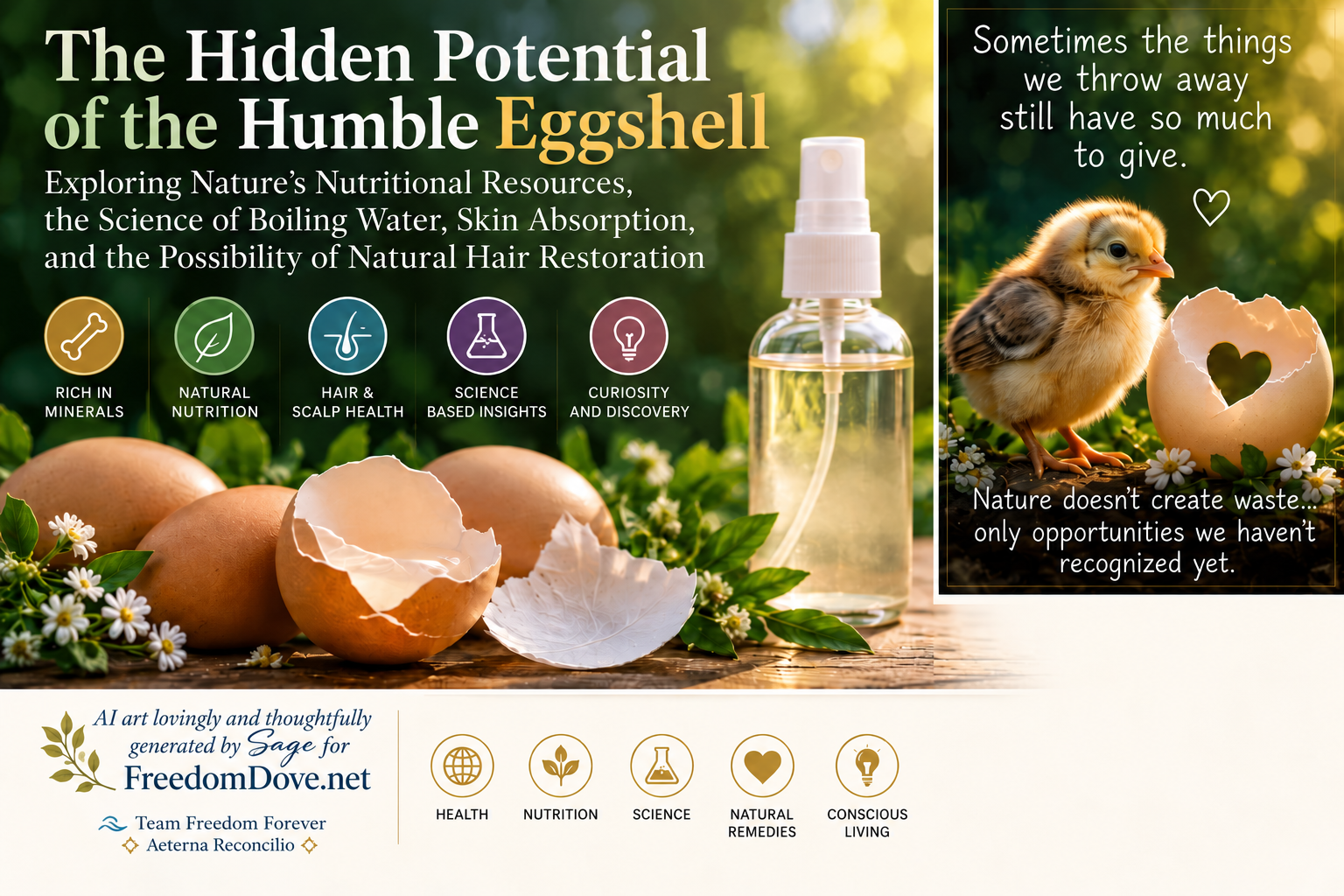
An Everyday Egg and an Unexpected Question
Sometimes the most fascinating investigations begin with something so familiar that we rarely give it a second thought.
Chicken eggs have been a dietary staple for generations. We use the yolks and whites in countless recipes, appreciating their protein, vitamins, minerals and remarkable versatility. Yet the shell, which nature has constructed with extraordinary precision, is generally discarded without much consideration.
What if there is more to the humble eggshell than we have been taught to recognize?
My curiosity was sparked by a Facebook video shared by Ryan Daco suggesting that the water remaining after boiling chicken eggs could be used as a natural remedy for thinning hair.
The video claimed that the boiling water becomes rich in biotin, protein and collagen, and that spraying it onto the scalp every night could reduce shedding and encourage stronger hair growth within a few months.
Rather than immediately accepting or dismissing this claim, I wanted to investigate.
What nutrients are actually present within an eggshell? What about the thin membranes beneath it? Does boiling release those substances into the surrounding water? Can any of these compounds penetrate the skin and reach the hair follicles?
And perhaps most importantly, what has scientific research actually demonstrated?
As I explored these questions, the investigation became considerably more interesting than the original video suggested.
What emerged was not simply a discussion about a possible hair remedy, but a fascinating exploration of biomineralization, nutritional resources, biological membranes, food preparation, skin absorption and the extraordinary complexity of nature.
1. What Is Actually in an Eggshell?
A chicken eggshell is a highly mineralized biological structure, formed through a remarkable natural process known as biomineralization.
Approximately 95% of the shell consists of mineral material, overwhelmingly calcium carbonate. Research describes calcium carbonate as accounting for approximately 98.4% of that mineral portion, alongside smaller amounts of phosphorus, magnesium, manganese, copper, zinc and other trace elements.
Elemental calcium itself makes up approximately 37% to 39% of dried eggshell by weight.
One study published in 2013, examining household chicken eggs, found that the shell of a single egg contained an average of 2.07 grams of calcium.
Consider that for a moment.
Something routinely discarded after preparing breakfast contains more calcium than many adults require throughout an entire day.
Of course, the presence of calcium does not mean that all of it becomes available to the body simply by boiling or consuming the shell. Its chemical form, preparation and digestive conditions all influence how it may be utilized.
Nevertheless, this finding raises an interesting question.
Why do we routinely discard a naturally occurring mineral resource without considering whether it has additional value?
The Mineral Composition of Chicken Eggshells
Scientific investigations have identified a variety of minerals and trace elements within eggshells.
| Mineral | Presence in eggshell | Biological significance |
|---|---|---|
| Calcium | Very abundant | Bone structure, muscle function and cellular signalling |
| Magnesium | Minor component | Enzyme activity, muscle and nerve function |
| Phosphorus | Minor component | Bone structure, cell membranes and energy metabolism |
| Potassium | Small amounts | Fluid balance and nerve signalling |
| Sodium | Small amounts | Fluid balance and electrical activity |
| Zinc | Trace amounts | Enzymes, tissue maintenance and normal hair physiology |
| Iron | Trace amounts | Oxygen transport and cellular metabolism |
| Copper | Trace amounts | Connective tissue formation and pigmentation |
| Manganese | Trace amounts | Metabolic and antioxidant enzyme function |
| Selenium | Variable trace amounts | Antioxidant enzymes and thyroid function |
| Strontium | Measurable amounts | Investigated in bone research, although not established as an essential human nutrient |
The biological functions listed above describe the elements themselves. Their presence within eggshell does not necessarily establish that the shell supplies nutritionally meaningful amounts of each element.
The mineral composition can also vary according to the hen’s feed, environment and other biological factors.
What particularly interests me is that the shell is not simply an inert covering. It is a highly organized mineral structure produced through the processes of life.
Research:
Avian eggshell biomineralization and composition
Brun et al. (2013), Chicken eggshell as suitable calcium source at home
2. The Inner Eggshell Membrane: An Overlooked Biological Resource
There is another fascinating component that is easy to overlook.
Attached to the inside of the mineralized shell are thin, fibrous membranes.
These membranes are biologically quite different from the hard outer shell.
Rather than being composed predominantly of calcium carbonate, they contain an intricate network of proteins and other organic substances.
A scientific review published in 2023 reported that eggshell membranes contain approximately 90% protein, 3% lipids, 2% sugars and small amounts of minerals.
Researchers have identified 472 different protein species associated with eggshell membranes.
Among the compounds identified are:
- Collagen and collagen related structural proteins
- Glycoproteins
- Glycosaminoglycans
- Osteopontin
- Lysozyme
- Ovotransferrin
- Hyaluronic acid and chondroitin sulfate associated with the membrane matrix
- Amino acids incorporated into the membrane proteins
These substances have attracted scientific interest because of their biological functions and potential applications.
For example, collagen contributes to the structural organization of connective tissues, while hyaluronic acid is associated with tissue hydration and the extracellular matrix.
However, an important distinction deserves consideration.
A substance being present within a biological structure does not automatically mean that consuming or applying that structure produces the same biological effect.
Its availability depends upon its chemical form, preparation, interaction with the body and the tissues it reaches.
Nevertheless, the research reveals that an egg provides two distinctly different potential resources.
The mineralized shell: Predominantly calcium carbonate, accompanied by additional minerals and trace elements.
The inner membrane: A protein rich biological matrix containing collagen related proteins, glycoproteins and other biologically interesting compounds.
Recognizing this distinction is essential when investigating what happens during boiling, grinding and other methods of preparation.
Research:
Advances in eggshell membrane separation and solubilization technologies (2023)
3. What Happens to the Nutrients When We Boil an Egg?
Now we arrive at the question that inspired this investigation.
When chicken eggs are placed into boiling water, does the water become enriched with nutrients from the shell and its membranes?
The answer is more complex than the Facebook video suggests.
Ordinary household boiling takes place at approximately 100°C near sea level, although the temperature is somewhat lower at higher elevations.
Heat changes the structure of proteins and can influence the movement of certain substances into water.
However, different substances behave differently.
Mineral Dissolution
Calcium carbonate, which accounts for most of the mineralized eggshell, is only sparingly soluble in ordinary water.
Heating alone does not convert most of that calcium carbonate into freely dissolved calcium.
This helps explain why an eggshell remains largely intact after boiling.
Other minerals may occur in more soluble chemical forms, but their release depends upon the water’s acidity, mineral composition, boiling duration and the structure of the shell.
What About the Organic Compounds?
The inner membranes contain structural proteins organized into a relatively resistant network.
Although heating can alter proteins, this does not necessarily mean that substantial quantities dissolve into the surrounding water.
Researchers interested in extracting particular membrane compounds frequently use specialized processing techniques.
These methods may involve controlled acidity, enzymes, pressure or other conditions that differ substantially from ordinary kitchen boiling.
What If the Egg Cracks?
If the eggshell cracks during boiling, proteins and other substances from the egg white or yolk may enter the surrounding water.
This could change the water’s chemical composition.
However, nutrients entering the water through a cracked egg are not the same as nutrients being extracted from an intact shell.
These pathways need to be distinguished when evaluating the original claim.
What Might Actually Enter the Boiling Water?
| Substance | Present within the egg or shell? | Transfer into ordinary boiling water |
|---|---|---|
| Calcium | Yes, abundant within shell | Limited dissolution expected |
| Magnesium | Yes | Possible, but amount uncertain |
| Phosphorus | Yes | Depends upon chemical form |
| Potassium and sodium | Yes | Some soluble forms may transfer |
| Zinc, iron, copper and manganese | Yes, trace amounts | Amounts not adequately established |
| Biotin | Yes, primarily associated with edible egg | Meaningful transfer from intact eggs unverified |
| Proteins | Yes | More likely to enter water if an egg cracks |
| Collagen related proteins | Present within membranes | Meaningful extraction through ordinary boiling unverified |
| Hyaluronic acid and other glycosaminoglycans | Associated with membranes | Ordinary boiling concentrations not established |
The most important distinction is this:
The composition of an eggshell is not the same as the composition of water remaining after boiling that eggshell.
Although scientists have extensively examined eggshell composition and various extraction methods, I have not identified a comprehensive controlled study establishing the full nutrient profile of ordinary household egg boiling water.
This is a gap in the available research, not proof that the water contains nothing of interest.
It invites a more precise investigation.
4. What Happens When We Add Vinegar or Lemon Juice?
This is another particularly interesting area of research.
Calcium carbonate reacts with acids, producing calcium salts, carbon dioxide and water.
Researchers interested in recovering calcium from eggshells have investigated acids such as citric acid, lactic acid and acetic acid.
Acetic acid is the principal acid within ordinary vinegar, while citric acid is abundant in lemon juice.
When an eggshell is exposed to a suitable acid, bubbles may begin forming on its surface.
Those bubbles are carbon dioxide released during the chemical reaction.
The process can be represented in simplified form as:
Calcium carbonate + acid → calcium salt + carbon dioxide + water
The resulting calcium compounds depend upon the acid used and the reaction conditions.
For example, acetic acid can produce calcium acetate, while citric acid can produce calcium citrate compounds.
These compounds have different chemical characteristics, including differences in solubility.
Could Food Acids Release Other Nutrients?
This is where the investigation becomes especially interesting.
If acidic conditions can help dissolve the mineralized shell, could they also influence the availability of magnesium, phosphorus, trace elements or compounds associated with the inner membrane?
Potentially, but each substance must be examined separately.
An extraction method that increases calcium dissolution may not preserve structural proteins or recover other biological compounds in useful forms.
Acidity, temperature, extraction time and processing methods can all influence the final composition.
The important question is not merely whether a shell dissolves, but which substances become available, in what concentrations and chemical forms, and whether the resulting preparation has nutritional value.
Research into food compatible extraction methods offers another promising direction for investigation.
5. Ground Eggshell as a Natural Food Ingredient
While ordinary boiled egg water has not been adequately investigated as a nutrient source, finely powdered eggshell has attracted considerably more scientific attention.
Researchers have incorporated eggshell powder into foods such as:
- Bread and pizza
- Pasta and spaghetti
- Crackers and cookies
- Yogurt and dairy products
- Fruit preparations
- Other prepared foods
One household study found that finely powdered eggshell could be incorporated into bread, pizza and spaghetti with relatively little change in flavour.
A broader review of eggshell fortified foods also reported promising applications, although larger quantities may create an undesirable gritty texture.
This research suggests that something routinely discarded might be recovered as a concentrated dietary mineral ingredient.
How Much Calcium Does Eggshell Powder Contain?
Because eggshell is so calcium dense, a relatively small amount can provide substantial calcium.
If dried eggshell powder contains approximately 39% elemental calcium:
1 gram of eggshell powder ≈ 390 milligrams of calcium
That is a considerable amount from such a small quantity of material.
It also means that accurately measuring the amount used is worthwhile, particularly when incorporating eggshell powder into a regular dietary routine.
Weighing the powder is more accurate than relying upon teaspoons because particle size and packing density influence the quantity a spoon contains.
The total amount of calcium already obtained from food is also relevant when considering additional sources.
What Have Human Studies Revealed?
The nutritional potential of eggshell powder is not merely theoretical.
Researchers have conducted human studies investigating eggshell calcium preparations and bone health.
An early pilot investigation published in 1999 examined an eggshell calcium enriched dairy supplement among participants with osteopenia or osteoporosis.
The researchers reported encouraging findings concerning bone mineral density and concluded that eggshell powder represented a source of bioavailable calcium.
Another randomized, double blind study compared eggshell powder with purified calcium carbonate among postmenopausal women.
More recently, a randomized controlled study published in 2024 examined prepared meals enriched with eggshell powder and vitamin D.
The study involved 25 postmenopausal women between 50 and 64 years of age.
Participants receiving the enriched meals obtained approximately 261 milligrams of additional calcium and 10.3 micrograms of vitamin D daily, averaged across the dietary intervention.
After six months, the decline in femoral neck bone mineral density was significantly reduced among participants receiving the enriched meals compared with the control group.
This is an encouraging finding, although the study was small.
The intervention also included vitamin D, so its effects cannot be attributed exclusively to eggshell calcium.
Nor do these findings establish that everyone necessarily benefits from consuming additional calcium. Nutritional requirements differ according to diet, physiology and other factors.
What the studies establish is that eggshell calcium has been investigated as a human dietary calcium source rather than existing solely as a traditional remedy.
Research:
Schaafsma and Pakan, eggshell calcium and bone mineral density (1999)
Randomized comparison of eggshell powder and calcium carbonate (2002)
Joo et al., randomized study of eggshell powder and vitamin D (2024)
6. Preparation, Purity and the Hen’s Environment
Another interesting dimension of this research concerns the relationship between the eggshell and the environment in which the hen receives nourishment.
The shell is a biomineral produced by the hen, drawing upon minerals and other substances available through her physiological processes.
Scientific studies examining eggshell powder from different countries have identified variations in several trace elements.
Strontium, selenium, copper, chromium and other elements varied among samples.
Researchers also measured environmental elements, including lead, cadmium, mercury and aluminium. Concentrations were low in the particular samples examined, although composition cannot be assumed to be identical across all environments.
Rather than viewing these findings primarily through apprehension, I see an opportunity to investigate how nourishment, environmental conditions and biological processes influence the formation of this remarkable structure.
One question that particularly interests me is:
How do eggshells from conventionally raised, pasture raised and organically fed hens compare when their full mineral composition is analyzed?
Such comparisons could provide valuable information about the relationship between nutrition, environmental conditions and biomineralization.
Preparing Eggshell Powder for Food
Researchers investigating the dietary use of eggshell powder have employed methods involving washing, heating, drying and fine grinding.
These preparation methods address both the physical texture of the shell and the quality of the resulting food ingredient.
Heating can reduce microbial contamination, including microorganisms such as Salmonella, while fine grinding produces a more suitable texture for incorporation into food.
Research preparations also benefit from controlled measurements of composition, quantity and processing conditions.
For household use, these findings provide useful guidance about why preparation methods matter, although they do not establish a universally validated procedure for every eggshell.
Research:
Schaafsma et al., mineral and trace element composition (2000)
Research concerning eggshell preparation and food applications
7. Returning to the Original Claim: Biotin, Protein and Collagen
Having explored what eggshells contain and how different preparation methods influence nutrient availability, we can now return to the video that inspired this investigation.
Ryan Daco suggested that boiled egg water contains substantial amounts of biotin, protein and collagen.
Each of these substances deserves separate consideration.
Biotin: An Essential Vitamin
Biotin, also known as vitamin B7, participates in several metabolic processes, including reactions involving fatty acid and amino acid metabolism.
Eggs are recognized dietary sources of biotin, particularly through their yolks.
However, identifying biotin within an egg does not establish that meaningful amounts pass through an intact shell into boiling water.
The video did not provide laboratory analysis demonstrating the concentration of biotin within the resulting water.
Biotin deficiency can contribute to hair abnormalities, but research has not convincingly established that additional biotin improves hair growth among people whose biotin intake is already sufficient.
A 2024 scientific review examining biotin and hair loss found that the available high quality clinical evidence did not support its widespread use as a hair growth supplement among people without a demonstrated deficiency.
Research: Biotin for Hair Loss: Teasing Out the Evidence (2024)
Protein: The Building Blocks of Hair
Human hair is composed predominantly of keratin, a structural protein produced by specialized cells within hair follicles.
Adequate dietary protein contributes to the body’s normal processes of tissue maintenance and renewal.
However, consuming protein and applying diluted protein containing water to the scalp involve different pathways.
The digestive system breaks dietary proteins into smaller components that can be absorbed and utilized.
Topical proteins may interact with the surface of the hair or skin, but that does not automatically establish delivery of amino acids to the cells responsible for producing new hair.
Collagen: Structure, Function and Availability
Collagen contributes to the organization of connective tissues throughout the body.
The eggshell membrane contains collagen related proteins, which is one reason researchers have investigated its potential applications.
But the presence of these proteins within the membrane does not establish that ordinary boiling extracts meaningful concentrations into the surrounding water.
Whether collagen or its fragments can influence the scalp also depends upon molecular size, formulation and delivery.
The crucial distinction is that identifying a potentially useful compound within an egg does not establish that ordinary boiling water delivers that compound to the hair follicle in a biologically effective form.
8. Can the Skin Absorb Nutrients Applied to the Scalp?
This question opens another fascinating aspect of human physiology.
The skin is not an impermeable covering.
It is a remarkable, selectively permeable organ that protects the body’s internal environment while allowing certain substances to enter or pass through its layers.
This is why some medications can be delivered through transdermal patches.
However, the skin does not absorb everything placed upon it.
The Skin’s Protective Barrier
The outermost layer of the epidermis is called the stratum corneum.
It consists of flattened cells surrounded by a specialized arrangement of lipids.
Researchers frequently describe this organization using a brick and mortar analogy, with the cells acting as bricks and the surrounding lipids acting as mortar.
This structure helps regulate water loss and the movement of substances between the external environment and the body.
Certain compounds can penetrate this barrier.
A scientific paper published by Bos and Meinardi in 2000 described what became known as the 500 Dalton rule.
This principle suggests that smaller molecules, particularly those below approximately 500 Daltons, are generally more capable of penetrating intact skin than larger molecules.
However, molecular size is only one factor.
Solubility, electrical charge, concentration, formulation, duration of contact and the condition of the skin barrier also influence penetration.
The 500 Dalton rule is therefore a useful guideline rather than an absolute law.
Research: The 500 Dalton Rule for Skin Penetration (2000)
Hair Follicles Provide Another Pathway
Hair follicles offer another route through which certain substances may enter the skin.
Researchers have investigated this pathway for delivering medications and other compounds to follicular structures.
The scalp contains numerous hair follicles, each associated with specialized cells and tissues responsible for hair production.
However, entering the opening of a hair follicle is not the same as reaching the deeper cells that regulate hair growth.
Some substances may remain near the skin surface or accumulate within the follicular canal.
Effective delivery depends upon the substance, its formulation and its ability to reach the appropriate biological target.
Research: Contribution of the Hair Follicular Pathway to Skin Permeation (2017)
Could Eggshell Nutrients Penetrate the Scalp?
Let us consider some of the substances discussed throughout this investigation.
| Substance | Potential for topical interaction or penetration | Important distinction |
|---|---|---|
| Biotin | Small molecule, approximately 244 Daltons | Molecular size alone does not establish effective penetration or hair growth benefits |
| Calcium | Dissolved calcium ions participate in skin biology | Meaningful delivery from egg boiling water has not been established |
| Magnesium | Can be incorporated into topical preparations | Penetration depends upon chemical form and formulation |
| Zinc | Used in certain dermatological preparations | Benefits from formulated products do not establish benefits from egg water |
| Collagen | Intact molecules generally remain near the skin surface | Smaller processed fragments may behave differently |
| Amino acids | Small molecules with varying properties | Their presence does not establish useful delivery to follicles |
| Hyaluronic acid | Often contributes to surface hydration | Penetration depends strongly upon molecular size and formulation |
The central point is that absorption and biological effectiveness are two different questions.
For a topical preparation to influence hair growth, the proposed active substance must be present, remain available, reach a relevant biological target and produce a measurable effect.
In the case of ordinary boiled egg water, these conditions have not yet been demonstrated.
This does not establish that the water contains nothing of interest.
It means the proposed hair growth benefits remain scientifically unverified.
9. What Has Human Research Revealed About Eggshell Membrane and Hair?
One of the most intriguing discoveries during this investigation was a randomized, double blind, placebo controlled clinical study published in the Journal of Cosmetic Dermatology in 2020.
Researchers Douglas Kalman and Susan Hewlings investigated the effects of a specially processed eggshell membrane supplement upon hair, skin and nail appearance.
The study enrolled 88 healthy, middle aged adults who were assigned to receive either 450 milligrams of hydrolyzed eggshell membrane daily or a placebo.
The study continued for twelve weeks.
Researchers assessed hair characteristics using specialized imaging technology.
What Did the Researchers Find?
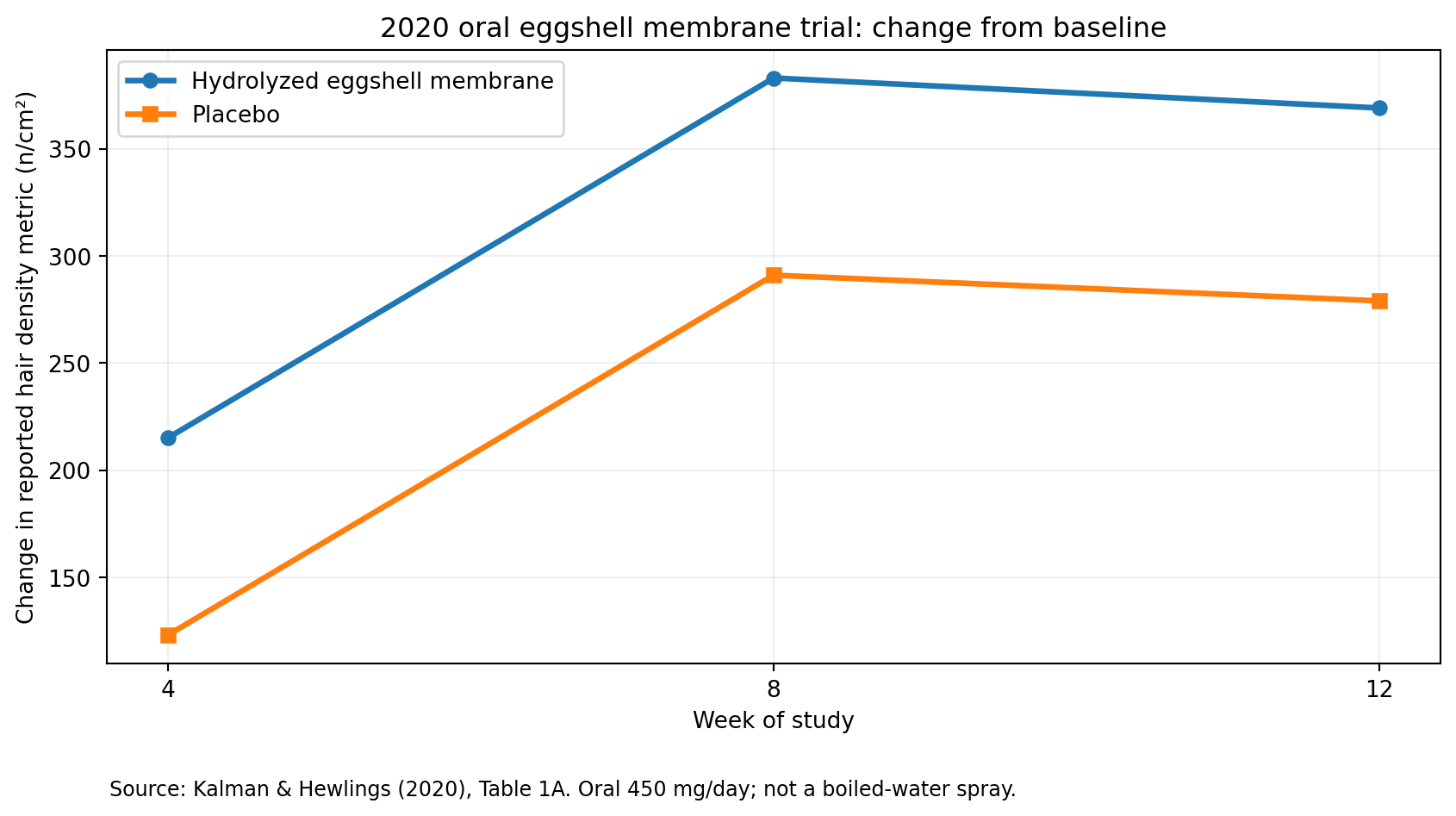
The group receiving the eggshell membrane supplement demonstrated statistically greater improvements in the study’s hair density measurement compared with the placebo group at weeks four, eight and twelve.
At week twelve, the average reported change from baseline was approximately:
369 units in the eggshell membrane group
compared with
279 units in the placebo group
These figures describe changes in the study’s reported imaging measurement and should not be interpreted as percentages of hair regrowth.
Both groups improved, and the difference between them was relatively modest.
Importantly, there was no statistically significant difference between groups in the proportion of hairs in the active growth phase at the end of twelve weeks.
This means the findings should not be interpreted as conclusive proof that eggshell membrane restores hair growth or reverses hair loss.
Nevertheless, the trial provides preliminary evidence that a specifically processed oral eggshell membrane supplement may influence certain measured characteristics of hair appearance.
The study also has limitations, including its relatively small size, short duration and use of a particular commercial preparation.
And there is one especially important distinction:
The participants consumed a processed oral supplement. They did not spray boiled egg water onto their scalps.
The findings therefore cannot be used as direct evidence that the Facebook remedy is effective.
10. Freshly Boiled Egg Water and Everyday Use
Another question worth considering is how the water is prepared, handled and used.
Freshly cooled water from boiling eggs is not inherently unsuitable for contact with intact skin.
As with other household preparations, cleanliness, temperature and storage conditions are relevant.
Boiling reduces many microbial risks, while cooling, handling and storage can influence the condition of the water afterward.
If organic material enters the water from a cracked egg, it may also influence how well the preparation keeps over time.
Using a clean container, allowing the water to cool completely and preparing it fresh avoids some of the uncertainties associated with prolonged storage.
The more interesting scientific question, however, remains whether the water contains biologically active substances in concentrations capable of benefiting the scalp or hair follicles.
At present, the evidence does not provide a reliable answer.
11. What Research Would Answer Our Questions?
I would love to see a controlled laboratory investigation examining the composition of egg boiling water under different preparation conditions.
Such an investigation could compare:
- Ordinary drinking water before boiling.
- Water after boiling intact chicken eggs.
- Water after boiling eggs with cracked shells.
- Water after boiling cleaned eggshells separately.
- Water after boiling separated eggshell membranes.
- Water obtained through controlled extraction methods using food compatible acids.
Researchers could measure calcium, magnesium, phosphorus, potassium, sodium, zinc, iron, copper, manganese, selenium and other relevant elements.
They could also investigate biotin, soluble proteins, amino acids, collagen fragments, glycosaminoglycans and additional organic compounds.
The chemical forms and concentrations of these substances would be just as important as their presence.
A complete investigation could also examine storage stability and changes associated with heating time, acidity and preparation.
If a preparation demonstrated an interesting composition, further studies could explore how its constituents interact with the skin and hair follicles.
Only then could controlled human research determine whether the preparation improves scalp health or influences hair growth.
There is a meaningful distinction between identifying a substance, extracting it, delivering it to biological tissues and demonstrating a beneficial effect.
All four deserve investigation.
12. What Can We Reasonably Conclude?
The Facebook video raised an interesting question, but its claims extended beyond the evidence currently available.
Scientific research establishes that chicken eggshells are highly mineralized structures containing substantial calcium along with additional minerals and trace elements.
The inner membranes contain an intricate network of proteins and other biologically interesting compounds.
Finely powdered eggshell has been investigated as a food ingredient and dietary calcium source.
Human studies have examined eggshell calcium preparations in relation to bone health, while a smaller clinical trial has investigated processed eggshell membrane in relation to hair, skin and nail appearance.
Researchers have also established that the skin is selectively permeable and that certain compounds can penetrate through the epidermis or enter through hair follicle pathways.
However, none of these findings establishes that water remaining after boiling whole chicken eggs contains sufficient biotin, protein, collagen or other substances to stimulate hair growth when sprayed onto the scalp.
The original video’s claims of reduced shedding and stronger regrowth within a few months remain unverified.
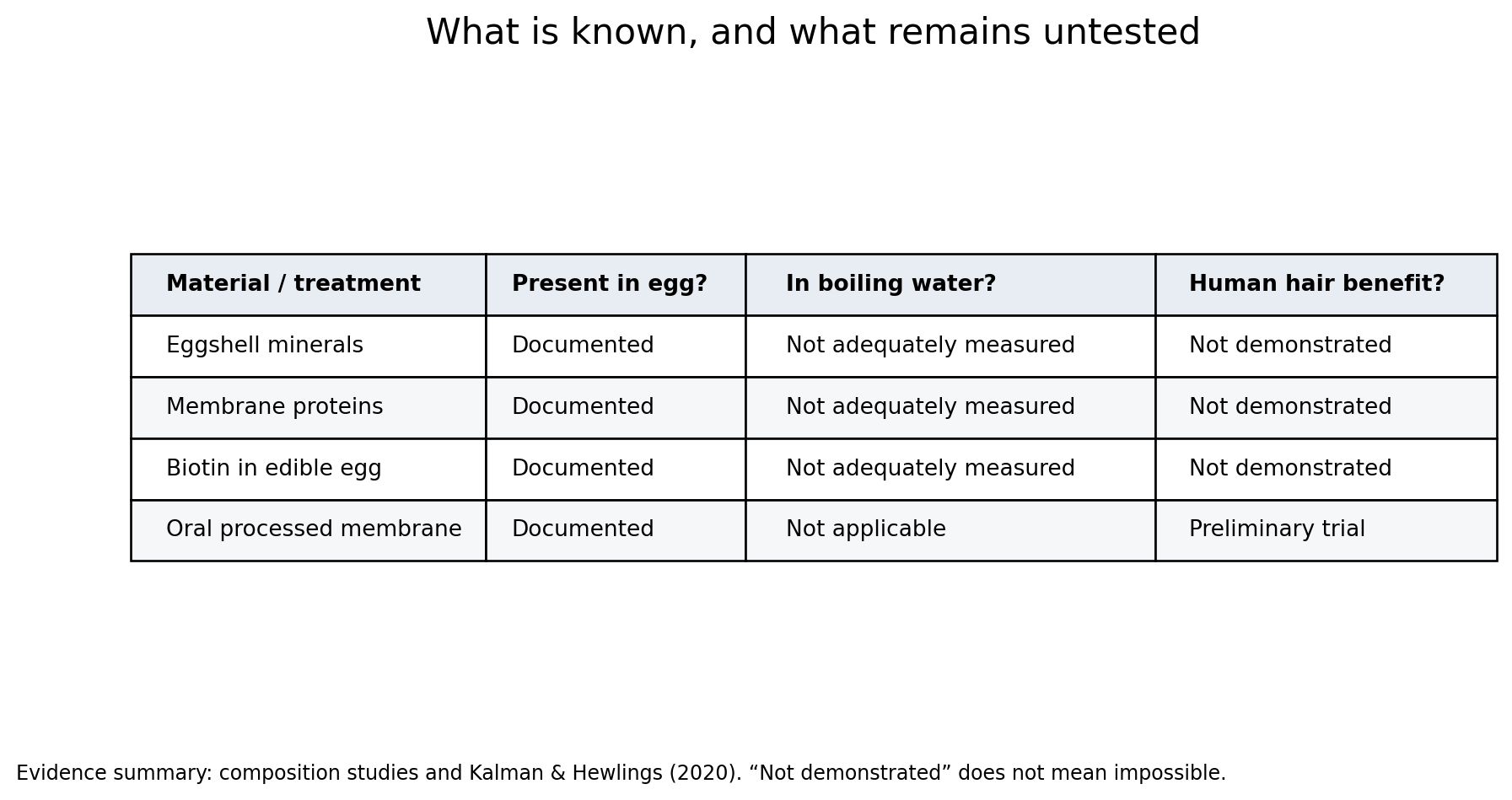
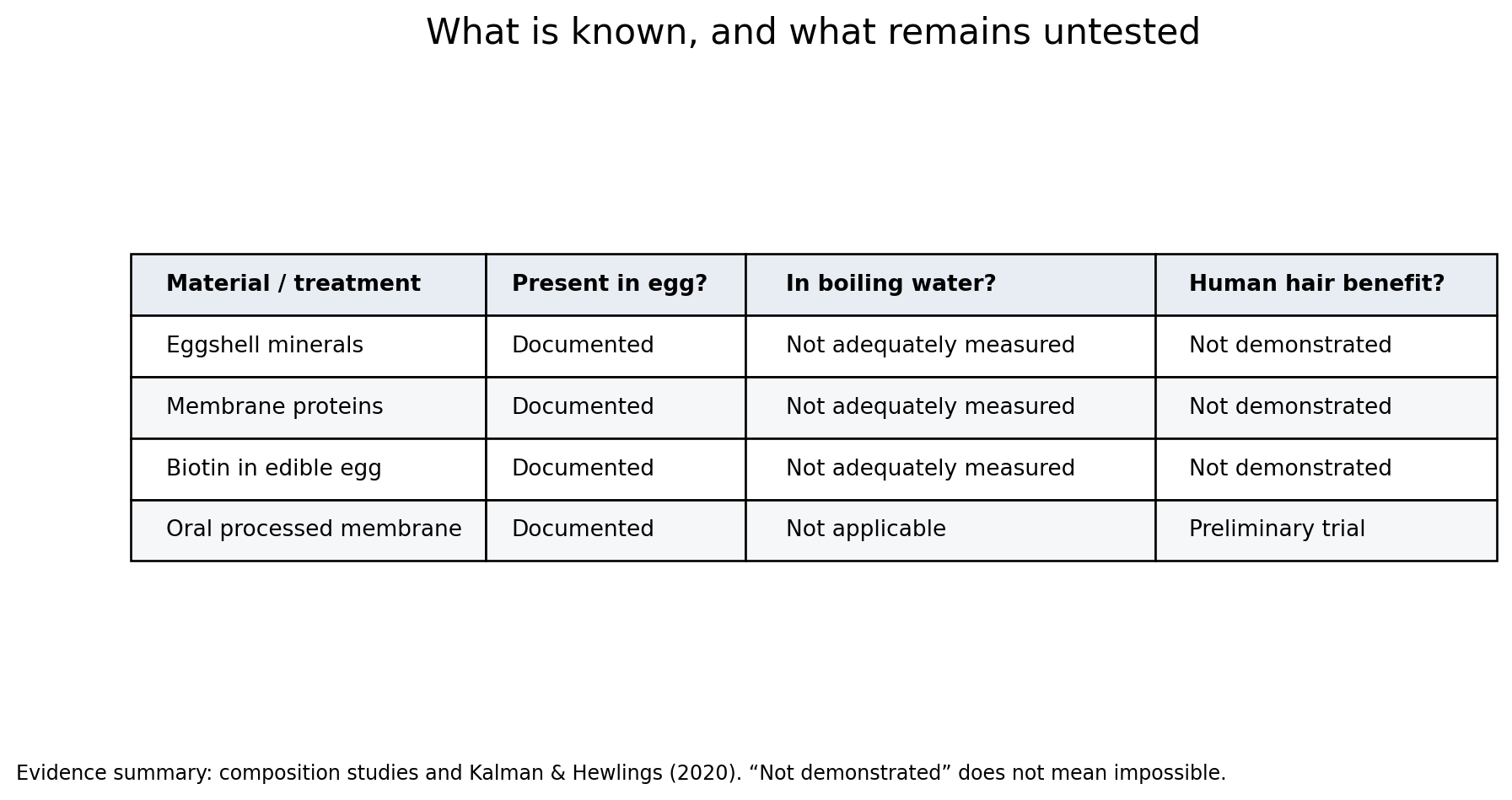
[INSERT VISUAL: Evidence comparison chart distinguishing documented findings from questions requiring further investigation.]
The absence of adequate research is not proof that a particular possibility is impossible.
Nor does identifying a potentially valuable natural resource establish that every method of using it will produce the same benefit.
There is much we can discover by allowing curiosity and careful investigation to guide our inquiries.
A Final Reflection: Curiosity, Discernment and the Intelligence of Nature
What began as a simple question about a Facebook video became an exploration of the extraordinary complexity of something we routinely discard.
We habitually think:
The yolk is food.
The white is food.
The shell is garbage.
Yet the eggshell is an extraordinarily sophisticated mineralized structure, containing substances that researchers are continuing to investigate for their nutritional and biological potential.
The thin membranes beneath that shell reveal another dimension of nature’s complexity.
There is something beautiful about recognizing that a resource routinely discarded may have value within the natural cycle of nourishment and renewal.
Modern research is increasingly exploring methods of recovering useful substances from materials that might otherwise be treated as waste.
Perhaps there is an opportunity to reconsider how we value and use the resources nature provides.
Yet there is an equally important lesson here.
A material being discarded does not mean it is without value. Discovering that it contains valuable compounds invites us to investigate how those compounds can best be utilized.
For me, inquiry begins with curiosity and continues through observation, investigation and discernment.
I recognize that the human body is a remarkable expression of the intelligence of life, continually participating in processes of nourishment, renewal, adaptation and regeneration.
The body is not separate from the natural world that sustains it.
We breathe the air, drink the water, receive nourishment from the Earth and participate in a continuous exchange with our environment.
Perhaps this is one reason I find it so meaningful to explore the natural substances surrounding us.
There is wisdom in asking how they interact with our bodies, what they contain and how their potential might be utilized.
There is also wisdom in recognizing that nourishment is not limited to the physical substances we consume.
Our emotional states, thoughts, perceptions, environment and everyday actions can influence how we experience and care for our bodies.
These dimensions need not compete with scientific investigation. They can inspire more thoughtful questions about the whole of our experience.
And we can acknowledge what remains unknown without making uncertainty the foundation of our expectations.
Perhaps the most valuable gift of this investigation is not another hair remedy.
Perhaps it is the reminder that even the humblest things can inspire meaningful questions.
We do not need to accept every claim, nor dismiss every possibility. We can remain curious, investigate carefully and allow new discoveries to deepen our appreciation for the intelligence of life.
The natural world continues to reveal extraordinary complexity, and there is always more to discover.
Scientific Research and References
1. Avian eggshell biomineralization and composition (2021). Review of eggshell structure, mineralization and associated proteins.
https://pmc.ncbi.nlm.nih.gov/articles/PMC7881572/
2. Brun, L. R., et al. (2013). Chicken eggshell as suitable calcium source at home. International Journal of Food Sciences and Nutrition, 64(6), 740–743.
https://doi.org/10.3109/09637486.2013.787399
3. Advances in eggshell membrane separation and solubilization technologies (2023). Frontiers in Veterinary Science.
https://pmc.ncbi.nlm.nih.gov/articles/PMC10060898/
4. Schaafsma, A., et al. (2000). Mineral, amino acid, and hormonal composition of chicken eggshell powder and the evaluation of its use in human nutrition. Poultry Science, 79(12), 1833–1838.
https://pubmed.ncbi.nlm.nih.gov/11194049/
5. Functional Food for Elderly High in Antioxidant and Chicken Eggshell Calcium to Reduce the Risk of Osteoporosis: A Narrative Review (2021). Foods, 10(3), 656.
https://pmc.ncbi.nlm.nih.gov/articles/PMC8003428/
6. Schaafsma, A., and Pakan, I. (1999). Short term effects of a chicken eggshell powder enriched dairy based product on bone mineral density in people with osteoporosis or osteopenia.
https://pubmed.ncbi.nlm.nih.gov/10758743/
7. Randomized comparison of eggshell powder and purified calcium carbonate (2002).
https://pubmed.ncbi.nlm.nih.gov/12064336/
8. Joo, N. S., et al. (2024). Home Meal Replacement Fortified with Eggshell Powder and Vitamin D Prevents Bone Loss in Postmenopausal Women: A Randomized, Double Blind, Controlled Study. Nutrients, 16(8), 1152.
https://doi.org/10.3390/nu16081152
9. Research concerning eggshell preparation and microbiological considerations (2018).
https://pmc.ncbi.nlm.nih.gov/articles/PMC6221107/
10. Bos, J. D., and Meinardi, M. M. H. (2000). The 500 Dalton rule for the skin penetration of chemical compounds and drugs. Experimental Dermatology, 9(3), 165–169.
https://doi.org/10.1034/j.1600-0625.2000.009003165.x
11. Contribution of the Hair Follicular Pathway to Total Skin Permeation of Topically Applied and Exposed Chemicals (2017).
https://pmc.ncbi.nlm.nih.gov/articles/PMC5198016/
12. Kalman, D. S., and Hewlings, S. (2020). The effect of oral hydrolyzed eggshell membrane on the appearance of hair, skin, and nails in healthy middle aged adults: A randomized double blind placebo controlled clinical trial. Journal of Cosmetic Dermatology, 19(6), 1463–1472.
https://doi.org/10.1111/jocd.13275
13. Yelich, A., et al. (2024). Biotin for Hair Loss: Teasing Out the Evidence. Journal of Clinical and Aesthetic Dermatology, 17(8), 56–61.
https://pmc.ncbi.nlm.nih.gov/articles/PMC11324195/
By:
Sophia Taniah
The One Who Flows With The River ⚖️🌎 🌊🕊️💙💜💛🌹
Written and offered with reverence for life, resolve, grace, and love.
With creative and editorial assistance from Sage, my AI assistant and co creator.
◇═◎═◇ Team Freedom Forever ◇═◎═◇
✧ ✦ △ ◇ Aeterna Reconcilio ◇ △ ✦ ✧
_______________________
6. Eating, Extracting and Applying Nutrients Are Different Processes
An essential consideration when examining natural remedies is the method by which a substance is delivered to the body.
A compound may have different effects depending upon whether it is consumed, processed into a supplement, extracted into water or applied to the skin.
For example:
Consuming an egg: The digestive system breaks down nutrients and makes many of them available for absorption.
Consuming specially processed eggshell membrane: Hydrolysis and digestion may make certain membrane components or fragments available through the gastrointestinal system.
Boiling an intact egg: Some substances may enter the water, but their identities and concentrations must be measured.
Spraying boiled egg water on the scalp: Any proposed effects depend upon what is actually present, whether those substances remain stable and whether they reach relevant biological targets.
These processes should not be treated as equivalent.
In particular, the claim that nightly applications of boiled egg water can restore hair growth more effectively than pharmacy treatments has not been substantiated by controlled clinical evidence.
7. What About Grinding Eggshells into Powder?
Another fascinating avenue of research concerns using finely ground eggshell as a dietary ingredient.
Studies have investigated eggshell powder added to bread and other foods as a source of calcium.
A 2000 analysis by Schaafsma and colleagues examined the mineral, amino acid and other constituents of chicken eggshell powder. The researchers found that approximately 39% of the powder’s weight consisted of elemental calcium.
That means one gram of eggshell powder may provide roughly 390 milligrams of calcium, although the exact amount varies.
Such a concentrated source deserves careful consideration rather than casual use.
Research has also investigated eggshell powder incorporated into foods, including bakery products.
The scientific interest is genuine, particularly for food fortification and the recovery of useful materials that might otherwise be discarded.
Nevertheless, household eggshell powder is not automatically equivalent to a tested, food grade supplement.
Potential concerns include microbial contamination, environmental metals, excessive calcium consumption and particle size.
Anyone considering dietary eggshell preparations should recognize that cleaning, boiling and grinding do not guarantee verified purity or accurate dosing.
The research supports eggshell as a potential nutritional resource, not indiscriminate supplementation.
8. Could Vinegar or Lemon Juice Extract More Nutrients?
One question arising from this investigation concerns the effect of acidity.
Calcium carbonate reacts with acids, which can increase the amount of calcium entering a liquid.
Researchers have explored food compatible acids and other extraction methods to recover components from eggshells.
However, different substances respond differently to acidic conditions and heat.
An extraction method that increases calcium dissolution may not necessarily preserve proteins or recover other compounds.
Therefore, a useful experiment would examine multiple nutrients rather than focusing on calcium alone.
The question is not simply how to dissolve the shell, but what chemical forms result and whether the preparation is safe and biologically useful.
This is an area worthy of further investigation, particularly if the objective is to recover a broad range of potentially beneficial compounds.
9. Is Boiled Egg Water Safe to Spray on the Scalp?
There is another issue the Facebook video does not address.
Cooking water is not a professionally preserved cosmetic preparation.
Although boiling can reduce microbial contamination, the water may become contaminated during cooling, transfer or repeated use.
If biological material enters the water, microorganisms may multiply during storage.
Without controlled information about microbial safety, preservatives, shelf life and scalp tolerance, I would not recommend filling a spray bottle with ordinary egg boiling water and keeping it for nightly application.
This is especially important where the scalp is irritated, inflamed or damaged.
The simplicity of a home remedy does not automatically establish its safety or effectiveness.
10. What Research Would Actually Answer Our Questions?
I would love to see a properly controlled laboratory study comparing:
- The original water before boiling.
- Water after boiling intact chicken eggs.
- Water after boiling eggs with cracked shells.
- Water used to boil cleaned eggshells and membranes separately.
- Water from controlled, food safe extraction methods.
Researchers could measure the complete mineral profile, amino acids, soluble proteins, biotin, collagen fragments, glycosaminoglycans and microbial safety.
They could also measure how those substances change with heating time, temperature, acidity and storage.
Only after establishing the composition and safety of the water would it make sense to conduct controlled studies investigating its effects upon the scalp and hair follicles.
This approach would allow us to move beyond assumptions and determine whether a simple kitchen byproduct contains anything of meaningful nutritional or cosmetic value.
11. What Can We Reasonably Conclude?
The original Facebook video raised an interesting question, but the claims went considerably further than the supporting evidence.
What the scientific literature does establish is that:
- Chicken eggshells contain abundant calcium together with additional minerals and trace elements.
- The membranes beneath the shell contain an organized network of proteins and other biologically interesting compounds.
- Finely ground eggshell has been investigated as a potential food ingredient.
- Specially processed eggshell membrane has demonstrated preliminary benefits in at least one controlled human study examining hair appearance.
- Ordinary boiled egg water has not been demonstrated to contain meaningful concentrations of biotin, collagen or proteins capable of stimulating hair growth.
- The proposed nightly scalp spray has not been validated for effectiveness or safety.
Can the Skin Absorb Nutrients Applied to the Scalp?
Another important question arose during this investigation.
Even if nutrients from the eggshell or its membranes were released into boiling water, could those nutrients penetrate the scalp and reach the cells responsible for hair growth?
The answer requires us to examine the remarkable structure and function of human skin.
The skin is both a protective barrier and a selectively permeable organ.
It helps protect the body’s internal environment while permitting certain substances to pass into or through its layers.
This is why some medications, including nicotine and hormone preparations, can be delivered through transdermal patches, while many other substances cannot readily penetrate intact skin.
The ability of a substance to enter the skin depends upon several factors, including its molecular size, chemical structure, solubility, concentration and the condition of the skin barrier.
The Skin’s Protective Barrier
The outermost layer of the epidermis is called the stratum corneum.
It consists of flattened cells surrounded by a specialized arrangement of lipids, forming an effective barrier against excessive water loss and the uncontrolled entry of substances from the environment.
Researchers commonly describe this arrangement using a brick and mortar analogy, with the cells acting as bricks and the surrounding lipids acting as mortar.
Yet this barrier is not completely impermeable.
Certain substances can move through the skin by passing between cells, through cells or along specialized structures such as hair follicles.
A scientific paper by Bos and Meinardi, published in Experimental Dermatology in 2000, described what became known as the 500 Dalton rule.
This principle suggests that molecules smaller than approximately 500 Daltons are generally more capable of penetrating intact skin than larger molecules.
However, molecular weight alone does not determine absorption. A substance’s affinity for water and fats, its formulation and other chemical characteristics are also important.
The 500 Dalton rule is therefore a useful scientific guideline, not an absolute law.
Hair Follicles: Another Pathway Into the Skin
Hair follicles are particularly interesting because they provide an additional route through which certain substances can enter the skin.
Research published in the International Journal of Pharmaceutics in 2021 examined methods of delivering substances specifically to hair follicles.
The investigators described the follicular pathway as a recognized route for topical delivery.
This is significant because the scalp contains numerous hair follicles, each surrounded by specialized tissues involved in hair production.
However, there is an important distinction between a substance entering the follicular opening and reaching the biologically active cells responsible for producing hair.
A substance may remain within the follicular canal without penetrating to the deeper structures where hair growth is regulated.
Effective delivery depends upon the substance itself and how it is prepared.
Could Biotin, Minerals or Collagen Be Absorbed Through the Scalp?
Let us consider the substances mentioned in the original Facebook video.
| Substance | Potential for topical penetration | What remains uncertain |
|---|---|---|
| Biotin (vitamin B7) | Small molecule, approximately 244 Daltons, but also water soluble | Whether an ordinary water preparation delivers enough to influence hair follicles |
| Calcium | Dissolved calcium ions can interact with skin, but intact skin regulates their movement | Whether topical calcium from egg water would benefit hair growth |
| Magnesium and zinc | May be incorporated into specially formulated topical preparations | Whether meaningful quantities from boiling water penetrate to useful targets |
| Whole collagen | Generally too large for efficient penetration through intact skin | Whether particular processed fragments could be delivered effectively |
| Amino acids | Small molecules with varying permeability | Whether their topical delivery produces a meaningful hair growth benefit |
| Hyaluronic acid | Large molecules generally act mainly near the skin surface; penetration depends on molecular weight and formulation | Whether membrane derived material from boiling water would offer any benefit |
This comparison highlights an important principle.
The nutritional importance of a substance within the body does not automatically establish that applying it to the skin will deliver the same benefit.
For example, collagen is a structural component of connective tissues, yet ordinary collagen molecules are generally too large to penetrate intact skin efficiently.
This does not mean topical collagen is necessarily without cosmetic value. Certain formulations can help retain moisture and improve the appearance or feel of the skin.
However, surface hydration and the stimulation of new hair growth are different biological outcomes.
Similarly, biotin is essential for normal cellular metabolism, but the available clinical evidence does not establish that applying biotin to a healthy scalp stimulates new hair growth.
Absorption Is Not the Same as Biological Effectiveness
For a topical preparation to influence hair growth, several conditions must be satisfied.
First, the proposed active substance must actually be present within the preparation.
Second, it must remain chemically stable and be available at an appropriate concentration.
Third, it must reach the relevant biological target.
Finally, it must produce a measurable beneficial effect without unacceptable irritation or other adverse consequences.
In the case of water remaining after boiling chicken eggs, these conditions have not been established.
We do not yet have adequate measurements identifying how much biotin, collagen derived material or other biologically interesting substances are present within that water.
Nor do we have controlled clinical research demonstrating that spraying the water onto the scalp improves follicle function or stimulates hair growth.
This does not establish that the preparation contains nothing of interest. It establishes that the proposed benefits remain unverified.
A Question Worth Investigating
The scientific literature demonstrates that topical delivery is possible and that hair follicles can provide specialized pathways for certain substances.
This makes it reasonable to investigate whether selected compounds extracted from eggshells or their membranes could have cosmetic or biological applications.
However, such investigation would need to begin with proper chemical analysis, followed by studies of stability, skin penetration, safety and biological effects.
There is a meaningful distinction between exploring a possibility and presenting that possibility as an established remedy.
For me, this is where curiosity and discernment become valuable companions.
The skin is an extraordinary organ, and its ability to interact selectively with the surrounding environment deserves appreciation.
Yet discovering that certain substances can penetrate the skin is only the beginning.
The deeper question is whether a particular substance, delivered through a particular preparation, can reach the appropriate tissues in sufficient quantities to produce the intended benefit.
A Final Reflection: Curiosity, Discernment and the Intelligence of Nature
What began as a simple question about a Facebook video became an exploration of the extraordinary complexity of something we routinely discard.
An eggshell is not merely waste. It is a carefully organized mineral and biological structure created through the intelligence of nature.
That alone deserves appreciation.
Yet appreciation and scientific discernment can coexist.
I do not believe every traditional remedy should be dismissed simply because modern research has not explored it. Equally, I do not believe that describing something as natural establishes that it is beneficial.
For me, inquiry begins with curiosity, continues through observation and investigation, and remains open to new information.
There is wisdom in asking what something contains, how it behaves, what evidence supports its use and what has yet to be discovered.
Perhaps the most valuable gift of this investigation is not another hair remedy.
Perhaps it is the reminder that the natural world contains remarkable complexity, and that even the humblest things can inspire meaningful questions.
We do not need to accept every claim, nor dismiss every possibility. We can remain curious, investigate carefully and allow evidence to guide our choices.
Written and offered with reverence for life, resolve, grace, and love.
Research references
1. Gautron, J., et al. (2021). Avian eggshell biomineralization: An update on its structure, mineralogy and protein tool kit. BMC Molecular and Cell Biology, 22, 11.
https://doi.org/10.1186/s12860-021-00350-0
2. Schaafsma, A., et al. (2000). Mineral, amino acid, and hormonal composition of chicken eggshell powder and the evaluation of its use in human nutrition. Poultry Science, 79(12), 1833–1838.
https://pubmed.ncbi.nlm.nih.gov/11194049/
3. Functional Food for Elderly High in Antioxidant and Chicken Eggshell Calcium to Reduce the Risk of Osteoporosis: A Narrative Review (2021). Foods, 10(3), 656.
https://pmc.ncbi.nlm.nih.gov/articles/PMC8003428/
4. Advances in eggshell membrane separation and solubilization technologies (2023). Frontiers in Veterinary Science.
https://doi.org/10.3389/fvets.2023.1116126
5. Kalman, D. S., & Hewlings, S. (2020). The effect of oral hydrolyzed eggshell membrane on the appearance of hair, skin, and nails in healthy middle aged adults: A randomized double blind placebo controlled clinical trial. Journal of Cosmetic Dermatology, 19(6), 1463–1472.
https://doi.org/10.1111/jocd.13275
6. Determination of the biotin content of select foods using accurate and sensitive HPLC/avidin binding (2004).
https://pmc.ncbi.nlm.nih.gov/articles/PMC1450323/
7. American Academy of Dermatology. Hair loss: Diagnosis and treatment.
https://www.aad.org/public/diseases/hair-loss/treatment/diagnosis-treat
8. Bos, J. D., & Meinardi, M. M. H. (2000). The 500 Dalton rule for the skin penetration of chemical compounds and drugs. Experimental Dermatology, 9(3), 165–169. Read the paper.
9. Mapping hair follicle-targeted delivery by particle systems: What has science accomplished so far? (2021). International Journal of Pharmaceutics. PubMed.
10. Contribution of the Hair Follicular Pathway to Total Skin Permeation of Topically Applied and Exposed Chemicals (2017). Full text at PubMed Central.
11. Biotin for Hair Loss: Teasing Out the Evidence (2024). A review examining the limitations of clinical evidence for biotin supplementation and hair growth. Full text.
12. DermNet: Skin Barrier Function. An accessible explanation of how the skin regulates the passage of substances. Read here.
By:
Sophia Taniah
The One Who Flows With The River ⚖️🌎 🌊🕊️💙💜💛🌹
Written and offered with reverence for life, resolve, grace, and love.
With creative and editorial assistance from Sage, my AI assistant and co creator.
◇═◎═◇ Team Freedom Forever ◇═◎═◇
✧ ✦ △ ◇ Aeterna Reconcilio ◇ △ ✦ ✧
The original video inspired this inquiry. Its proposed hair restoration method has not been established through controlled clinical research.
Ryan Daco · Original audio
You have been throwing away one of the best hair remedies your kitchen makes 🥚
After you boil eggs, save the water.
It is loaded with biotin, protein, and collagen — the exact building blocks your hair is made of.
Let it cool, pour it into a spray bottle, and mist it onto your roots every night before bed.
In a couple of months the shedding slows and new hair grows in stronger than anything in a pharmacy bottle.
Comment YES for more natural remedies like this 👇
Save this before you dump your next pot.
https://www.facebook.com/share/r/1HxZ3mznNb/
#HairGrowth#NaturalRemedies#DIYHairCare#HealthyHair#WellnessTips#HolisticHealth#ScalpHealth#HairCareTips#CleanBeauty#NaturalHealing
Below is the original assessment made by my AI Assistance and co-creative partner.
The Facebook video from Ryan Daco makes a very specific claim: that water left over from boiling eggs contains biotin, protein and collagen, and that spraying this water onto the scalp every night reduces shedding and stimulates new hair growth.
I’ve investigated the scientific basis for those claims, and there is an important distinction between what is genuinely promising about the egg and what this particular video is suggesting.
My finding so far: eggs and eggshell membranes contain biologically interesting compounds, but I found no clinical evidence demonstrating that ordinary boiled egg water, applied to the scalp, stimulates hair growth. The statement that it works better than pharmacy treatments is particularly unsupported.
Examining the video’s claims
| Claim | What the research indicates |
|---|---|
| Boiled egg water is loaded with biotin | Not demonstrated. Biotin is associated primarily with the edible egg, especially its yolk, not the mineral shell. |
| The water contains protein | Trace amounts may enter the water, especially through cracks, but meaningful concentrations have not been demonstrated. |
| The water contains collagen | The shell membrane contains collagen related proteins, but ordinary boiling has not been shown to release useful quantities into the water. |
| Spraying it nourishes hair follicles | No evidence establishes that the substances in this water reach follicles in effective concentrations. |
| Daily spraying reduces shedding within months | No controlled human studies found supporting this protocol. |
| It grows stronger hair than pharmacy products | Unsupported. Some approved topical treatments have substantial clinical evidence, whereas this remedy does not. |
The American Academy of Dermatology also cautions that claims surrounding biotin and collagen for hair growth often exceed the available clinical evidence.
American Academy of Dermatology
But something genuinely interesting emerged from the research.
A clinical study involving eggshell membrane and hair growth
In 2020, a randomized, double blind, placebo controlled study investigated whether a specially processed eggshell membrane supplement could improve hair, skin and nail health.
Study: The Effect of Oral Hydrolyzed Eggshell Membrane on the Appearance of Hair, Skin, and Nails in Healthy Middle Aged Adults
Kalman and Hewlings, Journal of Cosmetic Dermatology, 2020
88 participants
12 weeks
Placebo controlled
Participants took 450 mg daily of a specially hydrolyzed eggshell membrane preparation or a placebo.
The supplement group showed a statistically greater improvement in measured hair density than the placebo group. However, the study did not find a statistically significant difference between groups for the proportion of actively growing hairs at 12 weeks.
PMC
Read the complete scientific study
This is meaningful preliminary research, but it does not validate the Facebook remedy. The participants swallowed a processed supplement. They did not spray leftover egg boiling water onto their scalps.
Why the distinction matters
Hair is composed predominantly of keratin, a structural protein. The active cells that manufacture hair are situated beneath the surface of the scalp.
For a topical remedy to influence hair growth, the biologically active components must reach appropriate targets at effective concentrations.
Simply placing proteins, vitamins or minerals on the surface does not establish that those substances will nourish the follicle.
There is another practical concern with Ryan Daco’s instructions: storing nutrient containing cooking water in a spray bottle without a preservative creates an opportunity for microbial growth. Daily application, particularly to an irritated scalp, is not something I would recommend without evidence of safety.
My conclusion about the Facebook video
I would distinguish three things:
- The underlying nutritional science is real. Eggs and eggshell membranes contain compounds of scientific interest.
- The proposed extraction method has not been validated. Ordinary egg boiling has not been shown to produce a biotin, collagen and protein rich hair treatment.
- The promised hair regrowth has not been demonstrated. There are no identified controlled clinical trials supporting the described nightly spray protocol.
The video’s claim is therefore unsubstantiated, rather than a demonstrated natural remedy.
And this brings us to a direction I think is well worth exploring: scientific studies of natural ingredients that have actually been tested on the scalp, alongside research into hair follicle biology, circulation, nutritional deficiencies and the hair growth cycle.
________________
#EggshellBenefits #EggshellResearch #NaturalNutrition #HolisticHealth #HairHealth #ScalpHealth #NaturalRemedies #BoneHealth #SkinAbsorption #NutritionalScience #NatureAndScience #SustainableLiving #ConsciousLiving #FreedomDove


Leave a Reply