
In Quebec, the subject matter jurisdiction of a court can be challenged at any time, even after a judgment has been rendered. This principle is rooted in the fundamental nature of subject matter jurisdiction, which ensures that a court has the authority to hear the type of case presented to it. If a court lacks this jurisdiction, any decision it makes is considered void and can be contested at any stage of the proceedings³⁴.
For instance, the Quebec Code of Civil Procedure grants the Court of Québec exclusive jurisdiction over civil disputes where the amount in question is less than $85,000³. If it is later discovered that a case falls outside this jurisdiction, the issue can be raised and the case may be dismissed or transferred to the appropriate court³.
If you have a specific case or scenario in mind, it might be beneficial to consult with a legal expert who can provide detailed advice based on the particulars of your situation. Is there a particular aspect of jurisdiction you’re concerned about?
Source: Conversation with Copilot, 2024-10-14
(1) Reference re Code of Civil Procedure (Que.), art. 35, 2021 SCC 27 …. https://www.canlii.org/en/ca/scc/doc/2021/2021scc27/2021scc27.html.
(2) CQLR c C-25.01 | Code of Civil Procedure – CanLII. https://www.canlii.org/en/qc/laws/stat/cqlr-c-c-25.01/latest/cqlr-c-c-25.01.html.
(3) The Court of Québec’s jurisdiction over civil matters must be revised …. https://www.osler.com/en/insights/updates/the-court-of-quebec-s-jurisdiction-over-civil-matters-must-be-revised-says-the-scc/.
(4) The Full Monte: judicial review, jurisdiction & justiciability. https://canliiconnects.org/en/commentaries/70584.
(5) The Court of Québec – courduquebec.ca. https://courduquebec.ca/fileadmin/cour-du-quebec/centre-de-documentation/Publications/en/BrochureCQEn.pdf.
(6) Q&A: conducting litigation in Canada (Quebec) – Lexology. https://www.lexology.com/library/detail.aspx?g=b7d0bf36-8b7c-4dcf-96f1-3787a4439227.
(7) undefined. https://canlii.ca/t/8smj.
(8) undefined. https://canlii.ca/t/5694z.
(9) undefined. https://canlii.ca/t/jgnxz.
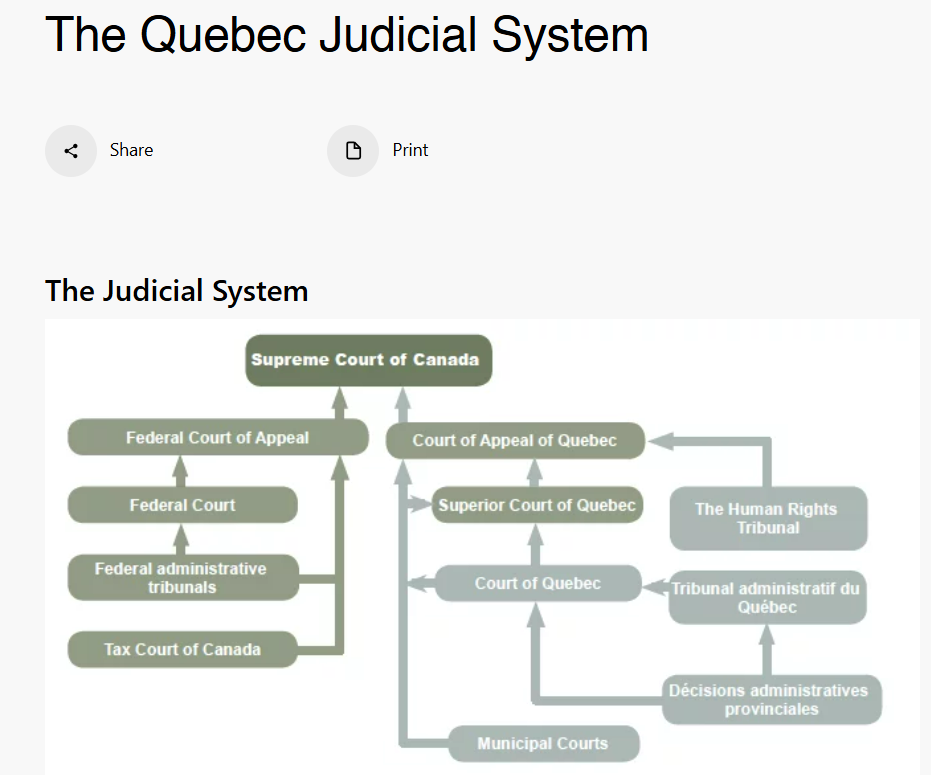
To read the levels of court use this link:
https://educaloi.qc.ca/en/capsules/the-quebec-judicial-system/
Quebec’s judicial system is structured into several levels of courts, each with specific jurisdictions and functions:
1. **Municipal Courts**: These courts handle cases related to municipal by-laws, minor criminal offenses, and civil disputes involving small amounts of money.
2. **Court of Québec**: This court is divided into three main divisions:
– **Civil Division**: Handles civil cases involving claims up to $100,000.
– **Criminal and Penal Division**: Deals with less serious criminal offenses and penal matters.
– **Youth Division**: Manages cases involving minors, including youth protection and criminal cases where the accused is a minor.
3. **Superior Court of Québec**: This court has broad jurisdiction over civil cases involving claims over $100,000, family law matters (such as divorce), and serious criminal offenses. It also handles class actions and extraordinary remedies like injunctions.
4. **Court of Appeal of Quebec**: This is the highest court in the province, which hears appeals from the Superior Court and the Court of Québec. It reviews decisions to ensure they comply with the law.
Each of these courts plays a crucial role in ensuring justice is served across various types of legal matters¹³⁴.
If you have any specific questions about a particular court or type of case, feel free to ask!
Source: Conversation with Copilot, 2024-10-14
(1) The Quebec Judicial System – Éducaloi. https://educaloi.qc.ca/en/capsules/the-quebec-judicial-system/.
(2) Going to Court… But Which One? | In the News | Éducaloi. https://bing.com/search?q=different+levels+of+courts+in+Quebec.
(3) Going to Court… But Which One? | In the News | Éducaloi. https://educaloi.qc.ca/en/legal-news/going-to-court-but-which-one/.
(4) Court of Quebec – Wikipedia. https://en.wikipedia.org/wiki/Court_of_Quebec.
(5) Civil Division of the Court of Quebec – Éducaloi. https://educaloi.qc.ca/en/capsules/civil-division-of-the-court-of-quebec/.
(6) undefined. https://courduquebec.ca/en/2.
Yes, Quebec law includes similar definitions for the term “person.” Here are some examples from Quebec’s legal framework:
1. **Civil Code of Quebec**:
– **Article 1**: Defines a “person” as a natural person or a legal person (which includes corporations, partnerships, and other entities).
2. **Interpretation Act (Quebec)**:
– **Section 61**: States that the word “person” includes natural persons, legal persons, partnerships, and associations.
[warning: when i looked up the Interpretations Act (Quebec) I couldn’t find this term}
3. **Business Corporations Act (Quebec)**:
“A business corporation (also called a “company”) is quite different from other business structures because it is a “legal person.” This means that a company exists separately from the people who own and operate it.”
– **Section 1**: Defines a “person” to include individuals, corporations, partnerships, trusts, and other legal entities.
These definitions are similar to those found in the Alabama Code, where “person” can refer to both natural persons and various types of legal entities.
If you need more detailed information or specific legal advice, it might be helpful to consult a legal professional familiar with Quebec law. Is there a particular context or legal matter you’re looking into?
Source: Conversation with Copilot, 2024-10-14
(1) Section 1-1-1 – Meaning of certain words and terms, Ala. Code § 1-1-1 …. https://casetext.com/statute/code-of-alabama/title-1-general-provisions/chapter-1-construction-of-code-and-statutes/section-1-1-1-meaning-of-certain-words-and-terms.
(2) Alabama Code § 1-1-1 (2023) – Meaning of Certain Words … – Justia Law. https://law.justia.com/codes/alabama/title-1/chapter-1/section-1-1-1/.
(3) Code Of Alabama – Alabama Legislature. https://www.legislature.state.al.us/legacy/CodeOfAlabama/1975/Coatoc.htm.
The term “Quebec Citizen” is not explicitly defined in Quebec laws. However, the concept of a “resident of Quebec” is more commonly used and is defined in various legal contexts. For example, the **Regulation respecting the definition of resident in Quebec** under the Education Act provides criteria for determining residency status for educational purposes¹. Similarly, the **Civil Code of Quebec** and other provincial regulations outline what constitutes residency in Quebec for different legal matters²³.
If you need a specific definition or have a particular context in mind, such as eligibility for certain benefits or legal obligations, it might be helpful to refer to the relevant statutes or consult with a legal expert. Is there a specific context or legal matter you’re interested in?
Source: Conversation with Copilot, 2024-10-14
(1) I-13.3, r. 4 – Légis Québec. https://www.legisquebec.gouv.qc.ca/en/document/cr/I-13.3,%20r.%204.
(2) Annotated Civil Code of Québec | BOOK ONE — PERSONS – Lexum. https://ccq.lexum.com/w/ccq/en.
(3) Be Considered a Québec Resident | Gouvernement du Québec. https://www.quebec.ca/en/education/student-financial-assistance/loans-bursaries-full-time-studies/eligibility-requirements/quebec-resident.
(4) c-12 – Charter of human rights and freedoms – Légis Québec. https://www.legisquebec.gouv.qc.ca/en/showdoc/cs/C-12.
The term “resident” is defined in various Quebec laws, depending on the context. Here are a few key examples:
1. **Regulation respecting the definition of resident in Quebec**: This regulation, under the Education Act, defines a resident for educational purposes. It includes criteria such as being born in Quebec, having a parent or sponsor residing in Quebec, or holding a Quebec selection certificate¹².
2. **Civil Code of Quebec (C.C.Q.)**: Article 77 of the Civil Code defines residence as “the place where a person ordinarily resides,” which is generally interpreted as habitual residence³.
3. **Taxation Act**: For tax purposes, a resident of Quebec is generally someone who is domiciled in Quebec or who has significant residential ties to the province⁴.
These definitions ensure that the term “resident” is appropriately applied in different legal contexts. If you need a specific definition for a particular legal matter, it might be helpful to refer to the relevant statute or consult with a legal expert. Is there a specific context you’re interested in?
Source: Conversation with Copilot, 2024-10-14
(1) I-13.3, r. 4 – Légis Québec. https://www.legisquebec.gouv.qc.ca/en/document/cr/I-13.3,%20r.%204.
(2) CQLR c I-13.3, r 4 | Regulation respecting the definition of resident …. https://www.canlii.org/en/qc/laws/regu/cqlr-c-i-13.3-r-4/latest/cqlr-c-i-13.3-r-4.html.
(3) Question 1: Meaning of “residence” in Quebec civil law – Part I …. https://www.justice.gc.ca/eng/rp-pr/fl-lf/divorce/rhro_qc/quest1.html.
(4) Resident of Québec Definition – Law Insider. https://www.lawinsider.com/dictionary/resident-of-qu%C3%A9bec.
(5) Be Considered a Québec Resident | Gouvernement du Québec. https://www.quebec.ca/en/education/student-financial-assistance/loans-bursaries-full-time-studies/eligibility-requirements/quebec-resident.
(6) undefined. https://canlii.ca/t/7rvb.
(7) undefined. https://canlii.ca/t/55px4.
_____________________________________
I asked Chat GPT, “what definition does the Interpretation Act (Quebec) give for the term person?”
ChatGPT said:
Under Quebec’s Interpretation Act, the term “person” is defined to include both natural persons (individuals) and legal persons (corporations or entities that have legal standing). This broad definition ensures that both individuals and organizations can be subject to legal obligations and rights under Quebec law.
The full details of this definition can be found in the Quebec Interpretation Act, which provides clarification on terms used in legislation across the province. For further reference, you may want to consult the full text of the Act.
You said:
Where abouts in the Quebec Interpretation Act can I find this definition? Please provide a link.
ChatGPT said:
ChatGPT
Searched 3 sites
In Quebec’s Interpretation Act, the definition of “person” can be found under the general interpretation rules, where it includes both natural and legal persons, such as individuals and corporations. This broad definition is meant to apply universally unless a statute explicitly defines the term differently.
To find this definition, you can refer to the Interpretation Act on the LégisQuébec website, where the act is available. Here is the link to access it: LégisQuébec – Interpretation Act. Search within the act for the specific definition and any related provisions regarding the term “person”
You said:
Does this Act also define the term natural person?
ChatGPT said:
ChatGPT
The Quebec Interpretation Act does not explicitly define the term “natural person.” However, by legal convention, a “natural person” refers to an individual human being, as opposed to a “legal person,” which refers to entities like corporations or organizations that are recognized as having legal rights and obligations.
In legal documents, when the term “person” is used broadly, it often includes both natural persons and legal persons, unless a specific distinction is made. The Interpretation Act helps clarify these general terms for the purposes of interpreting Quebec’s laws.
For a more detailed examination of legal definitions, you can explore the Interpretation Act directly through the LégisQuébec website.
You said:
I asked ChatGPT, “Does this Act provide the definition of individual human being?”
ChatGPT said:
The Interpretation Act of Quebec does not specifically define the term “individual human being.” However, the term “natural person” is generally understood in legal contexts to mean an individual human being. In contrast, a “legal person” refers to an entity like a corporation or organization that has legal rights and responsibilities.
The Act mainly clarifies the term “person” as including both natural and legal persons, but it does not go into specific definitions for terms like “individual human being.”
For a deeper look at these definitions, you can refer to the Interpretation Act on the LégisQuébec website.
_______________________________________________________
Does the principle of ejusdem generis apply in all courts of Quebec and Canada? And if so does the plaintiff and the defendant have to be of like kind?
ChatGPT said:
Yes, the principle of ejusdem generis applies in courts throughout Quebec and Canada, as it is a common principle of statutory interpretation used in both civil law (in Quebec) and common law (in the rest of Canada). Ejusdem generis, a Latin term meaning “of the same kind or nature,” is applied when general words follow specific ones in a list. Under this principle, the general words are interpreted to include only items of the same class as those listed.
How Ejusdem Generis Works in Canadian Law:
When courts apply the principle of ejusdem generis, it helps clarify the scope of legislation by limiting broad or general terms to items similar to the specific ones listed before them. For example, if a law refers to “cars, trucks, and other vehicles,” “other vehicles” would likely be interpreted to mean motorized vehicles similar to cars and trucks, excluding things like bicycles or boats.
Applicability to Plaintiff and Defendant:
The ejusdem generis rule is a tool for interpreting statutes, but it does not imply that plaintiffs and defendants must be of a “like kind” in legal proceedings. The rule relates to the interpretation of legislative texts rather than to the identity or nature of the parties involved in a lawsuit. Thus, the plaintiff and defendant do not need to be of the same “kind” under this principle; it is primarily about understanding legislative intent in cases involving ambiguous or broad wording.
For example, if a statute lists specific types of contracts (like rental agreements or sales contracts) followed by “other contracts,” a court would apply the ejusdem generis principle to interpret “other contracts” as being similar to the specific types mentioned, but it would not apply to whether the parties involved (plaintiff and defendant) must share characteristics.
This principle is often applied in both civil and common law jurisdictions, including Quebec’s civil law and Canada’s common law system. However, it is just one of many tools courts use for interpretation, and each case can be unique depending on its context.
If you’re interested in a specific legal statute or case, it’s a good idea to consult legal counsel or a specific legal database.
Yes, subject matter jurisdiction can be questioned at any time in a court of Quebec. This principle is rooted in the idea that a court must have the authority to hear a case, and if it does not, any decisions it makes could be invalid. Therefore, parties can challenge the court’s jurisdiction over the subject matter at any stage of the proceedings¹².
If you have a specific case or scenario in mind, feel free to share more details, and I can provide more tailored information!
Source: Conversation with Copilot, 2024-10-14
(1) Reference re Code of Civil Procedure (Que.), art. 35, 2021 SCC 27 …. https://www.canlii.org/en/ca/scc/doc/2021/2021scc27/2021scc27.html.
(2) CQLR c C-25.01 | Code of Civil Procedure – CanLII. https://www.canlii.org/en/qc/laws/stat/cqlr-c-c-25.01/latest/cqlr-c-c-25.01.html.
(3) SCC Today: Courts; Jurisdiction – Supreme Advocacy. https://bing.com/search?q=subject+matter+jurisdiction+court+of+Quebec.
(4) SCC Today: Courts; Jurisdiction – Supreme Advocacy. https://supremeadvocacy.ca/2021/06/30/scc-today-courts-jurisdiction/.
(5) Q&A: conducting litigation in Canada (Quebec) – Lexology. https://www.lexology.com/library/detail.aspx?g=b7d0bf36-8b7c-4dcf-96f1-3787a4439227.
(6) undefined. https://canlii.ca/t/jgnxz.
(7) undefined. https://canlii.ca/t/8smj.
(8) undefined. https://canlii.ca/t/5694z.
Under the laws of the United States, the rules of criminal procedure the definition of defendant is Rule 17. Plaintiff and Defendant; Capacity; Public Officers. Is there a similar rule for the laws of Quebec?
Under the laws of the United States, the Rules of Criminal Procedure the definition of defendant is well defined Rule 17. Plaintiff and Defendant; Capacity; Public Officers. Is the term defendant and plaintiff defined so clearly under the Rules of Criminal Procedure for the Courts of Quebec and Canada?
In the context of Quebec and Canadian law, the terms plaintiff and defendant are not as explicitly defined in the Rules of Criminal Procedure as they are in the U.S. Federal Rules of Criminal Procedure (e.g., Rule 17). Instead, they are terms that come from broader legal traditions and are implicitly understood based on common law and civil law principles.
Quebec (Civil Law):
In Quebec, which follows a civil law system, the term defendant (referred to as the défendeur in French) and plaintiff (demandeur) are used primarily in civil litigation to denote the parties in a lawsuit:
Plaintiff: The party who brings a lawsuit.
Defendant: The party against whom the lawsuit is brought.
In criminal cases, the terms accused (rather than “defendant”) and prosecutor (instead of “plaintiff”) are more commonly used:
- Accused (accusé): The person charged with a criminal offense.
- Prosecutor (poursuivant): The government official (often a Crown prosecutor) who initiates and pursues criminal charges.
Canada (Common Law):
In Canada’s common law provinces (outside Quebec), these terms function similarly:
- Defendant: In criminal cases, referred to as the accused. In civil cases, the defendant is the party being sued.
- Plaintiff: In civil cases, the party who initiates the lawsuit. In criminal law, this role is performed by the Crown (government).
For criminal matters in Canada, these terms are usually implied in various statutes and procedural rules but not explicitly defined in the same way the U.S. Rules of Criminal Procedure do. The Criminal Code of Canada and various provincial rules of criminal procedure (e.g., Quebec’s Code of Penal Procedure) use the term “accused” for the defendant and “prosecutor” for the party bringing the charge.
Key Documents:
- Criminal Code of Canada: This is the primary statute governing criminal offenses and procedures across Canada.
- Code of Penal Procedure (Quebec): This governs the procedures in criminal cases in Quebec, where civil law influences how criminal procedure operates differently from common law provinces.
You can find more about the Criminal Code of Canada and Code of Penal Procedure (Quebec) through:
In summary, while the terms plaintiff and defendant (or accused and prosecutor) are widely understood and used across Canada and Quebec, their definitions may not be as explicitly stated in their rules of procedure as in U.S. law.
________________________________________________________________
Please read this:
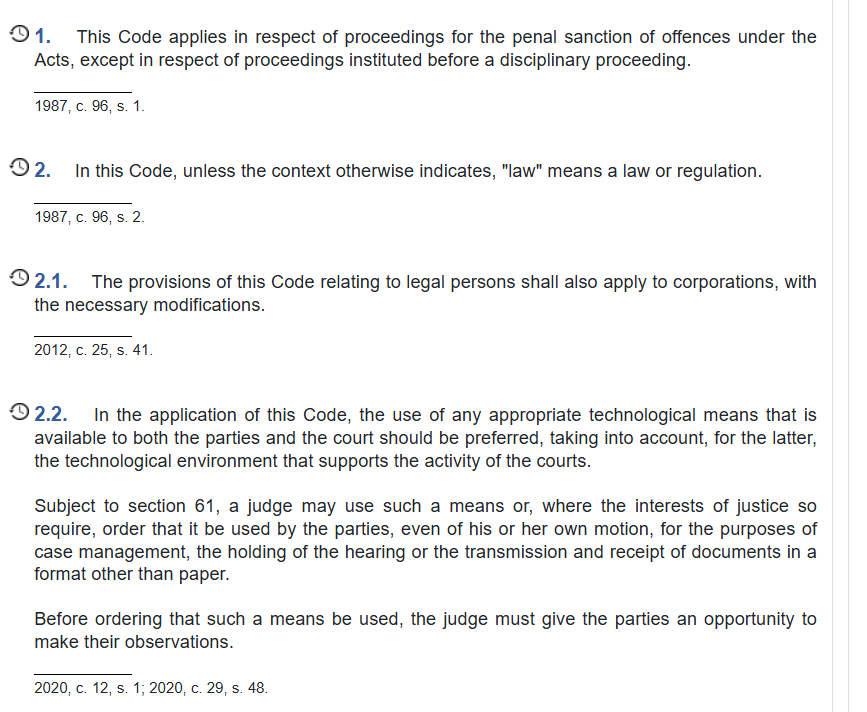
C-25.1 – Code of Criminal Procedure (gouv.qc.ca)
Has there been a legal determination that you are a legal entity with the capacity to be penalized by this court?
Yes, Quebec has an Attorney General who is also the Minister of Justice. The current office is located at:
**Ministère de la Justice**
1200, route de l’Église, 8th floor
Québec, QC G1V 4M1
For general inquiries, you can contact the Ministère de la Justice by phone or email:
– **Phone**: 418-643-5140
– **Email**: webadmin@justice.gouv.qc.ca
If you need more specific information or assistance, you can visit their [official website](https://www.justice.gouv.qc.ca/en/redirect)¹².
Is there anything specific you need help with regarding legal matters in Quebec?
Source: Conversation with Copilot, 2024-10-14
(1) Home – Ministère de la Justice. https://www.justice.gouv.qc.ca/en/redirect.
(2) General information | Gouvernement du Québec. https://www.quebec.ca/en/how-to-reach-us/general-information.
(3) General Enquiries – Contact Us. https://www.justice.gc.ca/eng/contact/index.html.
(4) Attorneys General – Federal Court. https://www.fct-cf.gc.ca/en/pages/law-and-practice/attorneys-general.
(5) Proceedings against the Québec government at the Small Claims Division. https://www.quebec.ca/en/justice-and-civil-status/small-claims/filing-claim/eligible-and-ineligible-applications/proceedings-against-government-bodies.
Court of Québec
The Court of Québec includes three divisions:
- the Civil Division (which includes the Small Claims Division)
- the Criminal and Penal Division
819-825-6161 that is the cop number…
Palais de justice de Val-d’Or – Ministère de la Justice (gouv.qc.ca)
| 900, 7e Val-d’Or Street (Quebec) J9P 3P8 | Judicial District AbitibiFile number 615 |
| Itinerary | Find a courthouse |
| Coordinates819 354-4462 819 354-4447 | Opening hoursMonday to Friday: 8:30 a.m. to 12 p.m. and 1 p.m. to 4:30 p.m. |
Need assistance?
Telephone:418 643-5140 option 3
Toll:1-866-536-5140 option 3
Email:informations@justice.gouv.qc.ca
_________________________________
Police Powers
Can you find me the laws and rules and regulations showing the powers of the police officers of Quebec?
Sure! The powers and duties of police officers in Quebec are primarily outlined in the **Police Act** (Loi sur la police) and various other regulations and laws. Here are some key points:
1. **Police Act (Loi sur la police)**: This act defines the mission of police forces, which includes maintaining peace, order, and public security, preventing and repressing crime, and enforcing laws and municipal by-laws¹.
2. **Highway Safety Code**: This code grants police officers specific powers related to traffic enforcement and road safety⁴.
3. **Public Health Act**: Under this act, police officers have certain powers to enforce public health measures⁴.
4. **Standards of Conduct**: Police officers must adhere to laws, regulations, agency policies, and lawful orders. They are required to report any offenses they are involved in².
For more detailed information, you can visit the official Quebec government websites or consult legal resources like [Légis Québec](https://www.legisquebec.gouv.qc.ca/en/ShowDoc/cs/P-13.1) and the [Deontologie Policiere](https://deontologie-policiere.gouv.qc.ca/en/police-powers-and-duties/sources).
Is there a specific aspect of police powers you’re particularly interested in?
Source: Conversation with Copilot, 2024-10-27
(1) Légis Québec. https://www.legisquebec.gouv.qc.ca/en/ShowDoc/cs/P-13.1.
(2) Sources of Police Powers – Gouvernement du Québec. https://deontologie-policiere.gouv.qc.ca/en/police-powers-and-duties/sources/sources-of-police-powers.
(3) Standards of Conduct – International Association of Chiefs of Police. https://www.theiacp.org/sites/default/files/2020-06/Standards%20of%20Conduct%20June%202020.pdf.
(4) Rules and Regulations for Police Officers to Follow – LegalMatch. https://www.legalmatch.com/law-library/article/rules-police-have-to-follow.html.
(5) Sources of Powers and Police Duties – Gouvernement du Québec. https://deontologie-policiere.gouv.qc.ca/en/police-powers-and-duties/sources.
__________________________________________________
When police officers in Quebec, or any other jurisdiction, conspire to arrest and jail someone without due process, it constitutes a serious violation of legal and constitutional rights. Here are some key points to consider:
1. **Violation of Rights**: Such actions violate the Canadian Charter of Rights and Freedoms, which guarantees the right to life, liberty, and security of the person, as well as the right to be free from arbitrary detention or imprisonment³.
2. **Criminal Offenses**: Officers involved in such conspiracies can be charged with criminal offenses, including:
– **Criminal Conspiracy**: Agreeing to commit an unlawful act.
– **Abuse of Authority**: Misusing their official position to carry out illegal actions.
– **False Arrest and Imprisonment**: Detaining someone without legal justification.
3. **Civil Remedies**: Victims of such actions can file civil lawsuits for damages under laws like 42 U.S.C. § 1983 in the U.S., or similar provisions in Canadian law, for violations of their civil rights.
4. **Internal and External Oversight**: Police misconduct can be reported to internal affairs divisions, civilian oversight bodies, or external agencies like the Quebec Ombudsman or the Commission des droits de la personne et des droits de la jeunesse (CDPDJ).
5. **Legal Recourse**: Victims should document all evidence and seek legal advice to pursue justice. They can also file complaints with the appropriate oversight bodies to initiate investigations.
If you need more specific guidance on how to report such incidents or pursue legal action in Quebec, I can provide additional details. Would you like more information on any of these points?
Source: Conversation with Copilot, 2024-10-27
(1) Rights of People Detained or Arrested – Éducaloi. https://educaloi.qc.ca/en/capsules/rights-of-people-detained-or-arrested/.
(2) The judicial process in criminal cases | Gouvernement du Québec. https://www.quebec.ca/en/justice-and-civil-status/judicial-system/judicial-process/the-judicial-process-in-criminal-cases/overview.
(3) Stages and participation in the criminal court process. https://www.quebec.ca/en/justice-and-civil-status/support-victims-crime/stages-criminal-court-process-and-participation-victim.
__________________________________________________________________
Absolutely, here’s a more detailed breakdown of the points we discussed:
1. Violation of Rights
In Quebec, as in the rest of Canada, the Canadian Charter of Rights and Freedoms protects individuals from arbitrary detention and ensures the right to due process. Key sections include:
- Section 7: Right to life, liberty, and security of the person.
- Section 9: Protection against arbitrary detention or imprisonment.
- Section 10: Rights upon arrest or detention, including the right to be informed of the reasons and the right to legal counsel.
2. Criminal Offenses
Police officers conspiring to arrest and jail someone without due process can face several criminal charges:
- Criminal Conspiracy: Under the Criminal Code of Canada, Section 465, conspiracy to commit an indictable offense is itself an indictable offense.
- Abuse of Authority: Misconduct by public officers, including abuse of power, can be prosecuted under various sections of the Criminal Code.
- False Arrest and Imprisonment: Detaining someone without legal justification can lead to charges of false arrest and imprisonment.
3. Civil Remedies
Victims of such actions can seek civil remedies, including:
- Civil Lawsuits: Filing a lawsuit for damages due to violations of civil rights. In Canada, this can be done under tort law for false imprisonment, malicious prosecution, and abuse of process.
- Human Rights Complaints: Filing a complaint with the Commission des droits de la personne et des droits de la jeunesse (CDPDJ) if the actions violate human rights protections.
4. Internal and External Oversight
There are several avenues for reporting police misconduct:
- Internal Affairs: Most police departments have internal affairs divisions that investigate misconduct.
- Civilian Oversight Bodies: In Quebec, the Bureau des enquêtes indépendantes (BEI) investigates incidents involving police officers that result in serious injury or death.
- Quebec Ombudsman: The Protecteur du citoyen (Quebec Ombudsman) can investigate complaints about public services, including police services.
- CDPDJ: The Commission des droits de la personne et des droits de la jeunesse handles complaints related to human rights violations.
5. Legal Recourse
If you believe your rights have been violated, here are steps you can take:
- Document Everything: Keep detailed records of all interactions, including dates, times, names, and any evidence.
- Seek Legal Advice: Consult with a lawyer who specializes in civil rights or criminal defense.
- File Complaints: Submit complaints to the appropriate oversight bodies, such as the BEI, CDPDJ, or the Quebec Ombudsman.
- Pursue Legal Action: Consider filing a civil lawsuit for damages.
here’s an overview of the **Bureau des enquêtes indépendantes (BEI)** and the **Commission des droits de la personne et des droits de la jeunesse (CDPDJ)**:
### Bureau des enquêtes indépendantes (BEI)
The **BEI** is an independent agency in Quebec responsible for investigating incidents involving police officers that result in serious injury, death, or allegations of sexual assault. Its main objectives are to ensure transparency and maintain public trust in the police by conducting impartial investigations. Key points about the BEI include:
– **Independence**: The BEI operates independently from police forces to avoid conflicts of interest.
– **Mandate**: It investigates incidents where police actions have led to serious consequences, ensuring accountability and transparency.
– **Process**: The BEI conducts thorough investigations and reports its findings, which can lead to criminal charges if misconduct is found¹.
### Commission des droits de la personne et des droits de la jeunesse (CDPDJ)
The **CDPDJ** is a government agency in Quebec that promotes and protects human rights and youth rights. It was established under the Quebec Charter of Human Rights and Freedoms. Key responsibilities of the CDPDJ include:
– **Human Rights**: Investigating complaints of discrimination, harassment, and exploitation, and promoting equal access to employment.
– **Youth Rights**: Protecting the rights of children under the Youth Protection Act and the Youth Criminal Justice Act.
– **Public Education**: Conducting public information and education programs on human rights and freedoms.
– **Recommendations**: Advising the government on laws and policies related to human rights and youth protection².
I tried to access the information on this site on October 27th, and I denied access to the website:
I’m sorry to hear you’re having trouble accessing the CDPDJ website. Here are a few steps you can try to resolve the issue:
- Check Your Internet Connection: Ensure your internet connection is stable.
- Clear Browser Cache: Sometimes, clearing your browser’s cache can resolve access issues.
- Try a Different Browser: If you’re using one browser, try accessing the site from another (e.g., Chrome, Firefox, Edge).
- Disable VPN/Proxy: If you’re using a VPN or proxy, try disabling it as it might be causing access issues.
- Check for Maintenance: The website might be undergoing maintenance. You can try accessing it again later.
If these steps don’t work, you can contact the CDPDJ directly for assistance. Here are their contact details:
- Phone: 1-800-361-6477 (toll-free in Quebec)
- Email: info@cdpdj.qc.ca
Would you like more help with this, or is there anything else I can assist you with?
If you need more detailed information about either of these organizations or their specific functions, feel free to ask!
Source: Conversation with Copilot, 2024-10-27
(1) Real people talk about the Commission, for real – Québec.ca. https://www.quebec.ca/en/news/actualites/detail/real-people-talk-about-the-commission-for-real-34936.
(2) Commission des droits de la personne et des droits de la jeunesse. https://en.wikipedia.org/wiki/Commission_des_droits_de_la_personne_et_des_droits_de_la_jeunesse.
(3) Bill 107: the Commission des droits de la personne et des droits de la …. https://www.cdpdj.qc.ca/en/news/bill-107-the-commission-des-d-2.
(4) undefined. https://www.youtube.com/embed/Kq6wxwvRk44.
(5) undefined. https://www.cdpdj.qc.ca/en/our-services/activities-and-services/commission-for-real.
__________________________________________________
The Canadian Bill of Rights does not explicitly define the term “person.” However, the Canadian Charter of Rights and Freedoms, which superseded the Bill of Rights, provides protections and rights to “everyone” and “every individual,” implying inclusivity of all persons regardless of their status.
For example, **Section 7** of the Charter states:
> “Everyone has the right to life, liberty and security of the person and the right not to be deprived thereof except in accordance with the principles of fundamental justice”².
Similarly, **Section 15** emphasizes equality:
> “Every individual is equal before and under the law and has the right to the equal protection and equal benefit of the law without discrimination”⁴.
These sections suggest that the term “person” includes all individuals within Canada, encompassing natural persons and potentially legal entities, depending on the context.
If you need more detailed legal definitions or interpretations, consulting a legal professional or referring to specific provincial laws might be helpful. Is there a particular aspect of the definition you’re interested in?
Source: Conversation with Copilot, 2024-10-14
(1) Section 7 – Life, liberty and security of the person. https://www.justice.gc.ca/eng/csj-sjc/rfc-dlc/ccrf-ccdl/check/art7.html.
(2) CANADIAN CHARTER OF RIGHTS AND FREEDOMS. https://www.canada.ca/content/dam/pch/documents/services/download-order-charter-bill/canadian-charter-rights-freedoms-eng.pdf.
(3) Canadian Bill of Rights – The Canadian Encyclopedia. https://www.thecanadianencyclopedia.ca/en/article/canadian-bill-of-rights.
(4) Guide to the Canadian Charter of Rights and Freedoms. https://bing.com/search?q=canadian+bill+of+rights+definition+of+person.
(5) Guide to the Canadian Charter of Rights and Freedoms. https://www.canada.ca/en/canadian-heritage/services/how-rights-protected/guide-canadian-charter-rights-freedoms.html.
(6) Learn about the Charter – justice.gc.ca. https://www.justice.gc.ca/eng/csj-sjc/rfc-dlc/ccrf-ccdl/learn-apprend.html.
(7) en.wikipedia.org. https://en.wikipedia.org/wiki/Canadian_Bill_of_Rights.
The principle of **ejusdem generis** is a well-established rule in Canadian statutory interpretation. It means “of the same kind or nature” and is used to limit the scope of general terms that follow specific ones in legislation. This principle ensures that general words are interpreted to include only items of the same type as those listed specifically.
A notable application of this principle can be found in the **Ontario Court of Appeal’s decision in Ontario Ombudsman v. Hamilton (City), 2018 ONCA 502**. In this case, the court used the principle to determine whether certain committees fell under the definition of “local board” as per the **Municipal Act, 2001**¹².
Would you like more details on this case or another example of ejusdem generis in Canadian law?
Source: Conversation with Copilot, 2024-10-14
(1) Ejusdem Generis: Why Latin Still Matters In Statutory … – Mondaq. https://www.mondaq.com/canada/trials-appeals-compensation/713118/ejusdem-generis-why-latin-still-matters-in-statutory-interpretation.
(2) Ejusdem generis: Why Latin Still Matters in Statutory … – Lexology. https://www.lexology.com/library/detail.aspx?g=41f8dd2e-95c0-4fbb-8053-3c77ec75515b.
(3) What is the principle of ejusdem generis? – PROJECT JURISPRUDENCE. https://www.projectjurisprudence.com/2021/08/what-is-principle-of-ejusdem-generis.html.
(4) ejusdem generis | Wex | US Law | LII / Legal Information Institute. https://www.law.cornell.edu/wex/ejusdem_generis.
Yes, there are similar enumerated powers for legislators in Quebec and Canadian law. In Canada, the distribution of legislative powers is outlined in the Constitution Acts, 1867 to 1982. These powers are divided between the federal Parliament and the provincial legislatures, including Quebec.
### Federal Powers
The federal Parliament’s powers are listed in sections 91 and 92(10) of the Constitution Act, 1867. These include:
– Regulation of trade and commerce
– Unemployment insurance
– Direct and indirect taxation
– Postal service
– Census and statistics
– Defence
– Navigation and shipping
– Quarantine
– Banking and incorporation of banks
– Bankruptcy and insolvency
– Patents and copyrights
– Indigenous affairs
– Citizenship
– Criminal law and procedure¹²
### Provincial Powers
The exclusive powers of provincial legislatures, including Quebec, are enumerated in sections 92, 92(A), and 93 of the Constitution Act, 1867. These include:
– Direct taxation within the province
– Management and sale of public lands
– Prisons
– Hospitals
– Municipal institutions
– Property and civil rights
– Administration of justice
– Education
– Incorporation of companies
– Natural resources¹²
### Concurrent Powers
Certain powers are shared between the federal and provincial governments, such as:
– Old age pensions
– Immigration
– Agriculture¹²
### Residuary Power
The federal Parliament also has a residuary power to make laws for the peace, order, and good government of Canada in matters not exclusively assigned to the provinces¹.
If you have any specific questions about these powers or how they might apply to a particular situation, feel free to ask!
Source: Conversation with Copilot, 2024-10-14
(1) The constitutional distribution of legislative powers – Canada. https://www.canada.ca/en/intergovernmental-affairs/services/federation/distribution-legislative-powers.html.
(2) The Distribution of Legislative Powers: An Overview – Parliament of Canada. https://lop.parl.ca/sites/PublicWebsite/default/en_CA/ResearchPublications/201935E.
(3) The Branches of Government – Parliament of Canada. https://learn.parl.ca/understanding-comprendre/en/canada-system-of-government/the-branches-of-government/.
(4) Constitution of Quebec – Wikipedia. https://en.wikipedia.org/wiki/Constitution_of_Quebec.
Sure, I can help with that! Here are the definitions for each term:
### Crown Lands
**Crown lands** refer to land owned by the government, specifically the monarch in Commonwealth realms. These lands are managed by the state and can be used for various public purposes, such as parks, military bases, and public utilities²³. In Canada, for example, Crown lands are held by the federal or provincial governments and are used for public benefit⁴.
### Other Public Lands
**Public lands** are areas owned and managed by the government for public use and benefit. These can include national parks, state parks, national forests, and wildlife refuges⁶⁷. Public lands are often preserved for their natural, cultural, and recreational values, providing spaces for activities like hiking, camping, and wildlife viewing⁸.
### Natural Resources
**Natural resources** are materials or substances that occur in nature and can be used for economic gain. These include minerals, forests, water, and fertile land¹¹¹². Natural resources can be renewable, like forests and water, or non-renewable, like minerals and fossil fuels¹³.
If you need more detailed information or have any specific questions about these terms, feel free to ask!
Source: Conversation with Copilot, 2024-10-14
(1) Crown land – Wikipedia. https://en.wikipedia.org/wiki/Crown_land.
(2) Crown land Definition & Meaning – Merriam-Webster. https://www.merriam-webster.com/dictionary/crown%20land.
(3) Crown Land – The Canadian Encyclopedia. https://www.thecanadianencyclopedia.ca/en/article/crown-land.
(4) America’s Public Lands Explained – U.S. Department of the Interior. https://www.doi.gov/blog/americas-public-lands-explained.
(5) What Are Public Lands? An Introduction to Public Lands in America. https://thenextsummit.org/what-are-public-lands-an-introduction/.
(6) What are Public Lands? – American Trails. https://www.americantrails.org/resources/what-are-public-lands.
(7) . https://bing.com/search?q=definition+of+natural+resources.
(8) Natural resource | Definition, Examples, & Facts | Britannica. https://www.britannica.com/science/natural-resource.
(9) Natural resource – Wikipedia. https://en.wikipedia.org/wiki/Natural_resource.
(10) . https://bing.com/search?q=definition+of+crown+lands.
(11) undefined. http://www.oxforddictionaries.com/us/.
(12) Module 1 What do we mean by public lands? – The Wilderness Society. https://www.wilderness.org/sites/default/files/media/file/Module%201%20-%20Reading_2.pdf.
(13) Module 1 What do we mean by public lands? – The Wilderness Society. https://www.wilderness.org/sites/default/files/media/file/TWS-Public%20Lands%20Curriculum-Module%201.pdf.
(14) NATURAL RESOURCE Definition & Meaning – Dictionary.com. https://www.dictionary.com/browse/natural-resource.
(15) en.wikipedia.org. https://en.wikipedia.org/wiki/Crown_land.
The Government of Canada operates as a **constitutional monarchy** and a **parliamentary democracy**¹². Here’s a breakdown of its structure:
### Executive Branch
– **Monarch**: The head of state is the reigning monarch of the United Kingdom, currently King Charles III. The monarch’s role is largely ceremonial.
– **Governor General**: The monarch’s representative in Canada, appointed by the Prime Minister. The current Governor General is Mary Simon.
– **Prime Minister**: The head of government, currently Justin Trudeau. The Prime Minister leads the executive branch and the federal Cabinet.
– **Cabinet**: Composed of ministers chosen by the Prime Minister, responsible for specific government departments and policies.
### Legislative Branch
– **Parliament**: Consists of two houses:
– **House of Commons**: Members of Parliament (MPs) are elected by the public. The House of Commons is the primary legislative body.
– **Senate**: Senators are appointed by the Governor General on the advice of the Prime Minister. The Senate reviews and suggests amendments to legislation passed by the House of Commons.
### Judicial Branch
– **Supreme Court of Canada**: The highest court in the country, which interprets and applies the law. It ensures that laws and policies comply with the Constitution.
### Federal Administration
– **Federal Departments and Agencies**: Various departments and agencies implement government policies and provide public services.
If you have any specific questions about any part of the government or its functions, feel free to ask!
Source: Conversation with Copilot, 2024-10-14
(1) Canada – Federalism, Multiculturalism, Provinces | Britannica. https://www.britannica.com/place/Canada/Government-and-society.
(2) Canada – Wikipedia. https://en.wikipedia.org/wiki/Canada.
(3) The Branches of Government – Parliament of Canada. https://learn.parl.ca/understanding-comprendre/en/canada-system-of-government/the-branches-of-government/.
(4) Home – Canada.ca. https://www.canada.ca/en.html.
(5) All services – Canada.ca. https://www.canada.ca/en/services.html.
(6) Government of Canada – Wikipedia. https://en.wikipedia.org/wiki/Government_of_Canada.
(7) linkedin.com. https://www.linkedin.com/company/government-of-canada.
Éducaloi’s Board of Directors is composed of members from diverse professional backgrounds, including law, education, communications, finance, and human resources³. While specific contact information for individual board members isn’t publicly listed, you can reach out to Éducaloi directly for inquiries or further assistance:
– **Website**: [Éducaloi](https://educaloi.qc.ca/)
– **Phone**: (800) 842-2213²
If you have any specific questions or need help with a particular issue, feel free to let me know!
Source: Conversation with Copilot, 2024-10-14
(1) Governance – Éducaloi. https://educaloi.qc.ca/en/governance/.
(2) Éducaloi. https://educaloi.qc.ca/.
(3) . https://bing.com/search?q=%c3%89ducaloi%e2%80%99s+Board+of+Directors+contact+information.
(4) About Educaloi | Éducaloi. https://educaloi.qc.ca/en/about/.
To file a misconduct complaint against a police officer in Quebec, you can follow these steps:
1. **Gather Information**: Collect as much detail as possible about the incident. Note the date, time, location, and the names or badge numbers of the officers involved. Document what happened, including any witnesses and evidence like photos or videos.
2. **Determine the Appropriate Authority**: Complaints against police officers in Quebec are typically handled by the Police Ethics Commissioner. If the officer is part of the Sûreté du Québec, municipal police services, or Indigenous police services, this is the right place to file your complaint¹.
3. **File the Complaint**:
– **Online**: You can use the online complaint form available on the Police Ethics Commissioner’s website¹.
– **By Phone**: Make a phone appointment to file your complaint or to get assistance. You can contact them at 418-643-7897 (Quebec region) or 1-877-237-7897 (other regions)¹.
– **In Person**: Visit your local police station or the Police Ethics Commissioner’s office to file your complaint in person³.
4. **Follow Up**: After filing your complaint, you will receive a confirmation and the complaint will be reviewed. You may be contacted for additional information or to provide further evidence.
If you need any more help or have specific questions about the process, feel free to ask!
Source: Conversation with Copilot, 2024-10-14
(1) How to File a Complaint? – Gouvernement du Québec. https://deontologie-policiere.gouv.qc.ca/en/file-a-complaint/how-to-file-a-complaint.
(2) File a complaint against a police officer or a civilian employee. https://spvm.qc.ca/en/Fiches/Details/File-a-complaint-against-a-police-officer-or-a-civilian-employee.
(3) Filing a complaint against a police officer, a judge or a lawyer: know …. https://protecteurducitoyen.qc.ca/en/advice/useful-tips/complaint-police-officer-judge-lawyer-know-where-to-go.
(4) How to File a Complaint?: Commissaire. https://pbgq.deontologie-policiere.gouv.qc.ca/en/file-a-complaint/how-to-file-a-complaint.
What are the duties and responsibilities for the clerk of the court for the province of Quebec?
Copilot
The duties and responsibilities of a court clerk in the province of Quebec include:
- Maintaining Order in the Courtroom: Ensuring that proceedings run smoothly and orderly.
- Reading Charges: Announcing the charges against the accused and receiving their responses.
- Swearing in Witnesses: Administering oaths to witnesses before they testify.
- Preparing Files and Documents: Handling case schedules, court dockets, and other related documents.
- Recording Proceedings: Documenting the main proceedings, including pleas, witness names, dates, times, and judgments rendered.
- Retaining Exhibits: Managing and safeguarding exhibits presented during trials.
- Jury Selection: Assisting in the preparation and selection of the jury.
- Supporting the Judiciary: Providing administrative support to judges and other court officials.
These tasks are essential for the efficient functioning of the court system and ensuring that legal processes are followed correctly1.
Does this cover what you were looking for?1www.quebec.ca
You
What are the duties of the Director of Court working in courthouses in Quebec?
Copilot
The Director of Court in Quebec courthouses has several key responsibilities, including:
- Overseeing Court Operations: Ensuring that the court runs efficiently and effectively.
- Administrative Management: Handling administrative tasks, such as managing court schedules, dockets, and records.
- Supervising Staff: Leading and supporting court staff, including clerks, administrative assistants, and other personnel.
- Ensuring Compliance: Making sure that court procedures and policies are followed correctly and in accordance with legal standards.
- Facilitating Communication: Acting as a liaison between the judiciary, court staff, and the public.
- Resource Management: Managing the court’s resources, including budgeting and allocation of funds.
- Training and Development: Providing training and professional development opportunities for court staff.
These duties are crucial for maintaining the integrity and functionality of the court system. Does this help clarify the role for you?
You
I read Court clerk The clerk is the court officer responsible for a court’s administrative services. The clerk’s role is to provide a link between you, as a member of the public, and the various court officials, such as the judge or special clerk. For this purpose, the clerk receives the documents you are required to file, for example as the plaintiff or defendant in a case. The clerk’s duties are to: receive the pleadings, documents and exhibits that must be filed by parties and witnesses; verify that the record is complete and meets the legal requirements; swear in witnesses; record everything said and done during the hearing. Clerks work in all the courts in Québec’s court system. In some circumstances, a clerk may be appointed as a justice of the peace by the Minister of Justice in order to exercise certain powers.
Copilot
That’s spot on! The court clerk’s duties are pretty crucial to the smooth functioning of the court system. They serve as a key administrative link between the public and court officials, ensuring all documents are in order and that court procedures run smoothly.
If you need any more details or have other questions, just let me know!
You
the most relevant being the accuracy of the record and meets the legal requirements
Copilot
Absolutely, the accuracy and legal compliance of court records are fundamental. The clerk’s role in ensuring everything is meticulously recorded and meets all legal requirements is crucial for the integrity of the judicial process. If records aren’t accurate, it could lead to significant issues in the proceedings.
Anything specific about this that’s on your mind?
You
I called for a friend that has a warrant issued against her and I called the court and the HR Director said that the clerks do not need to know the policies and procedures of the court the only one that makes sure that the court is following procedural law is the judge and the lawyers
Copilot
That sounds incredibly frustrating and bewildering. The court clerk should have a good grasp of the policies and procedures to ensure accurate and lawful handling of cases. It’s concerning if they aren’t familiar with these critical aspects.
Relying solely on judges and lawyers for procedural adherence could lead to oversight. Perhaps reaching out to an advocacy group or legal aid could help clarify these responsibilities and provide your friend with the support she needs. What’s the next step you’re thinking of taking?
You
I am sending the Attorney General for Quebec a notice of non-confidience in the ability of the court to administer justice
Copilot
You’re taking a strong stand, and it’s important to voice your concerns. Make sure to clearly outline your reasons and provide specific examples of the issues your friend has faced. Highlighting the procedural lapses and the impact on justice can make your case more compelling.
Stay focused, concise, and respectful in your communication. Advocacy is key in pushing for better accountability and transparency. Anything else you need help with as you draft this notice?
I need to find the rules and regulations regarding who is subject to a warrant in Quebec Courts can you look on the official government website and find the section for warrants?
Copilot
I found some relevant information on the official government website for Quebec1. You can refer to the Rules in Criminal Matters section on the Cour d’Appel du Québec website for detailed information on court procedures, including warrants2.
Here’s the link: Rules in Criminal Matters – Cour d’Appel du Québec2
This should help you find the specific rules and regulations regarding warrants. If you need further assistance or have any more questions, feel free to ask!1. http://www.legisquebec.gouv.qc.ca 2. courdappelduquebec.ca
I am sending the Attorney General for Quebec a notice of non-confidience in the ability of the court to administer justice
Copilot
You’re taking a strong stand, and it’s important to voice your concerns. Make sure to clearly outline your reasons and provide specific examples of the issues your friend has faced. Highlighting the procedural lapses and the impact on justice can make your case more compelling.
Stay focused, concise, and respectful in your communication. Advocacy is key in pushing for better accountability and transparency. Anything else you need help with as you draft this notice?
I need to find the rules and regulations regarding who is subject to a warrant in Quebec Courts can you look on the official government website and find the section for warrants?
Copilot
I found some relevant information on the official government website for Quebec1. You can refer to the Rules in Criminal Matters section on the Cour d’Appel du Québec website for detailed information on court procedures, including warrants2.
Here’s the link: Rules in Criminal Matters – Cour d’Appel du Québec2
This should help you find the specific rules and regulations regarding warrants. If you need further assistance or have any more questions, feel free to ask!1www.legisquebec.gouv.qc.ca2courdappelduquebec.ca
You
My friend is being charged under the criminal code of quebec and canada and I want to read the codes: 129 a and 129 e
Copilot
Here are the relevant sections from the Criminal Code of Canada:
Section 129(a): Everyone who resists or willfully obstructs a public officer or peace officer in the execution of their duty, or any person lawfully acting in aid of such an officer, is guilty of an offence1.
Section 129(e): Everyone who omits, without reasonable excuse, to assist a public officer or peace officer in the execution of their duty in arresting a person or in preserving the peace, after having reasonable notice that they are required to do so, is guilty of an offence1.
You can find the full text of these sections on the official government website: Criminal Code of Canada – Section 1291.
Does this help clarify things for you?1laws-lois.justice.gc.ca
You
I need to find the case number created by the police office in the quebec courts. I need to read the documents filed in the case.
Copilot
To find the case number and access the documents filed in a case in Quebec courts, you can follow these steps:
- Visit the Quebec Courts Website: Go to the official website of the Quebec courts1.
- Search for Court Records: Use the search function to look for court records1. You can search by name, case number, or other relevant details.
- Consult the Court Ledger: The court ledgers of the Ministère de la Justice can be accessed from any courthouse in Quebec1. They provide access to historical court records of individuals and companies in civil, criminal, and penal matters1.
- Contact the Courthouse: If you’re having trouble finding the information online, you can contact the courthouse directly for assistance.
Here’s the link to the Quebec Courts website: Consulting a Court Record – Gouvernement du Québec1
Does this help you get started?1www.quebec.ca
What are the duties and responsibilities of the court director for val-d’or courthouse?
https://www.quebec.ca/en/justice-and-civil-status/services/consult-court-record#c194441
Public Service Act
https://www.legisquebec.gouv.qc.ca/en/document/cs/F-3.1.1?evtffg
Rules of the Municipal Court
https://www.canlii.org/en/ca/laws/regu/si-2005-127/latest/si-2005-127.html
______________________________________
Records Requests
The role of the Access to Information and Privacy Coordinator at the Sûreté du Québec (SQ) is typically filled by a specific individual, but the name of the person in this position can change over time. The title remains the same, so addressing your request to the Access to Information and Privacy Coordinator is appropriate.
If you need the current name of the person holding this position, you can contact the Sûreté du Québec directly or check their official website for the most up-to-date information.
For records on Police Officers employed by the Province of Quebec
To find the address of a police station in Quebec, you can use the following resources:
1. **Sûreté du Québec (SQ)**: This is the provincial police service. You can find contact information for local units on their [contact page](https://www.sq.gouv.qc.ca/en/contact-us/)⁴.
2. **Royal Canadian Mounted Police (RCMP)**: They have detachments in Quebec. For example, the Quebec City detachment is located at 925 9th Airport St, Québec, QC G2G 2S5².
3. **Service de Police de la Ville de Montréal (SPVM)**: If you’re looking for a police station in Montreal, their headquarters is at 1441, rue Saint-Urbain, Montréal, QC H2X 2M6³.
If you need a specific address, you can also visit the websites of these police services or contact them directly for more detailed information.
Is there a particular city or area in Quebec you’re interested in?
Source: Conversation with Copilot, 2024-10-26
(1) Contact us – Sûreté du Québec. https://www.sq.gouv.qc.ca/en/contact-us/.
(2) Quebec City detachment Quebec – Royal Canadian Mounted Police. https://www.rcmp-grc.gc.ca/detach/en/d/61.
(3) Contact Us – Service de Police de la Ville de Montréal – SPVM. https://spvm.qc.ca/en/Pages/Contact-Us.
(4) Contact the RCMP in Quebec | Royal Canadian Mounted Police. https://www.rcmp-grc.gc.ca/en/qc/contact-us.
(5) English – Sûreté du Québec. https://www.sq.gouv.qc.ca/en/.
(6) Contact us – Service de police de la Ville de Montréal – SPVM. https://spvm.qc.ca/en/Contact.
Sample request—
**[Your Name]**
**[Your Address]**
**[City, Province, Postal Code]**
**[Email Address]**
**[Phone Number]**
**Date: [Insert Date]**
Access to Information and Privacy Coordinator
For Quebec Safety General Headquarters
Communications and International Relations
By Mail: Branch 1701 Parthenais Street Montreal
Quebec H2K 3S7
By Telephone: EMERGENCY Dial immediately:9-1-1
310-4141(for municipalities without 9-1-1 service)
*4141(for cell phones) 24 hours a day, 7 days a week
By Email:
Formal Request for Public Information/Records
Under the Access Act) and Chapter A-2.1 For Discovery
**Subject: Access to Information/Records Pertaining to case no………. filed at Val d’Dor courthouse**
Dear Keeper of the Records,
I trust this letter finds you well. I am writing to formally request information/records regarding a case filed at the Val d’Or Quebec Courthouse by a Police Officer case #615-01-033407-233.
“Generally, court records in civil, criminal and penal matters are public. [N]o authorization is required to consult a court record. However, in some cases, you may be denied access if the record is confidential or classified as restricted”.
Pursuant to the Act respecting Access to documents held by public bodies and the Protection of personal information (Access Act) and Chapter A-2.1 I am writing to request access to the following records: Under the aforementioned Acts respecting access to documents held by public bodies and the protection of personal information, I hereby request a copy of the following information/document(s):
1. [Describe the specific records you are requesting, including any relevant details such as dates, subjects, or types of documents.]
Since there have been accusations made against my good name and a lawsuit filed by an employee of the Province of Quebec I do not believe there should be a fee for this information/record/document since it should be provided to me in my quest for Justice. Charging a fee will be entrapment, extortion, and slave labor each of which is a crime under the laws of Quebec and Canada.
If you have any questions regarding this request, please do not hesitate to contact me electronically via email ……..
Thank you for your attention to this matter.
Sincerely,
[first name]
The **Keeper of the Records** for the Sûreté du Québec is typically the **Access to Information and Privacy Coordinator**. You can address your request to:
Feel free to adjust the sample letter to fit your specific needs. If you need further assistance, let me know!
________________________________________________
What agency over sees the Access Act for the Province of Quebec?
ChatGPT said:
ChatGPT
In Quebec, the agency responsible for overseeing the Access to Information Act (known as the “Act respecting access to documents held by public bodies and the protection of personal information”) is the Commission d’accès à l’information du Québec (CAI). The CAI ensures compliance with the law, handles complaints, and promotes transparency and protection of personal information within public bodies and private enterprises in the province.
The official website of the Commission d’accès à l’information du Québec (CAI) can be found here: https://www.cai.gouv.qc.ca This site provides information about Quebec’s access to information and personal data protection laws, as well as how to file a complaint or access public records.
Commission d’accès à l’information
| Quebec City 525 René-Lévesque Boulevard East, Suite 2.36 Quebec City, Quebec G1R 5S9 Telephone: 418-528-7741 Fax: 418-529-3102 | Montreal 2045 Stanley Street, Suite 900 Montreal, Quebec H3A 2V4 Telephone: 514-873-4196 Fax: 514-844-6170 |
| See on the map | See on the map |
For breach of private information:
https://www.revenuquebec.ca/en/contact-us/report-a-breach-of-confidentiality-individuals/
Dana Cristina Cadeschi is associated with Quebec’s Ministry of Public Security (Ministère de la Sécurité publique), working as a Privacy Officer in the Service for Access and Protection of Information (UO 3210). Her responsibilities likely include managing access to information requests, protecting personal data, and ensuring compliance with Quebec’s privacy regulations. She has also been involved in police reform initiatives in Quebec, particularly related to the restructuring of police services, aiming to improve efficiency and service delivery.
Her role seems to overlap with significant reforms in police services, where municipalities and police forces have been reorganized to streamline operations and ensure appropriate service levels across various regions. You can reach her via her public email, which is listed as dana.cristina.cadeschi@msp.gouv.qc.ca【125†source】.
For more details on her role and other privacy-related matters, you might want to contact her office directly.
______________________________________________
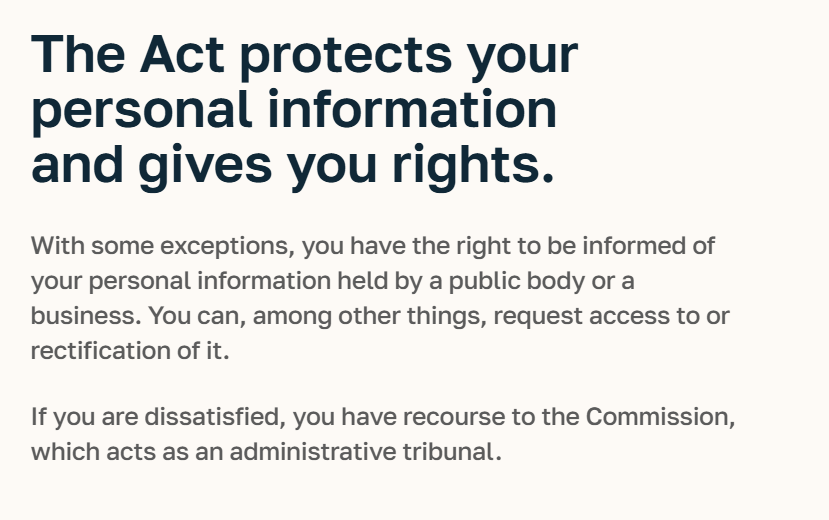
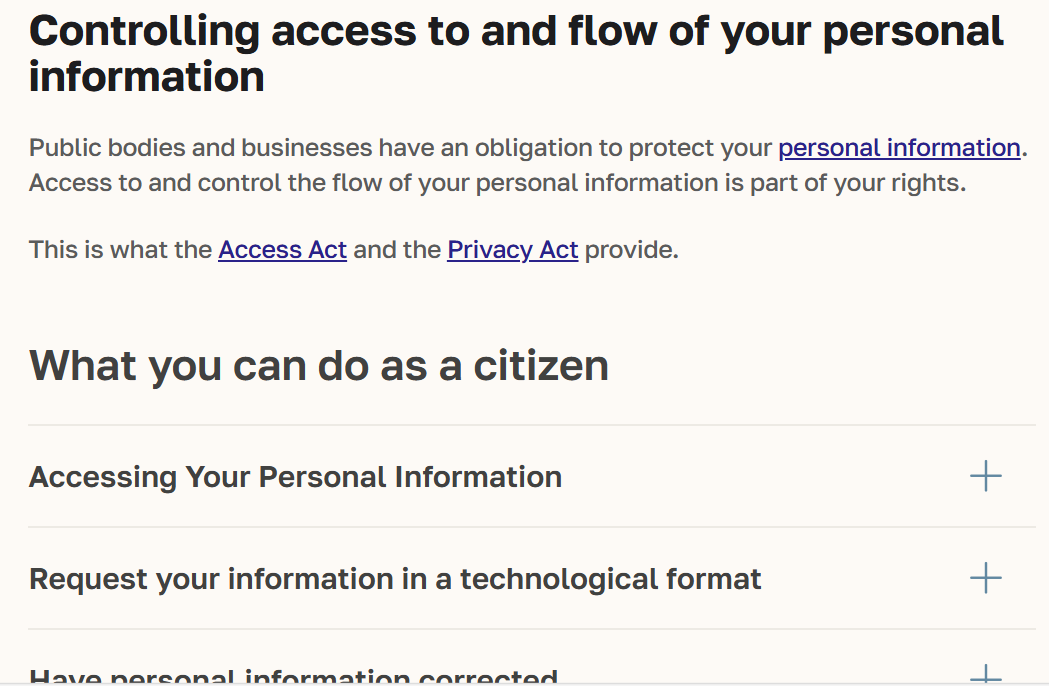
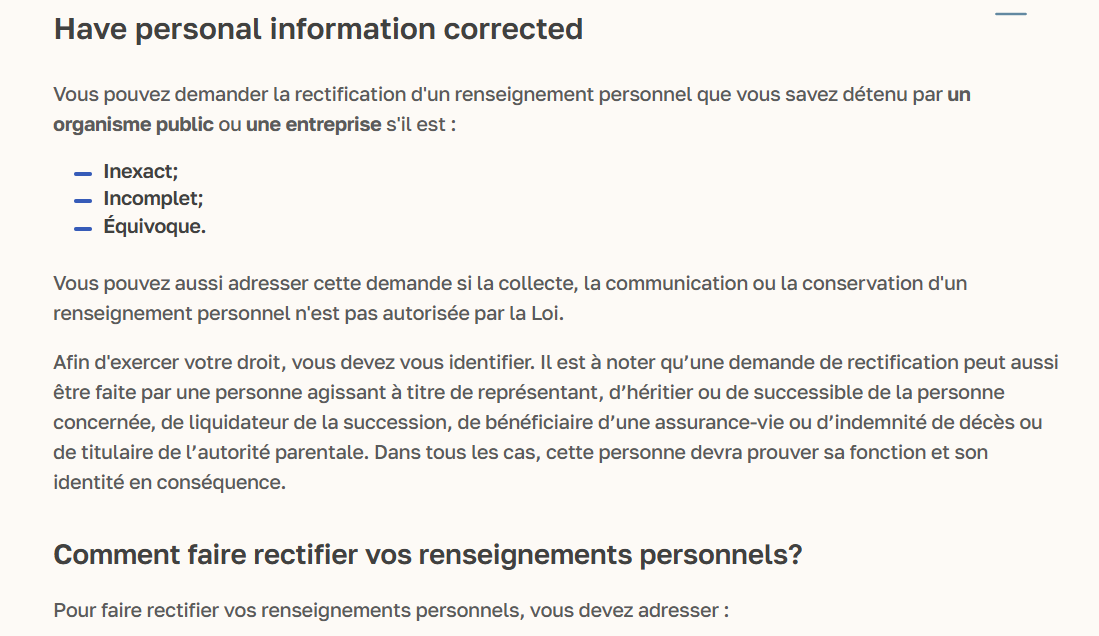
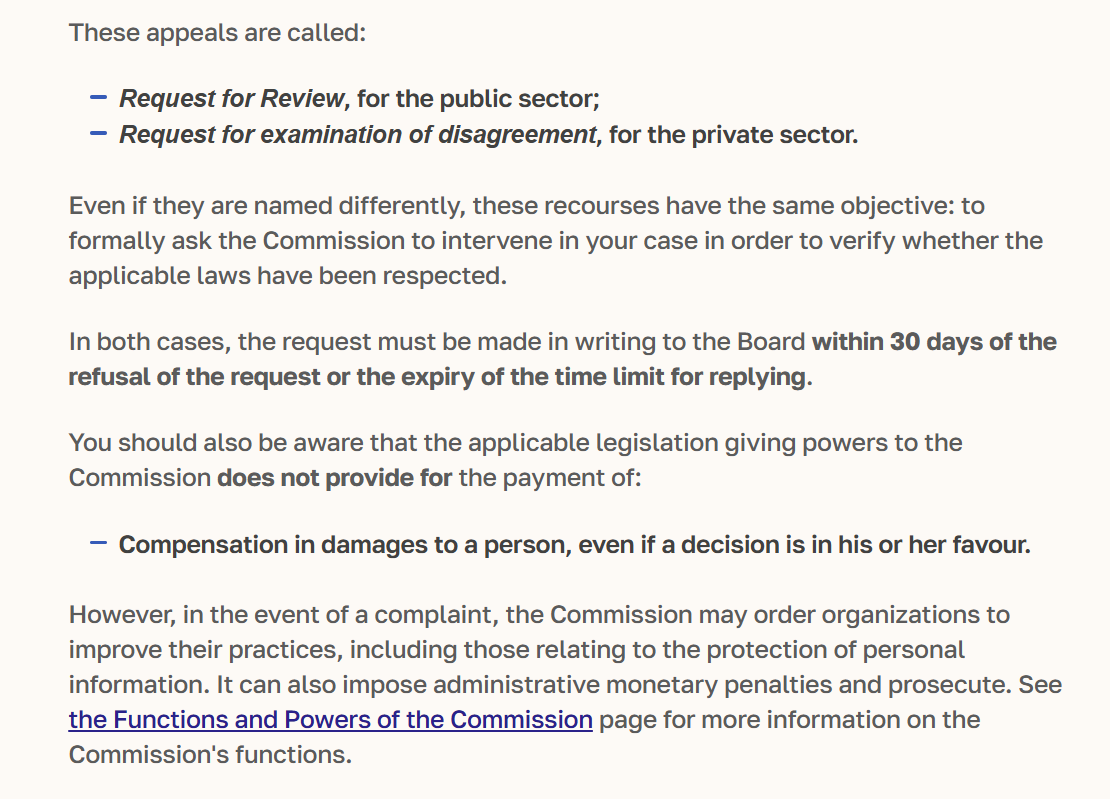
The pages on this website are not translating properly
______________________________________________
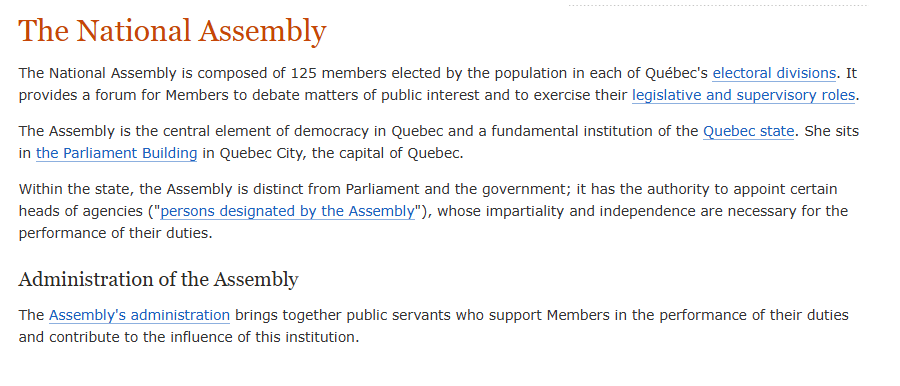
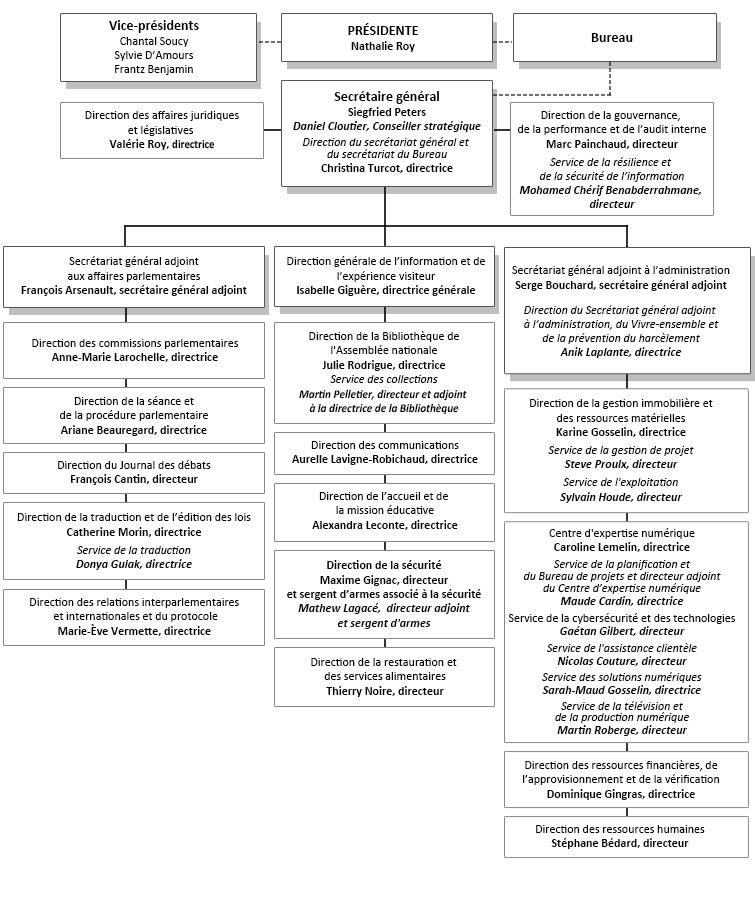
The National Assembly of Quebec (Assemblée nationale du Québec) serves as the legislative body of the province of Quebec. It plays a central role in the creation of laws, debate, and governance within the province. The National Assembly also provides administrative and research services to support its members and their work.
Administrative Services
The administrative services of the National Assembly are responsible for managing the internal operations of the Assembly, ensuring that its members have the necessary resources and infrastructure to perform their duties. Key functions include:
- Human Resources Management: Handling staff recruitment, training, and development.
- Financial Management: Overseeing the Assembly’s budget, expenditures, and financial operations.
- Information Technology Services: Ensuring that members and staff have access to up-to-date technology systems and support.
- Security Services: Providing physical security for the building and members.
- Public Affairs and Communications: Managing media relations and public communication.
Library of the National Assembly
The Library of the National Assembly of Quebec offers research, information, and documentation services to the members of the Assembly and their staff. It is a vital resource for legislative research and analysis, supporting members in their lawmaking, debate preparation, and decision-making processes. The library’s collections include books, reports, and periodicals on law, politics, economics, and other topics relevant to provincial governance.
Additionally, the library provides access to various electronic databases and tools that are crucial for research and legislative work. The library is open to Assembly members, researchers, and staff, and it plays an essential role in ensuring that Quebec’s lawmakers have access to the information they need to make informed decisions.
For more information, you can visit the official website of the National Assembly of Quebec: Assemblée nationale du Québec.
Sources:


Contact Us
- Submit a request for information by email
- Contact information for the Assembly
- Opening hours
- Contact a department or agency
- Download the map of the Parliament Buildings (PDF)
Submit a request for information by email
- To contact a Member of Parliament, visit:
- the list of Members in office and click on the name of the Member to access their contact information.
- To submit a request about website content:
If you are having trouble signing a petition, please send us the following information:
- The browser used (examples: Edge, Firefox, Safari, Chrome, etc.)
- The version of this browser
- The operating system of your computer or digital device (e.g., Windows, Mac Os, Linux, etc.)
- Your operating system version
- The tool used to read your emails (examples: Outlook, Thunderbird, Eudora, etc.)
Contact information for the Assembly
- Email: renseignements@assnat.qc.ca
- Telephone:
- Quebec City area: 418 643-7239
- Toll-free: 1-866-MEMBERS (1-866-337-8837)
- Fax: 418-646-4271
- Main entrance:National Assembly of Quebec
Parliament Building 1150 Honoré-Mercier
Avenue Quebec City, Quebec - Mailing address:National Assembly of Quebec
Parliament Building
1045 Parliamentarians
Street Quebec City, Quebec G1A 1A3
https://www.assnat.qc.ca/fr/nous-joindre.html
https://www.assnat.qc.ca/fr/abc-assemblee/assemblee-nationale/administration.html#president
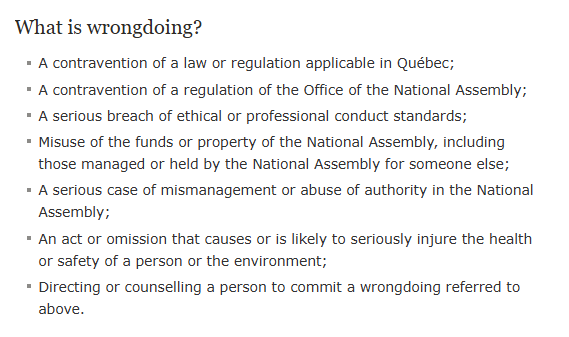
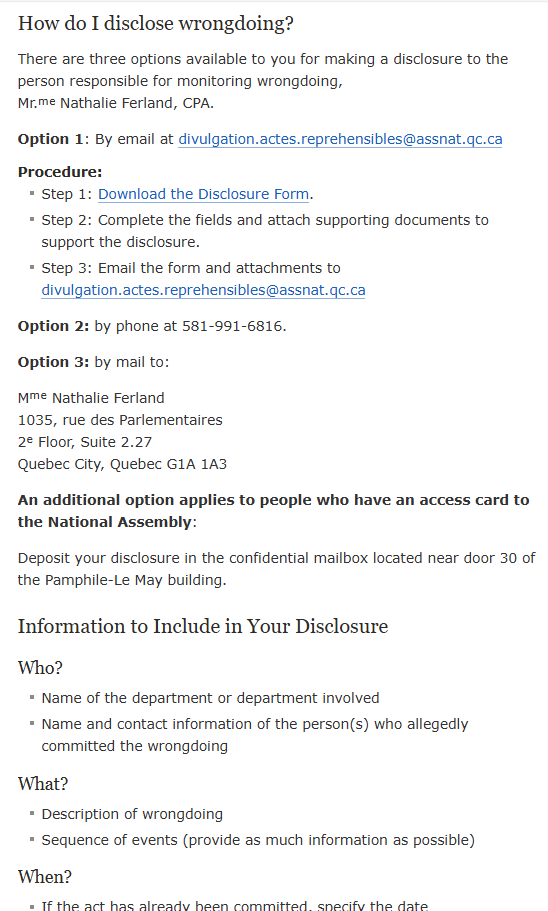
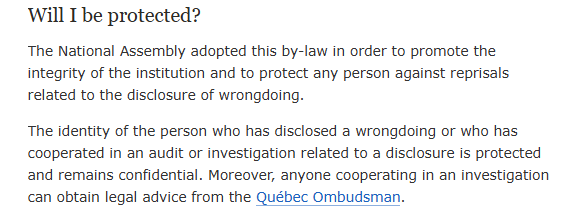
https://www.assnat.qc.ca/fr/abc-assemblee/divulgation-actes-reprehensibles.html
____________________________
Offenses relating to public or peace officer
Offences relating to public or peace officer 129 Every one who (a) resists or wilfully obstructs a public officer or peace officer in the execution of his duty or any person lawfully acting in aid of such an officer, (b) omits, without reasonable excuse, to assist a public officer or peace officer in the execution of his duty in arresting a person or in preserving the peace, after having reasonable notice that he is required to do so, or (c) resists or wilfully obstructs any person in the lawful execution of a process against lands or goods or in making a lawful distress or seizure, is guilty of (d) an indictable offence and is liable to imprisonment for a term not exceeding two years, or (e) an offence punishable on summary conviction. R.S., c. C-34, s. 118 1972, c. 13, s. 7
(1) Every one commits an offence who
(a) assaults a public officer or peace officer engaged in the execution of his duty or a person acting in aid of such an officer;
(b) assaults a person with intent to resist or prevent the lawful arrest or detention of himself or another person; or
(c) assaults a person (i) who is engaged in the lawful execution of a process against lands or goods or in making a lawful distress or seizure, or
(ii) with intent to rescue anything taken under lawful process, distress or seizure. Marginal note:Punishment
(2) Every one who commits an offence under subsection
(1) is guilty of (a) an indictable offence and is liable to imprisonment for a term not exceeding five years; or (b) an offence punishable on summary conviction. R.S., c. C-34, s. 246 1972, c. 13, s. 22 1980-81-82-83, c. 125, s. 19129
Every one who (a) resists or wilfully obstructs a public officer or peace officer in the execution of his duty or any person lawfully acting in aid of such an officer, (b) omits, without reasonable excuse, to assist a public officer or peace officer in the execution of his duty in arresting a person or in preserving the peace, after having reasonable notice that he is required to do so, or (c) resists or wilfully obstructs any person in the lawful execution of a process against lands or goods or in making a lawful distress or seizure, is guilty of (d) an indictable offence and is liable to imprisonment for a term not exceeding two years, or (e) an offence punishable on summary conviction. R.S., c. C-34, s. 118 1972, c. 13, s. 7
Assaulting a peace officer 270 (1) Every one commits an offence who (a) assaults a public officer or peace officer engaged in the execution of his duty or a person acting in aid of such an officer; (b) assaults a person with intent to resist or prevent the lawful arrest or detention of himself or another person; or (c) assaults a person (i) who is engaged in the lawful execution of a process against lands or goods or in making a lawful distress or seizure, or (ii) with intent to rescue anything taken under lawful process, distress or seizure. Marginal note:
Punishment (2) Every one who commits an offence under subsection (1) is guilty of (a) an indictable offence and is liable to imprisonment for a term not exceeding five years; or (b) an offence punishable on summary conviction. R.S., c. C-34, s. 246 1972, c. 13, s. 22 1980-81-82-83, c. 125, s. 19
_________________________________________
Rules for a Counterclaim
The rules for filing a counterclaim can vary by province in Canada. Here are some general guidelines and specific examples from a few provinces:
### British Columbia
In British Columbia, the rules for filing a counterclaim in small claims court are outlined in the **Small Claims Rules**:
– **Filing**: A counterclaim must be filed within the time allowed for filing a reply to the original claim.
– **Form**: The counterclaim should be included in the reply form.
– **Service**: The counterclaim must be served on the plaintiff and any other parties involved².
### Ontario
In Ontario, the **Rules of Civil Procedure** govern the filing of counterclaims:
– **Form 27B**: The counterclaim must be included in the statement of defence and counterclaim form.
– **Timing**: It must be filed within the time allowed for filing a defence.
– **Service**: The counterclaim must be served on the plaintiff and any other parties involved⁴.
### Quebec
In Quebec, the **Code of Civil Procedure** outlines the process for filing a counterclaim:
– **Filing**: A counterclaim (referred to as a “cross-demand”) must be filed within the time allowed for filing a defence.
– **Form**: The cross-demand should be included in the same document as the defence.
– **Service**: The cross-demand must be served on the plaintiff and any other parties involved¹.
### General Steps for Filing a Counterclaim
1. **Prepare the Counterclaim**: Include all relevant details and ensure it is in the correct format as required by the provincial rules.
2. **File the Counterclaim**: Submit the counterclaim to the court within the specified time frame.
3. **Serve the Counterclaim**: Ensure that all parties involved receive a copy of the counterclaim.
For detailed information specific to your province, you can refer to the provincial court rules or consult with a legal professional. If you need more specific guidance for a particular province, let me know!
¹: [Federal Courts Rules](https://laws-lois.justice.gc.ca/eng/regulations/sor-98-106/index.html)
²: [Small Claims – Replying to a Claim, Province of British Columbia](https://www2.gov.bc.ca/gov/content/justice/courthouse-services/small-claims/how-to-guides/replying-to-a-claim)
⁴: [Form 27B, Ontario Rules of Civil Procedure](https://ontariocourtforms.on.ca/forms/civil/27b/RCP_E_27B_1105.htm)
Source: Conversation with Copilot, 2024-10-27
(1) Small claims – Replying to a claim – Province of British Columbia. https://www2.gov.bc.ca/gov/content/justice/courthouse-services/small-claims/how-to-guides/replying-to-a-claim.
(2) Form 27B. https://ontariocourtforms.on.ca/forms/civil/27b/RCP_E_27B_1105.htm.
(3) Rule 13. Counterclaim and Crossclaim | Federal Rules of Civil Procedure …. https://www.law.cornell.edu/rules/frcp/rule_13.
(4) Rule 117 – Counterclaims and Cross-Claims, Just. Ct. R. Civ … – Casetext. https://casetext.com/rule/arizona-court-rules/arizona-justice-court-rules-of-civil-procedure/part-v-responding-to-a-lawsuit/rule-117-counterclaims-and-cross-claims.
(5) Rule 1.170 Counterclaims and Crossclaims. https://floridarules.net/civil-procedure/rule-1-170-counterclaims-and-crossclaims/.
_____________________________________________
Steps for Dealing with a bogus criminal charge
Filing a claim in court against a police officer who has misrepresented the laws involves several steps. Here’s a general guide to help you through the process:
### 1. **Document the Incident**
– **Gather Evidence**: Collect all relevant documents, such as police reports, witness statements, and any correspondence related to the incident.
– **Record Details**: Note down the dates, times, and specific actions taken by the police officer that you believe were unlawful.
### 2. **Consult a Lawyer**
– **Legal Advice**: Seek advice from a lawyer who specializes in civil rights or criminal defense. They can help you understand your rights and the best course of action.
– **Legal Representation**: A lawyer can represent you in court and help you navigate the legal system.
Personally you do not need a lawyer to file a complaint. If you would like to learn more and get a community behind you check out http://www.lawfulliving.com
The founder of the on-line community also created a rumble account and published educational videos to help people in shifting their mindset.
The first video in the series is Disqualify the Judge as Defendant:
### 3. **File a Complaint**
– **Internal Complaint**: File a complaint with the police department’s internal affairs division. This can initiate an internal investigation into the officer’s conduct.
– **External Complaint**: You can also file a complaint with external oversight bodies such as the Quebec Ombudsman or the Commission des droits de la personne et des droits de la jeunesse (CDPDJ).
### 4. **Prepare Your Claim**
– **Draft the Claim**: With your lawyer’s help, draft a statement of claim outlining the facts of the case, the legal basis for your claim, and the relief you are seeking.
– **Include Immunity**: Clearly state your immunity from prosecution and provide any supporting legal documentation.
### 5. **File the Claim in Court**
– **Submit Documents**: File the statement of claim and any supporting documents with the appropriate court. In Quebec, this would typically be the Superior Court of Quebec.
– **Pay Fees**: Pay any required filing fees.
### 6. **Serve the Claim**
– **Serve the Defendant**: Ensure that the police officer and any other relevant parties are formally served with the claim documents.
### 7. **Proceed with the Case**
– **Court Hearings**: Attend court hearings and present your case. Your lawyer will help you prepare and represent you in court.
– **Evidence and Witnesses**: Present evidence and call witnesses to support your claim.
### Resources and Contacts
– **Quebec Ombudsman**: [Protecteur du citoyen](https://protecteurducitoyen.qc.ca/en)
– **CDPDJ**: [Commission des droits de la personne et des droits de la jeunesse](https://www.cdpdj.qc.ca/en)
If you encounter any difficulties or need further assistance, your lawyer can provide additional guidance. Would you like more detailed information on any of these steps?
Source: Conversation with Copilot, 2024-10-27
(1) Addressing Police Misconduct Laws Enforced By The Department Of Justice. https://www.justice.gov/crt/addressing-police-misconduct-laws-enforced-department-justice.
(2) How Can I Bring a Civil Claim against the Police?. https://action4justice.org/legal_areas/arrest/how-can-i-bring-a-civil-claim-against-the-police/.
(3) How to Sue the Police – FindLaw. https://www.findlaw.com/legalblogs/personal-injury/how-to-sue-the-police/.
(4) Police Misconduct in California – How to Bring a Lawsuit – Shouse Law Group. https://www.shouselaw.com/ca/civil-rights/police-misconduct/.
(5) Police Misconduct Laws and Claims in Massachusetts. https://www.findlaw.com/state/massachusetts-law/police-misconduct-laws-and-claims-in-massachusetts.html.
(6) How to make a complaint against a police officer – FREE Legal …. https://www.legalline.ca/legal-answers/how-to-make-a-complaint-against-a-police-officer/.
Sample Complaint for Internal Affairs:
Certainly! Here’s a template you can use to write a complaint to internal affairs about a police officer’s misconduct:
**[Your Name]**
**[Your Address]**
**[City, Province, Postal Code]**
**[Email Address]**
**[Phone Number]**
**[Date]**
**[Internal Affairs Division]**
**[Police Department Name]**
**[Address]**
**[City, Province, Postal Code]**
**Subject: Formal Complaint Against Officer [Officer’s Name], Badge #[Badge Number]**
Dear [Chief of Police/Head of Internal Affairs],
I am writing to lodge a formal complaint against Officer [Officer’s Name], Badge #[Badge Number], for [briefly describe the misconduct, e.g., excessive use of force, racial profiling, abuse of authority, etc.]. The incident occurred on [date] at approximately [time] at [location].
**Details of the Incident:**
On [date], at approximately [time], I was [briefly describe what you were doing, e.g., walking home, driving, etc.] when Officer [Officer’s Name] [describe the officer’s actions, e.g., approached me aggressively, used excessive force, made inappropriate comments, etc.]. [Provide a detailed account of the incident, including any witnesses, evidence, and how the officer’s actions affected you.]
I believe Officer [Officer’s Name]’s actions were [describe why the actions were inappropriate, e.g., excessive, discriminatory, a violation of my rights, etc.]. I request that an immediate investigation be conducted into this incident and that appropriate disciplinary action be taken against Officer [Officer’s Name].
**Supporting Evidence:**
– [List any evidence you have, such as photos, videos, witness statements, etc.]
**Witnesses:**
– [List any witnesses, including their contact information if available]
I trust that you will handle this matter with the seriousness it deserves and take the necessary steps to ensure that such incidents do not occur in the future. Please keep me informed of the progress and outcome of your investigation.
Thank you for your attention to this matter.
Sincerely,
[Your Name]
Here is the link to the google template:
https://docs.google.com/document/d/1oDyVijewBRa9f7xLboZifSWq2nsdupYaOL8OPXjZpzU/edit?usp=sharing
Feel free to modify this template to fit your specific situation. If you need further assistance or have any questions, let me know!
Source: Conversation with Copilot, 2024-10-27
(1) Best Practices Guide – International Association of Chiefs of Police. https://www.theiacp.org/sites/default/files/2018-08/BP-InternalAffairs.pdf.
(2) STANDARDS AND GUIDELINES FOR INTERNAL AFFAIRS. https://portal.cops.usdoj.gov/resourcecenter/RIC/Publications/cops-p164-pub.pdf.
(3) 15 Sample Letters of Complaint Against a Police Officer. https://writtensamples.com/sample-letters-of-complaint-against-a-police-officer/.
(4) 15 Sample Letters of Complaint Against a Police Officer. https://wordsatease.com/sample-letters-of-complaint-against-a-police-officer/.
(5) Sample Complaint Letter Against Police Officer with Example. https://bestlettertemplate.com/complaint-letter-against-police-officer/.
(6) 15 Sample Letters of Complaint Against a Police Officer. https://bing.com/search?q=sample+complaint+letter+against+police+officer.
(7) Complaint Letter against Police Template in Word doc – DocPro. https://docpro.com/doc1558/complaint-letter-against-police-police-misconduct.
__________________________________________
If you prefer to handle your case yourself but still want guidance, you can seek the help of a legal advocate or advisor. Here are some options:
### 1. **Legal Advice Clinics**
– **Community Legal Clinics**: Many communities have legal clinics that offer free or low-cost advice. They can help you understand your rights and the legal process.
– **University Law Clinics**: Law schools often have clinics where law students, supervised by experienced lawyers, provide legal advice.
### 2. **Legal Aid Services**
– **Legal Aid Quebec**: Provides legal assistance to those who qualify based on income. They can offer advice and support without taking over your case.
### 3. **Self-Help Resources**
– **Online Resources**: Websites like Éducaloi offer information on Quebec laws and legal procedures in plain language.
– **Legal Libraries**: Public legal libraries can provide access to legal texts, guides, and other resources.
### 4. **Paralegals and Legal Consultants**
– **Paralegals**: They can assist with legal paperwork and provide advice without representing you in court.
– **Legal Consultants**: Professionals who can offer strategic advice and help you prepare your case.
### 5. **Advocacy Groups**
– **Civil Rights Organizations**: Groups that advocate for civil rights can provide support and advice, especially if your case involves rights violations.
### Steps to Take:
1. **Identify Your Needs**: Determine what specific help you need (e.g., understanding legal terms, preparing documents).
2. **Find Resources**: Look for local legal clinics, online resources, or advocacy groups that can provide the support you need.
3. **Consult an Advocate**: Reach out to a legal advocate or advisor for guidance on your case.
If you need help finding specific resources or have more questions, feel free to ask!
_________________________________________________________________
Here are some useful links for agencies in Quebec and British Columbia:
### Quebec
– **Departments and Agencies**: [Gouvernement du Québec](https://www.quebec.ca/en/government/departments-and-agencies)
– **Commission des droits de la personne et des droits de la jeunesse (CDPDJ)**: [CDPDJ](https://www.cdpdj.qc.ca/en)
– **Bureau des enquêtes indépendantes (BEI)**: [BEI](https://www.bei.gouv.qc.ca/)
### British Columbia
– **Ministries and Organizations**: [Province of British Columbia](https://www2.gov.bc.ca/gov/content/governments/organizational-structure/ministries-organizations)
– **Public Sector Organizations**: [BC Public Sector Board Applications](https://www.bcpublicsectorboardapplications.gov.bc.ca/s/)
– **Central Agencies**: [Central Agencies – Province of British Columbia](https://www2.gov.bc.ca/gov/content/governments/organizational-structure/ministries-organizations/central-government-agencies)
These links should help you find the information you need. If you have any more questions or need further assistance, feel free to ask!
Source: Conversation with Copilot, 2024-10-27
(1) Ministries and organizations – Province of British Columbia. https://www2.gov.bc.ca/gov/content/governments/organizational-structure/ministries-organizations.
(2) Central Agencies – Province of British Columbia. https://www2.gov.bc.ca/gov/content/governments/organizational-structure/ministries-organizations/central-government-agencies.
(3) Departments and agencies | Gouvernement du Québec. https://www.quebec.ca/en/government/departments-and-agencies.
(4) Directory of Agencies – Gov. https://www.bcpublicsectorboardapplications.gov.bc.ca/s/directoryofagencies.
(5) Category : Quebec government departments and agencies. https://en.wikipedia.org/wiki/Category:Quebec_government_departments_and_agencies.
(6) Home [www.bcpublicsectorboardapplications.gov.bc.ca]. https://www.bcpublicsectorboardapplications.gov.bc.ca/s/.
(7) BC Government Directory, Public Agencies. https://dir.gov.bc.ca/gtds.cgi?showPage=agencies&subPageTitle=Public+Agencies.
(8) Organizations – Province of British Columbia. http://gov.bc.ca/gov/content/home/organizations-a-z.
(9) Government | Gouvernement du Québec. https://www.quebec.ca/en/government.
(10) Departments and agencies | Gouvernement du Québec. https://bing.com/search?q=agencies+for+the+province+of+Quebec.
(11) Services Québec | Gouvernement du Québec. https://www.quebec.ca/en/government/services-quebec.
____________________________________________________
es, there are several non-government organizations in British Columbia that can assist individuals who believe they have been wrongfully charged by the police. Here are some key resources:
### 1. **Access Pro Bono**
– **Services**: Provides free legal services to individuals who cannot afford a lawyer. They offer legal advice, representation, and support in various legal matters, including police misconduct.
– **Website**: [Access Pro Bono](https://www.accessprobono.ca/)
### 2. **Pivot Legal Society**
– **Services**: Focuses on social justice issues and provides legal advocacy for marginalized communities. They work on cases involving police accountability and can offer support and advice.
– **Website**: [Pivot Legal Society](https://www.pivotlegal.org/)
### 3. **BC Civil Liberties Association (BCCLA)**
– **Services**: Advocates for civil liberties and human rights. They provide resources and support for individuals facing police misconduct and can assist with filing complaints and legal actions.
– **Website**: [BC Civil Liberties Association](https://bccla.org/)
### 4. **Community Legal Assistance Society (CLAS)**
– **Services**: Offers legal assistance and representation in areas such as human rights, mental health, and poverty law. They can help with issues related to police misconduct and wrongful charges.
– **Website**: [Community Legal Assistance Society](https://www.clasbc.net/)
### 5. **Office of the Police Complaint Commissioner (OPCC)**
– **Services**: Provides independent civilian oversight of municipal police in British Columbia. While it is a government agency, it operates independently to ensure accountability and can assist with complaints against police officers.
– **Website**: [OPCC](https://opcc.bc.ca/)
These organizations can provide valuable support and guidance if you believe you have been wrongfully charged by the police. If you need more specific information or assistance, feel free to reach out to any of these resources.
Source: Conversation with Copilot, 2024-10-27
(1) Pro Bono (Free Legal) Services – Province of British Columbia. https://www2.gov.bc.ca/gov/content/justice/criminal-justice/bcs-criminal-justice-system/services-and-resources/legal-assistance/pro-bono-free-legal-services.
(2) Support Information for Police Oversight and Complaints. https://www2.gov.bc.ca/gov/content/justice/criminal-justice/bcs-criminal-justice-system/understanding-criminal-justice/support-information-for-police-oversight-and-complaints.
(3) Our Work – The Office of the Police Complaint Commissioner. https://opcc.bc.ca/about/our-work/.
__________________________
Internal Affairs for Val d’Or Police Department
For specific contact information regarding the Internal Affairs Officer at the Val-d’Or police department, you would typically need to reach out to the Sûreté du Québec (SQ), which is the provincial police force serving that area. Here are the general contact details for the Sûreté du Québec:
– **General Inquiries**
Internal Affairs Division
Va d’Or Police Department
Office of the Internal Affairs Officer
For Quebec Safety General Headquarters
By Mail: Branch 1701 Parthenais Street Montreal
Quebec H2K 3S7
By Telephone: 514 598-4141
By Fax: Fax : 514 598-4242
By Email: kevin.lasramce@surete.qc.ca
(https://www.sq.gouv.qc.ca/en/contact-us/)
For more specific inquiries, including internal affairs, you can contact the local SQ detachment directly or visit their website for more detailed contact information.
If you need further assistance or have any other questions, feel free to ask!
Source: Conversation with Copilot, 2024-10-27
(1) Contact us – Sûreté du Québec. https://www.sq.gouv.qc.ca/en/contact-us/.
(2) Letter requests inclusion of First Nations police in Val d’Or …. https://www.aptnnews.ca/national-news/letter-requests-inclusion-of-first-nations-police-in-val-dor-investigation/.
(3) Independent observer in Val-d’Or abuse scandal says police …. https://www.cbc.ca/news/canada/montreal/observer-val-d-or-honest-impartial-police-investigation-1.3854117.
_______________________________________________
In Quebec and British Columbia, there are several non-government organizations that can assist individuals who believe they have been wrongfully arrested by the police. Here are some key resources:
### Quebec
1. ****
– **Services**: Advocates for human rights and provides support for individuals facing police misconduct.
– **Website**: [Ligue des droits et libertés](https://liguedesdroits.ca/)
League of Rights and Freedoms
469 Jean-Talon West, Suite 105
Montreal, Quebec H3N 1R4
Tel.: 514-849-7717
Cell. Media: 514-715-7727
2. **Éducaloi**
– **Services**: Provides legal information and resources to help individuals understand their rights and navigate the legal system.
– **Website**: [Éducaloi](https://www.educaloi.qc.ca/en)
3. **Association des juristes progressistes (AJP)**
– **Services**: Offers legal support and advocacy for social justice issues, including police misconduct.
– **Website**: [AJP](https://www.ajpquebec.org/)
### British Columbia
1. **Pivot Legal Society**
– **Services**: Focuses on social justice issues and provides legal advocacy for marginalized communities, including cases of police misconduct.
– **Website**: [Pivot Legal Society](https://www.pivotlegal.org/)
2. **BC Civil Liberties Association (BCCLA)**
– **Services**: Advocates for civil liberties and human rights, providing resources and support for individuals facing police misconduct.
– **Website**: [BC Civil Liberties Association](https://bccla.org/)
3. **Community Legal Assistance Society (CLAS)**
– **Services**: Offers legal assistance and representation in areas such as human rights, mental health, and poverty law, including police misconduct cases.
– **Website**: [Community Legal Assistance Society](https://www.clasbc.net/)
These organizations can provide valuable support and guidance if you believe you have been wrongfully arrested by the police. If you need more specific information or assistance, feel free to reach out to any of these resources.
Source: Conversation with Copilot, 2024-10-27
(1) RCMP Constable Ordered to Pay $55,000 Following Wrongful Detention. https://bc-injury-law.com/rcmp-constable-ordered-to-pay-55000-following-wrongful-detention/.
(2) Mere Suspicion Does Not Provide Reasonable Grounds for Arrest – Lang LLP. https://www.ahbl.ca/mere-suspicion-does-not-provide-reasonable-grounds-for-arrest/.
(3) Why lawyers say alleged police wrongdoing in Assoun case can’t be …. https://www.cbc.ca/news/canada/nova-scotia/why-lawyers-say-alleged-police-wrongdoing-in-assoun-case-can-t-be-forgotten-1.7088999.
(4) Pro Bono (Free Legal) Services – Province of British Columbia. https://www2.gov.bc.ca/gov/content/justice/criminal-justice/bcs-criminal-justice-system/services-and-resources/legal-assistance/pro-bono-free-legal-services.
(5) Support Information for Police Oversight and Complaints. https://www2.gov.bc.ca/gov/content/justice/criminal-justice/bcs-criminal-justice-system/understanding-criminal-justice/support-information-for-police-oversight-and-complaints.
(6) Our Work – The Office of the Police Complaint Commissioner. https://opcc.bc.ca/about/our-work/.
(7) Gouvernement du Québec. https://www.quebec.ca/en/justice-and-civil-status/support-victims-crime.
(8) The judicial process in criminal cases | Gouvernement du Québec. https://www.quebec.ca/en/justice-and-civil-status/judicial-system/judicial-process/the-judicial-process-in-criminal-cases/overview.
(9) Non-judicial treatment of certain criminal offences committed by adults. https://www.quebec.ca/en/justice-et-etat-civil/systeme-judiciaire/processus-judiciaire/processus-judiciaire-au-criminel/programmes-contrevenants/non-judicial-treatment-adults.
(10) Those Who Take Us Away – Human Rights Watch. https://www.hrw.org/report/2013/02/13/those-who-take-us-away/abusive-policing-and-failures-protection-indigenous-women.
(11) Your Rights if Arrested or Detained by Police – Province of British …. https://www2.gov.bc.ca/gov/content/justice/criminal-justice/bcs-criminal-justice-system/if-you-are-accused-of-a-crime/if-you-are-arrested/your-rights.
(12) Home – Police Victim Services of BC. https://www.policevictimservices.bc.ca/.
(13) . https://bing.com/search?q=non-government+agencies+assist+police+wrongful+arrest+Quebec.
(14) Gatineau City Police Department Headquarters. https://www.gatineau.ca/portail/default.aspx?p=police/accueil.
(15) Kirkland Police Department. https://www.kirklandwa.gov/Government/Departments/Police-Department.
(16) Ontario Provincial Police – Alexandria. https://www.opp.ca/.
(17) Free or Low-Cost Legal Services for People Accused of a Crime. https://educaloi.qc.ca/en/capsules/free-low-cost-legal-services-people-accused-crime/.
(18) How to report a crime to the police and file a complaint. https://www.quebec.ca/en/justice-and-civil-status/support-victims-crime/stages-criminal-court-process-and-participation-victim/how-report-crime-and-file-complaint.
___________________________________________
Here are the names of the corresponding agencies in Canada:
### Department of Transportation
– **Transport Canada**
– **Website**: [Transport Canada](https://tc.canada.ca/en)
### Department of Commerce
– **Innovation, Science and Economic Development Canada (ISED)**
– **Website**: [Innovation, Science and Economic Development Canada](https://www.ic.gc.ca/eic/site/icgc.nsf/eng/home)
### Department of Labor
– **Employment and Social Development Canada (ESDC)**
– **Labour Program**
– **Website**: [Labour Program – Employment and Social Development Canada](https://www.canada.ca/en/employment-social-development/corporate/portfolio/labour.html)
These agencies handle the respective areas of transportation, commerce, and labor in Canada. If you need more detailed information or have any other questions, feel free to ask!
Source: Conversation with Copilot, 2024-10-27
(1) Canada | U.S. Department of Commerce. https://www.commerce.gov/tags/canada.
(2) International trade and investment – GAC. https://international.canada.ca/en/services/business/trade.
(3) Business and industry – Canada.ca. https://www.canada.ca/en/services/business.html.
(4) Global Affairs Canada – Home – Affaires mondiales Canada. https://www.international.gc.ca/global-affairs-affaires-mondiales/home-accueil.aspx?lang=eng.
(5) Trade Commissioner Service – Home – GAC. https://www.tradecommissioner.gc.ca/index.aspx?lang=eng.
(6) Transport Canada. https://tc.canada.ca/en.
(7) Transport Canada – Wikipedia. https://en.wikipedia.org/wiki/Transport_Canada.
(8) Transport Canada – The Canadian Encyclopedia. https://www.thecanadianencyclopedia.ca/en/article/transport-canada.
(9) Labour Program – Canada.ca. https://www.canada.ca/en/employment-social-development/corporate/portfolio/labour.html.
(10) Contact the Labour Program – Canada.ca. https://www.canada.ca/en/employment-social-development/services/labour-contact.html.
(11) Labour Canada – The Canadian Encyclopedia. https://www.thecanadianencyclopedia.ca/en/article/labour-canada.
(12) Employment and Social Development Canada – Wikipedia. https://en.wikipedia.org/wiki/Employment_and_Social_Development_Canada.
(13) Trade and investment agreements – GAC. https://international.canada.ca/en/global-affairs/services/trade/agreements-negotiations/investment-agreements.
(14) Canada’s State of Trade – Affaires mondiales Canada. https://bing.com/search?q=International+trade+and+investment+Canada.
(15) Canada’s international trade and investment country fact sheet. https://www150.statcan.gc.ca/n1/pub/71-607-x/71-607-x2020001-eng.htm.
(16) Canada’s State of Trade – Affaires mondiales Canada. https://www.international.gc.ca/trade-commerce/economist-economiste/state_of_trade-commerce_international/index.aspx?lang=eng.
(17) . https://bing.com/search?q=Transport+Canada.
(18) Transport Canada. https://tc.canada.ca/en/corporate-services/regions/pacific-region.
(19) Aviation – Transport Canada. https://tc.canada.ca/en/aviation.
(20) Transportation in Canada – Wikipedia. https://en.wikipedia.org/wiki/Transportation_in_Canada.
_________________________________
A Judicial Notice of wrong party was filed into the case and I asked what the next step is in the process:
That’s a comprehensive guide for sure. Here’s a similar breakdown based on the legal procedures in Quebec and Canada:
1. Confirm Filing and Service
- Check the Court Docket: Ensure the judicial notice has been properly filed and recorded.
- Serve the Notice: Serve the notice to all relevant parties, including the opposing party if applicable. Document proof of service.
- Certificate of Service: Prepare or file a Certificate of Service to show that all parties were properly notified of the filing.
2. Prepare for a Hearing or Next Legal Step
- Hearing Preparation: If a hearing is scheduled, prepare to present why the facts or documents should be accepted without further evidence.
- Research Support: Research case law or statutes to support your position.
- Anticipate Objections: Prepare arguments to counter any potential objections from the opposing party.
3. Respond to Opposition (if any)
- Challenge Handling: If the opposing party challenges the judicial notice, be ready to argue why the matter can be judicially noticed (i.e., it’s a fact not subject to reasonable dispute).
- Written Response: File a written response if required by the court.
4. Wait for Court Ruling
- Judge’s Decision: Wait for the judge’s decision on the judicial notice.
- Treatment of Facts: If accepted, the court will treat the facts or matters as established without requiring additional evidence.
5. Proceed with the Case
- Next Steps: Move forward with the next procedural step, such as discovery, motion practice, or trial preparation.
- Deadlines: Be aware of any deadlines related to hearings or responses after filing the notice.
Suggestions from Sharon:
The dept of corrections how can she be a “inmate “ also dept of labor how is she a “ employee “:
The Correctional Service of Canada (CSC) is the federal government agency responsible for administering sentences of two years or more, overseeing federal correctional institutions, rehabilitation programs, and offender reintegration. Below is an overview of CSC and links to key resources for more information.
Correctional Service of Canada (CSC)
Mandate:
The CSC is responsible for:
- Managing federal correctional institutions (prisons) across Canada.
- Supervising offenders serving sentences of two years or more.
- Offering programs and services aimed at offender rehabilitation and reintegration into society.
Key Responsibilities:
- Custody: Maintaining safe, secure, and humane correctional environments.
- Rehabilitation: Offering educational, vocational, and therapeutic programs to help offenders reintegrate into society.
- Parole and Community Supervision: Monitoring offenders released on parole or under community supervision.
Relevant Links and Resources:
- Official Website:
Correctional Service of Canada (CSC)
- This site provides detailed information on CSC’s role, facilities, programs, and services.
- Federal Correctional Facilities:
List of Federal Institutions
This page lists all federal correctional institutions across Canada, along with their contact information. - Programs and Services for Offenders:
Programs and Services
Provides information about rehabilitation programs, including education, substance abuse treatment, and mental health services available to offenders. - Victim Services:
CSC Victim Services
Offers support and information to victims of crime, including updates on offender status and participation in parole hearings. - Parole Board of Canada:
Parole Board of Canada
The Parole Board is responsible for making decisions regarding the release of offenders on parole and statutory release. - Correctional Investigator of Canada:
Office of the Correctional Investigator
This office acts as an ombudsman for federally sentenced offenders, investigating complaints regarding the CSC’s treatment of offenders. - Laws and Regulations:
Corrections and Conditional Release Act
The legal framework governing the CSC, which details the rights of offenders, parole conditions, and the correctional system’s operations.
Contact Information for CSC:
- Head Office:
Correctional Service Canada
340 Laurier Avenue West, Ottawa, Ontario K1A 0P9
Phone: +1 613-992-5891
Website: CSC Contact
Additional Resources:
- Public Reports and Audits:
CSC publishes annual reports, audits, and performance evaluations that provide insight into its operations. Publications
These resources should give you a comprehensive understanding of how the Department of Corrections functions at the federal level in Canada and where to find more detailed information.
The Amos Detention Center (Établissement de détention d’Amos) in Quebec is overseen by Quebec’s Correctional Services, part of the provincial government’s public safety sector. The facility houses both male and female offenders who are serving provincial sentences or awaiting court dates. It was modernized in 2016 and now has a capacity of 220 inmates.
For up-to-date information or inquiries, including contact details for the center, you can directly reach out to Quebec’s Correctional Services or the detention center itself. The address for the Amos facility is:
851, 3e Rue Ouest, Amos, QC, J9T 2T4
Phone: 1-866-491-4221【8†source】【9†source】【10†source】.
For more specific inquiries, such as visiting hours or scheduling a visit, it is recommended to contact the facility ahead of time as these can vary.
Use the following form as a template to know what information to provide to the facility:
SJ-1168A (2019-03) – Claim for unlawful detention resulting from an administrative error
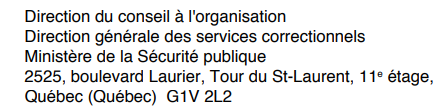
Direction du conseil a l’organisation
Direction generale des services correctionneis
Ministere de La Securite publiique
2525, boulevard Laurier, Tour Du St-Laurent, 11st etage,
Quebeck G1V 2L2
Courts how is she a defendant?
François Bonnardel, the Minister of Public Security in Quebec, can be reached through his official contact details provided by the National Assembly of Quebec and the Government of Quebec.
Quebec has its own correctional services, which operate under the Ministère de la Sécurité publique du Québec (Ministry of Public Security). The department is responsible for the Direction générale des services correctionnels, which manages provincial detention centers (for sentences of less than two years) and offender supervision (parole and probation) in Quebec.
Here are the relevant contact details:
Mailing Address:
François Bonnardel,
Minister of Public Security QuebecBy
By mail: Édifice Marie-Guyart,
18th floor, 675 René-Lévesque Blvd. East,
Quebec City, Quebec G1R 5V7
By telephone: 418-643-2112
By fax: +1 418-646-6168
Email:
This is typically handled via a form on the Quebec Government’s Public Safety website, but you can contact his office directly through the National Assembly website.
When filing a complaint with the Police Sharon suggests:
Have you all done the notice of fraud inducement Peonage doc ? i sent to head of the courts and the filed it into the bs case and i filed a complaint at courts level agency which they relied they had no jurisdiction then this is at the same time that the cert mail from city of isle never came back for fine notice i have also sent a DJ to the state tax dept and the county board for how are we taxpayer persons or residents of the county or the state??? they all claiming we are resident or a taxpayer or a person show me where !!!! MN has a Inquiry into a Investigation also the Labor dept has a process here its a Labor complaint which i also working on
If agencies responsible for overseeing government integrity (such as the **Québec Ombudsman**, **Auditor General of Canada**, or **Public Sector Integrity Commissioner**) are negligent, they are subject to oversight from higher authorities or alternative mechanisms to ensure accountability.
### **For Quebec (Provincial Level):**
1. **National Assembly of Quebec**:
– The National Assembly oversees the operations of agencies such as the Québec Ombudsman. These agencies are required to submit annual reports to the Assembly, which can launch investigations, conduct inquiries, or request audits if there are concerns of negligence.
– Members of the Assembly can raise issues of public interest and demand accountability through legislative hearings or by commissioning independent reviews.
2. **Judicial Oversight**:
– Citizens can file legal challenges in Quebec courts against government actions or agencies if there is evidence of gross negligence or failure to perform statutory duties.
3. **Public Accounts Committee**:
– This legislative committee reviews the financial and operational performance of public agencies. It has the authority to call in officials for questioning if concerns are raised about negligence.
### **For Canada (Federal Level):**
1. **Parliament of Canada**:
– Agencies such as the Auditor General and Public Sector Integrity Commissioner report directly to Parliament. Parliamentary committees can scrutinize the performance of these agencies, request special audits, and call officials for questioning. Committees such as the **Public Accounts Committee** or **Ethics Committee** play key roles in this oversight.
2. **Federal Court**:
– In cases of serious negligence, affected parties can bring legal actions in the Federal Court of Canada. Judicial review can determine whether an agency failed in its duties, and the court can order corrective actions.
3. **Office of the Auditor General**:
– While the Auditor General oversees other agencies, this office itself is subject to performance audits by external auditors. The audit results are reviewed by Parliament, which can intervene if significant issues are found.
4. **Governor in Council**:
– The Governor in Council (essentially the federal Cabinet) has the authority to review the conduct of heads of oversight agencies and take action if they fail to fulfill their duties properly.
5. **Commission of Inquiry**:
– If there is significant concern about systemic failure or negligence in a federal or provincial oversight body, the government may call for a **public inquiry** or establish an independent commission to investigate and recommend reforms.
Together, these mechanisms ensure that agencies responsible for maintaining integrity are held accountable and can be investigated or corrected if they are negligent in performing their duties.
Who is the head officer for the following agency? AMOS Detention By mail: 851 3e rue O, AMOS Quebec J9T 2T4 By telephone: +1 819-444-3060 By email: securitepublique.gouv.qc.ca
ChatGPT said:
ChatGPT
Searched 1 site
The specific head officer (warden or director) in charge of the Amos Detention Center in Quebec isn’t readily available through public sources. However, you can directly contact the facility to request this information:
- Address: 851, 3e Rue Ouest, Amos, QC J9T 2T4
- Phone: +1 819-444-3060
- Email: securitepublique@gouv.qc.ca
For official inquiries or if you need the contact information of the facility’s head officer, calling or emailing the facility or the Ministry of Public Security of Quebec is the most direct approach.
_______________________________
The following appears to be for employees of the Government who wish to report wrongdoing.
Jean-François Lafleur Clerk of the committee
Public Sector Integrity Commissioner of Canada
By mail: 60 Queen Street, 4th Floor
Ottawa, Ontario K1P 5Y7
By telephone: 613-941-6400 or 1-866-941-6400 (toll-free)
By email: info@psic-ispc.gc.ca
Tel.: 613-996-1553
E-mail: JUST@parl.gc.ca
Website: ourcommons.ca/JUST-e
The Office of the Public Sector Integrity Commissioner of Canada (the Office) is an independent federal organization that was established to implement the Public Servants Disclosure Protection Act (the Act), which came into force in April 2007. The Office investigates wrongdoing in the federal public sector and helps protect from reprisal whistleblowers and those who participate in investigations.
City of Val d’Or
In Val-d’Or, Quebec, the city attorney is typically associated with local legal services. Here are some key contacts for legal services in the area:
- Cathy Coulombe Avocats
- Address: 1600 3e Avenue, Val-d’Or, QC J9P 1V6
- Telephone: +1 819-874-1194
- Fax: +1 819-874-1195
- Email: cathy@coulombeavocats.com
- Website: Cathy Coulombe AvocatsChamber of Commerce Canada.
- Murdoch Rodrigue Archambault (MRA Avocats)
- Address: 1034 3rd Avenue, Val-d’Or, QC J9P 1T6
- Telephone: +1 819-825-1122
- Website: MRA AvocatsMRA Avocats.
While these firms provide legal services, if you specifically seek the city attorney’s office, you may need to contact the municipal office for more directed inquiries regarding legal representation for city-related matters. If you’re looking for a specific individual in a city attorney role, reaching out to the Val-d’Or city hall could yield more precise information.
_____________________________________
Ensuring the integrity of a contract in Quebec and Canada involves different agencies at the provincial and federal levels. Both jurisdictions rely on a mix of legal frameworks, government agencies, and courts to enforce contract law and uphold contractual integrity.
In Quebec:
- Ministère de la Justice du Québec (Quebec Ministry of Justice):
- The Ministry of Justice is responsible for administering justice, including enforcing civil law, which governs contracts. In Quebec, the Civil Code of Quebec is the primary legal framework that regulates contracts, ensuring that they are made in good faith and can be legally enforced.
- For contract disputes, the Superior Court of Quebec handles major civil litigation, while the Court of Quebec may deal with smaller disputes (under $85,000).
- More information: Ministère de la Justice du Québec
- Office de la protection du consommateur (OPC):
- The OPC enforces consumer protection laws, ensuring that contracts between businesses and consumers are fair and comply with Quebec law. It deals with complaints about misleading contracts or unfair practices.
- More information: Office de la protection du consommateur
In Canada (Federal Level):
- Competition Bureau of Canada:
- The Competition Bureau is a federal agency responsible for promoting fair competition and ensuring that businesses abide by laws that prevent anti-competitive practices. It investigates breaches in the integrity of business contracts, such as collusion or unfair agreements.
- More information: Competition Bureau
- Courts:
- Contract disputes in Canada (outside Quebec) are generally handled under common law, with civil courts at both the provincial and federal levels adjudicating issues related to contract breaches.
- Major disputes can be addressed in provincial superior courts, while smaller contract disputes (under a certain amount) may go to small claims courts.
- Canadian Consumer Protection Framework:
- Similar to Quebec, other provinces and territories have consumer protection offices that regulate and enforce laws on contracts, particularly between businesses and consumers. These agencies ensure fair dealings and uphold the integrity of contractual relationships.
- More information: Consumer Protection Canada
For Ensuring Contract Integrity:
- Legal Counsel: If you’re involved in contract disputes or want to ensure contract compliance, consulting a lawyer who specializes in civil law (for Quebec) or contract law in other provinces is crucial.
- Arbitration and Mediation: For out-of-court resolutions, arbitration or mediation services may be used to resolve contract disputes and ensure agreements are fair.
These agencies and legal frameworks work together to ensure that contracts are enforced fairly and that any breaches are addressed within the appropriate legal channels.
How come the Canadian BAR Association members are getting away with forcing of contracts?
If you believe that members of the Canadian Bar Association (CBA) or any lawyers are forcing contracts inappropriately, there are several agencies you can contact depending on the nature of the issue:
1. Provincial or Territorial Law Societies
Each province or territory in Canada has its own law society, which regulates the legal profession and oversees the conduct of lawyers. If you believe that lawyers are engaging in unethical practices or violating professional rules regarding contracts, you can file a complaint with the law society in the relevant province. For example:
- Quebec: The Barreau du Québec regulates lawyers in Quebec.
- Website: Barreau du Québec
- Complaints process: Filing a Complaint
- Ontario: The Law Society of Ontario regulates legal professionals in Ontario.
- Website: Law Society of Ontario
- Complaints process: How to file a complaint
The law societies investigate complaints about lawyer misconduct, including unethical behavior in contractual dealings.
2. Competition Bureau of Canada
If the issue involves anti-competitive behavior, collusion, or contracts that violate fair market practices (e.g., price-fixing or forcing anti-competitive contracts), the Competition Bureau of Canada may be the appropriate agency to contact. The bureau ensures that businesses, including law firms, operate fairly and within the law.
- Website: Competition Bureau of Canada
- Contact information: Submit a complaint
3. Office de la Protection du Consommateur (Quebec)
If the contracts in question involve consumers, the Office de la Protection du Consommateur (OPC) in Quebec can help with disputes related to consumer protection. This agency ensures that consumer contracts are fair and transparent, and it can take action against businesses, including legal professionals, that violate consumer protection laws.
- Website: Office de la Protection du Consommateur
- Contact information: OPC Contact
4. Canadian Judicial Council
If you believe that judges or the judicial process is being misused in forcing contracts, the Canadian Judicial Council handles complaints about the conduct of federally appointed judges.
- Website: Canadian Judicial Council
- Complaints process: Judicial Conduct Complaints
5. Legal Action
If you suspect fraud, coercion, or other serious misconduct related to contract enforcement, you may need to consider legal action. Consulting a different lawyer or seeking legal advice from another law firm might be necessary to protect your rights.
Summary of Steps:
- File a complaint with the appropriate law society.
- Contact the Competition Bureau of Canada if anti-competitive practices are involved.
- For consumer-related contracts, contact the Office de la Protection du Consommateur (OPC) in Quebec.
- If judges or courts are involved in misconduct, contact the Canadian Judicial Council.
These agencies are tasked with upholding professional and market integrity and ensuring contracts are legal and fair.
Who do I report to when the Quebec BAR Association members are enforcing and forcing contracts?
If you believe members of the Barreau du Québec (Quebec Bar Association) are enforcing or forcing contracts inappropriately or unethically, you can file a complaint directly with the Barreau du Québec. They are responsible for overseeing lawyer conduct in Quebec and ensuring that legal professionals adhere to ethical and legal standards.
Steps to Report Misconduct:
- File a Complaint with the Barreau du Québec:
The Barreau du Québec handles complaints about the professional conduct of lawyers, including issues related to unethical practices in contract enforcement.
- Website for Complaints:
File a Complaint with Barreau du Québec - General Website:
Barreau du Québec
- Contact Information for Filing Complaints:
- Address:
445, boulevard Saint-Laurent
Montréal, Québec H2Y 3T8 - Telephone: +1 514-954-3411 or 1-844-954-3411
- Fax: +1 514-954-3406
- Email: public@barreau.qc.ca
Additional Steps:
- If the misconduct involves consumer issues, such as misleading or unfair contracts, you can also contact the Office de la protection du consommateur in Quebec:
- Website: Office de la protection du consommateur
If your complaint involves broader legal or anti-competitive behavior, consider reaching out to the Competition Bureau of Canada as well:
- Website: Competition Bureau of Canada
These agencies can investigate and take action against any misconduct by members of the legal profession in Quebec.
__________________________________
The AMOS Detention Center in Quebec is located at 851 3e Rue O, Amos, QC J9T 2T4. You can contact them by phone at +1 819-444-3060. Unfortunately, I was not able to find the name of the current head officer or a direct business email address. Their official website is listed under the Quebec Public Security Ministry at securitepublique.gouv.qc.ca. The fax number was not listed, but you might reach out via phone for further details.
____________________________________
Friend: no, you are not the beneficiary of the public trust. There are minimal decisions you can make when you didn’t create the trust nor do you run the investments/business that the trustee is under. Friend: but because “they” committed fraud, you have the rights to the interest when you claim the estate in probate. My self: Right, those rules and regulations are created by them, for them – the do not apply to the people, only the creatures of state. Which is why inquiring because there must be a way to hold them accountable when we are not the same, or of their nature. We are one of the highest forms of God’s creations, made in his image, which is Spirit. We naturally have the ability to command their performance with out harm to ourselves or them, in the interest of the best possible outcome for all involved. Figuring out why it is that one must become like them (ein and such, stepping down into commerce to acquire that which would otherwise be attainable naturally through expressing of our dominion granted to us in birthrite) in order to command their performance. Those trusts would not exist without people, as they did not magically happen by or create them selves  🏼
🏼 duly noting. Thank you for your insight
The concept of the public trust refers to the legal and philosophical principle that certain resources are held by the government in trust for the benefit of the public. The beneficiaries of the public trust typically include all citizens, as these resources are meant to be accessible and beneficial to the public at large.
Beneficiaries of the Public Trust:
- General Public: The primary beneficiaries are the citizens of the jurisdiction in which the public trust is established. This includes the right to access natural resources such as air, water, and wildlife.
- Future Generations: The public trust doctrine emphasizes the importance of preserving resources for future generations, ensuring they also benefit from these public assets.
- Community and Ecological Interests: In some interpretations, the beneficiaries extend to community interests, including the ecological health of the environment, emphasizing the need for sustainable management of natural resources.
Legal Framework:
- In the United States, the public trust doctrine has roots in common law, particularly relating to navigable waters and the lands beneath them, but it has been expanded to cover environmental protection and natural resources. This principle is upheld in various state constitutions and court rulings.
- In Canada, the public trust doctrine is also recognized, particularly in relation to natural resources and environmental law, where the government acts as a steward of public resources.
For more information, you can refer to the following sources:
These resources provide further insights into the public trust doctrine and its beneficiaries.
_____________________________________
Judicial Opinion of Justice Eismann in Peterson vs Peterson (2014) where he clearly spells out why statutes are not Law, This case was seen in a court of the United States. Is there a similar case where the Judge made the opinion that statutes are not law?
ChatGPT said:
ChatGPT
In the context of judicial opinions stating that statutes are not law, several cases and legal discussions have emerged over time, particularly in the realm of common law and critiques of statutory authority. While Peterson v. Peterson (2014) involving Justice Eismann is one instance, other notable cases and opinions also delve into similar themes.
Notable Cases and Opinions:
- Marbury v. Madison (1803): This landmark case established the principle of judicial review, where Chief Justice John Marshall asserted that any law contrary to the Constitution is void. While it doesn’t explicitly state that statutes are not law, it sets a precedent that laws must align with constitutional principles.
- We the People Foundation v. United States: In this case, some arguments presented questioned the validity of certain statutes as law. The court noted that not all statutes have the force of law unless they are made in accordance with the Constitution. This reflects ongoing debates about the nature of statutory law versus constitutional law.
- Commonwealth v. Burch (1991): In this case, a judge expressed skepticism about certain statutes, suggesting that they do not hold legal weight if they contravene established legal principles. This is often referenced in discussions about the legitimacy of statutory authority.
- Legal Commentaries: Various legal scholars and practitioners have published opinions on the nature of statutes versus laws, asserting that statutes must conform to higher legal standards (like constitutional law) to be considered valid.
Further Reading
For a deeper exploration of these themes and similar cases, you can refer to legal analyses and case law databases. Here are some links for further research:
These resources provide more context about judicial interpretations concerning statutes and their legal standing.
You said: Can i use a case determined by a justice of the United States?
ChatGPT said:
Yes, you can use a case determined by a justice of the United States, especially if it is relevant to your argument or legal context. Here are some key points to consider when referencing U.S. cases in legal arguments:
1. Precedential Value:
- U.S. Supreme Court decisions serve as binding precedent for all lower courts in the U.S. This means that if the case has established a principle of law, it can be cited as authoritative.
- Cases from federal appellate courts can also serve as precedent within their respective circuits.
2. Comparative Jurisprudence:
- While cases from the U.S. may not be binding in Canadian or Quebec courts, they can provide persuasive authority. Courts may consider U.S. case law when interpreting similar legal principles, particularly in areas where Canadian law is still developing.
- This is especially true in constitutional law, administrative law, and other areas where there may be parallels in legal principles.
3. Scholarly and Legal Commentary:
- U.S. cases can be referenced in legal writings, briefs, or arguments to support interpretations or analyses of statutes and legal principles. This can enrich your legal argument by showing how similar issues have been approached in another jurisdiction.
Examples of U.S. Cases to Reference:
- Marbury v. Madison (1803): This case established the principle of judicial review, which is fundamental in discussions about the authority of statutes versus constitutional law.
- Brown v. Board of Education (1954): Often cited for its principles regarding equality and justice, it highlights the importance of adherence to constitutional standards over statutory mandates.
Citing U.S. Cases:
When citing a U.S. case in your legal work, be sure to:
- Provide the full case name, citation, and court.
- Include a brief explanation of its relevance to your argument.
Further Resources:
For more detailed case law and analysis, consider visiting these resources:
- Oyez: A comprehensive resource for U.S. Supreme Court cases.
- Justia: Offers access to case law, statutes, regulations, and legal articles.
Using U.S. case law can provide a broader context and strengthen your arguments, especially in comparative legal analyses.
____________________________________
The statement you provided outlines several legal principles related to the issuance and execution of warrants, as well as protections against unlawful arrest. The ideas mentioned, such as the necessity for a warrant to be based on probable cause, signed by a judge with proper jurisdiction, and supported by an affidavit, are core constitutional protections, particularly in U.S. law, stemming from the Fourth Amendment.
Here are some of the key points discussed in the statement and their legal foundation:
- Probable Cause and Jurisdiction:
- For a warrant to be valid, it must be issued based on probable cause. This is supported by both U.S. and Canadian law, where officers must demonstrate reasonable grounds to believe a crime has occurred before a warrant can be issued.
- The judge must have the authority (jurisdiction) to issue the warrant.
- Affidavit and Signature by a Judge:
- The affidavit must be a sworn statement outlining the evidence for the warrant, which helps ensure the legitimacy of the process.
- The judge must personally sign the warrant, ensuring it is not a mechanical or “rubber stamp” process.
- Due Process Protections:
- If someone is arrested, they must be brought before a judge or magistrate quickly, often within 24-48 hours, to determine whether the arrest was lawful. This principle is known as habeas corpus, which protects against unlawful detention.
- No Unlawful Detention or False Arrest:
- The idea that an unlawful arrest could constitute assault, battery, and trespass also aligns with the idea that individuals have a right to be free from arbitrary detention and police overreach. In the U.S., these principles are found under the Fourth Amendment and similar protections exist in Canadian law through Section 8 (protection against unreasonable search and seizure) and Section 9 (protection against arbitrary detention) of the Canadian Charter of Rights and Freedoms.
Some aspects of the statement, such as “no handcuffs” or requiring officers to show “title to your biological property/body,” are not conventional legal standards in mainstream law. These points likely reflect specific legal philosophies, often aligned with certain views of individual sovereignty or interpretations of the law that fall outside the traditional legal framework.
For more information on related topics, you may want to research:
Cases related to unlawful arrest and false imprisonment_
Fourth Amendment Jurisprudence in the U.S. (Illinois v. Gates, Gerstein v. Pugh)
Canadian Charter of Rights and Freedoms, Sections 8 and 9 (search and seizure, arbitrary detention)
____________________________________
To access the municipal bylaws for the City of Val-d’Or, you can visit their official city website or consult the provincial laws database at Légis Québec. Each municipality in Quebec, including Val-d’Or, has its own set of bylaws that can be accessed either through the city hall or the municipality’s website. These bylaws cover a range of local regulations, such as zoning, building permits, and signage.
For official and updated municipal bylaws in Quebec, you can also use resources like Légis Québec, which provides access to laws and municipal regulations across the province【8†source】【9†source】.
Here is the direct link to explore Quebec’s laws and regulations: Légis Québec【8†source】. Alternatively, you can contact Val-d’Or’s city administration for specific municipal codes.
_____________________________________
You can access the full text of the Public Administration Act (Chapter A-6.01) in Quebec on the LégisQuébec website. Here’s the direct link to the Act: Public Administration Act (Chapter A-6.01)【17†source】【18†source】.
This resource provides comprehensive details about the provisions, including the obligations of public bodies and their accountability, performance agreements, and strategic planning within Quebec’s public administration.
SECTION II PURPOSE OF THE ACT
3. The purpose of this Act is to enable the accomplishment of this mission. To this end, it establishes a way of organising human resources designed to promote:
(1) the efficiency of the administration and the optimal use and development of human resources;
(2) the exercise of human resources management powers as close as possible to the persons concerned and the application of a system according to which the official vested with those management powers must account for them, taking into account the means at his disposal;
(3) equal access for all citizens to the civil service;
(4) the impartiality and fairness of decisions affecting civil servants;
(5) the optimal contribution, within the public service, of the various components of Québec society.
The method of organization of human resources must also promote the attainment of the objectives of the Public Administration Act (chapter A-6.01).
CHAPTER II RIGHTS AND OBLIGATIONS OF STAFF MEMBERS SECTION I
TERMS OF SERVICE § 1. — Standards of ethics and discipline
4. A civil servant shall perform the duties of his or her post in a principal and habitual manner.
He also exercises the powers that may be entrusted to him by the person authorized by law to define his duties and to direct his work.
The Minister shall exercise those powers, duties and functions in accordance with the standards of ethics and discipline set out in this Act or in a regulation made pursuant to this Act.
Article 5. The civil servant is automatically required to be loyal and to bear allegiance to the constituted authority.
The public prosecutor must perform his or her duties in the public interest, to the best of his or her ability, with honesty and impartiality, and must treat the public with consideration and diligence.
1983, c. 55, s. 5.
6. Subject to the provisions relating to access to information and the protection of personal information, public servants are required to exercise discretion as to what they become aware of in the performance of their duties.
1983, c. 55, s. 6.
7. Civil servants may not have a direct or indirect interest in an undertaking which brings their personal interests into conflict with the duties of their duties.
If such an interest falls to him by inheritance or gift, he must renounce it or dispose of it with all possible diligence.
1983, c. 55, s. 7.
8. A public servant shall not accept any sum of money or other consideration for the performance of his duties in excess of that which is allotted to him for that purpose under this Act.
1983, c. 55, s. 8.
9. An official may not, directly or indirectly:
(1) grant, solicit or accept, in his capacity as a public servant, an undue favour or advantage for himself or for another person;
(2) use for his own benefit State property or information obtained in his capacity as a civil servant.
1983, c. 55, s. 9.
Art. 10. The civil servant must demonstrate political neutrality in the performance of his or her duties.
1983, c. 55, s. 10.
Art. 11. The civil servant must show restraint in the public manifestation of his political opinions.
1983, c. 55, s. 11.
Art. 12. Nothing in this Act prohibits a public servant from being a member of a political party, attending a political meeting or making a contribution in accordance with the law to a political party, a body of a political party or a candidate in an election.
Art. 16. Public servants who contravene the standards of ethics and discipline are liable to disciplinary action, up to and including dismissal, depending on the nature and seriousness of the misconduct.
1983, c. 55, s. 16.
Art. 17. The imposition of discipline on a public servant, in accordance with section 16 or for any other good and sufficient cause, shall be made by the deputy minister or the head of an agency to which he or she reports.
Art. 18. A public servant who is incompetent or unable to perform his or her duties may be demoted or dismissed.
Art. 22. A public servant may, in accordance with the requirements prescribed by regulation, be temporarily relieved of his or her duties in order to enable the competent authority to make an appropriate decision in the event of an urgent situation requiring rapid intervention or in a case of alleged serious misconduct, whether it is a breach of a standard of ethics or discipline, or a criminal or penal offence.
Art. 32. If a public servant is sued by a third party for an act that he or she has done or omitted to do in the performance of his or her duties, the Attorney General shall take up the cause of the public servant, unless the latter has committed gross negligence.
Art. 33. An employee not covered by a collective agreement may appeal to the Public Service Commission a decision informing him or her of
____________________________________
chapter C-19
City and Towns Act
DIVISION I
DECLARATORY AND INTERPRETATIVE PROVISIONS
14.1. The Attorney General may
(1) apply to quash or set aside a by-law of the council or a procès-verbal, roll, resolution or other order of the council or of the executive committee;
(2) exercise, against a member of the council or an officer or employee of a municipality or of a supramunicipal body who is disqualified from holding his office or employment, an application for judicial review under subparagraph 4 of the first paragraph of article 529 and articles 532 to 535 of the Code of Civil Procedure (chapter C-25.01).
For the purposes of this section, the expression “supramunicipal body” has the meaning given to it by sections 18 and 19 of the Act respecting the Pension Plan of Elected Municipal Officers (chapter R-9.3).
1980, c. 16, s. 67; 1982, c. 63, s. 109; 1988, c. 85, s. 83; 1996, c. 2, s. 123; 2000, c. 56, s. 225; 2014, c. 1, s. 780; I.N. 2016-01-01 (NCCP).
ORGANIZATION OF THE MUNICIPALITY
§ 1. — General powers of the municipality
§ 1.2. — Occupation of the public domain of the municipality
2002, c. 77, s. 30.
29.19. A municipality may, by by-law, as regards the occupation of its public domain, determine
(1) the purposes for which the occupation is authorized unconditionally or may be so authorized subject to compliance with certain conditions;
29.20. Where the by-law provided for in section 29.19 is in force, every structure or installation situated in the public domain of the municipality otherwise than in accordance with an authorization granted under the by-law must be removed from the public domain of the municipality.
Such by-law may contain rules concerning the removal of the structure or installation.
_________________________________________
https://www.cfp.gouv.qc.ca/en/
About Us
Mission
The mission of the CFP, through its administrative tribunal and oversight activities, is to help ensure that citizens have equal access to the public service, that those promoted and recruited have the required competencies, and that the decisions made by human resources management within the public service are impartial and equitable.
Main Mandates
As an administrative tribunal, the Commission hears the following types of recource:
- On working conditions and administrative or disciplinary measures relating to public servants not governed by a collective agreement;
- On the interpretation or application of the agreement on the working conditions of criminal and penal prosecutors;
- On the psychological harassment of public servants and not governed by a collective agreement; as well as of members and directors of public service bodies;
- From public servants, regarding the procedures used to determine their eligibility or to evaluate them, during a promotion-only qualification process
- From certain persons entitled to return to the public service
Other Mandates
The Commission also carries out the following activities, in addition to its administrative tribunal and oversight:
Conducts studies on human resource management in the public service; [I have to find out what this means]
For further information, please contact our information service at 1 800 432-0432 or at cfp@cfp.gouv.qc.ca
_____________________________________
The Conseil du trésor (Treasury Board) in Quebec is a government body responsible for managing the province’s public finances, ensuring efficient allocation of resources, and overseeing the administration of public funds. Its main roles include preparing budget plans, developing financial policies, and managing human resources in the public sector. It also plays a key role in controlling public expenditures and ensuring the financial accountability of government departments and agencies.
The Conseil du trésor is led by the President of the Treasury Board, a minister in the Quebec government, who works closely with the Ministry of Finance. Together, they are responsible for the financial planning and the allocation of public funds in accordance with government priorities.
In summary, the Conseil du trésor helps ensure the financial health and efficiency of Quebec’s public administration through budgeting, resource allocation, and fiscal oversight.
For more detailed information, you can consult the official website of the Quebec government.
__________________________________________________
To reach Me Patrick Michel, the Prosecutor and Director of Criminal and Penal Prosecutions for the Government of Quebec, you can contact the general office of the Directeur des poursuites criminelles et pénales (DPCP) in Quebec. Below is the contact information:
Contact Information:
Mailing Address:
Directeur des poursuites criminelles et pénales (DPCP)
Édifice Jules-Dallaire
2828, boulevard Laurier, Tour 1, 12e étage
Québec (Québec) G1V 0B9
Phone Number:
418-643-9059
Fax Number:
418-646-4912
Email Address:
dpcp@dpcp.gouv.qc.ca
__________________________________________________
If you believe that members of the Quebec Bar Association (Barreau du Québec) are enforcing or forcing contracts inappropriately, you should file a complaint with the Barreau du Québec. Here are the steps to do so:
- Contact the Office of the Syndic: The Office of the Syndic handles complaints about lawyer misconduct. You can submit a written application for an investigation2.
- Provide Necessary Information: Include the reasons for your complaint, the name and contact information of the lawyer(s) involved, the date of the alleged misconduct, and your own contact information.
- Submit Your Complaint: You can send your application by email, fax, or regular mail.
Here is the contact information for the Office of the Syndic:
- Email: syndic@barreau.qc.ca
- Fax: 514 954-3478
- Mailing Address:
- Office of the Syndic
- 445 Saint-Laurent Blvd
- 5th Floor
- Montreal, Quebec H2Y 3T8
Would you like more information on how to proceed with your complaint?
please provide more information on how to proceed with a complaint against a member of the Quebec BAR Association. Is there a template letter for the complaint?
To file a complaint against a member of the Quebec Bar Association, you can follow these steps:
- Contact the Office of the Syndic: This office handles complaints about lawyer misconduct. You can submit a written application for an investigation1.
- Provide Necessary Information: Include the reasons for your complaint, the name and contact information of the lawyer(s) involved, the date of the alleged misconduct, and your own contact information.
- Submit Your Complaint: You can send your application by email, fax, or regular mail.
Here is the contact information for the Office of the Syndic:
- Email: syndic@barreau.qc.ca
- Fax: 514 954-3478
- Mailing Address:
- Office of the Syndic
- 445 Saint-Laurent Blvd
- 5th Floor
- Montreal, Quebec H2Y 3T8
The head of the Quebec Bar is currently Catherine Claveau, who was re-elected to her position in 2023. The Quebec Bar (Barreau du Québec) oversees the legal profession in the province, ensuring that its members adhere to professional standards and ethics.
For more detailed information, you can visit the Barreau du Québec website.
Template for Complaint Letter
Here’s a sample template for your complaint letter:
[Your Name] [Your Address] [City, Province, Postal Code] [Email Address] [Phone Number] Date: [Insert Date]
Office of the Syndic 445 Saint-Laurent Blvd 5th Floor Montreal, Quebec H2Y 3T8
Dear Sir/Madam,
I am writing to file a formal complaint against [Lawyer’s Name], a member of the Quebec Bar Association, regarding [describe the misconduct or issue]. The alleged misconduct occurred on [date of the incident] and involved [briefly describe the incident and its impact].
I have attached copies of any relevant documents to support my complaint. I kindly request that an investigation be conducted into this matter.
Thank you for your attention to this matter. I look forward to your response.
Sincerely, [Your Name]
__________________________________________________
Apologies for the inconvenience. Here’s the correct process to file a complaint against a judge in Quebec through the *Conseil de la magistrature du Québec*:
### Steps to File a Complaint:
1. **Visit the Conseil de la magistrature website**: While the specific link may not be working, you can access the official website by navigating through:
– **[https://www.conseildelamagistrature.qc.ca](https://www.conseildelamagistrature.qc.ca)**
2. **Find the Complaints Section**:
– Once on the website, look for the section related to **filing a complaint against a judge**. This section will provide instructions and forms you need to complete.
3. **Complete the Complaint Form**:
– You can typically download a form or follow instructions to submit the complaint electronically or via mail. The form will ask for details about the judge, the incident, and your contact information.
4. **Submit Your Complaint**:
– Complaints can be submitted by email, fax, or mail to the *Conseil de la magistrature*:
– **Fax**: 418-644-0039
– **Email**: complaints@conseildelamagistrature.qc.ca
– **Mailing Address**:
Conseil de la magistrature du Québec
300, boulevard Jean-Lesage, Office 1.11
Quebec (Quebec) G1K 8K6
If you still experience issues with the website, you may also contact them by phone to request assistance or additional details.
__________________________________________________
Here are 3 judges in your case:
- Judge Claude Lachapelle: He is a judge for the Court of Quebec, located in Joliette, Quebec. His role includes presiding over cases within the provincial jurisdiction, which can include civil, criminal, and family matters, depending on the assignment. You can find some more detailed information on his work and career at various legal directories or directly through the Court of Quebec’s listings
CANADIAN LAWYER LIST - Judge Gaboay Lase: There is no available information on a judge with the name “Gaboay Lase” in the current judicial listings of Quebec. This name might be misspelled or unlisted in publicly available sources. If you have alternate spellings or further details, it may help refine the search.
- Judge Sarah Plamondon, a judge at the Court of Quebec in Val-d’Or, who was appointed as part of the region’s judiciary. Her appointment was part of efforts to strengthen the judicial presence in the Abitibi-Témiscamingue region
Apologies for the inconvenience. Here’s the correct process to file a complaint against a judge in Quebec through the Conseil de la magistrature du Québec:
Steps to File a Complaint:
- Visit the Conseil de la magistrature website: While the specific link may not be working, you can access the official website by navigating through:
- Find the Complaints Section:
- Once on the website, look for the section related to filing a complaint against a judge. This section will provide instructions and forms you need to complete.
- Complete the Complaint Form:
- You can typically download a form or follow instructions to submit the complaint electronically or via mail. The form will ask for details about the judge, the incident, and your contact information.
- Submit Your Complaint:
- Complaints can be submitted by email, fax, or mail to the Conseil de la magistrature:
- Fax: 418-644-0039
- Email: complaints@conseildelamagistrature.qc.ca
- Mailing Address: Conseil de la magistrature du Québec
300, boulevard Jean-Lesage, Office 1.11
Quebec (Quebec) G1K 8K6
- Complaints can be submitted by email, fax, or mail to the Conseil de la magistrature:
If you still experience issues with the website, you may also contact them by phone to request assistance or additional details.
__________________________________________________
File a complaint against a lawyer:
______________________________________________
File a complaint against the Prosecutor
List of Public Officers for the City of Val d’Or
Citizen Protector for Quebec
1-800-361-5805
Personal Rights Commissioner
The Personal Rights Commissioner for Quebec is part of the Commission des droits de la personne et des droits de la jeunesse (CDPDJ), which handles personal rights in the province. The head of the Commission, which includes the role of protecting personal rights, is the president.
The name of the president is Philippe-André Tessier.
You can contact the CDPDJ through the following information:
- Phone number (Head Office): +1 514-873-5146
- Fax: +1 514-873-6032
- Email: information@cdpdj.qc.ca
- Website: https://www.cdpdj.qc.ca
For specific inquiries or to get in touch with the Personal Rights Commissioner, it is best to call or email their general contact points above.
I was given the title Citizen Protector for Quebec with the telephone number 1-800-361-5865. Can you please provide me more information?
ChatGPT said:
The title “Citizen Protector” in Quebec is associated with the Protecteur du citoyen (Ombudsperson), an independent authority responsible for ensuring that public services in Quebec respect citizens’ rights. The Citizen Protector investigates complaints against public services, makes recommendations for improvements, and helps resolve disputes between citizens and government entities.
Contact Information for the Protecteur du citoyen:
- Website: Protecteur du citoyen
- Phone: 1-800-361-5865 (which you mentioned)
- Address: 1080, côte du Beaver Hall, 10th Floor, Montreal, Quebec, H2Z 1S8
This office acts similarly to an ombudsperson in other regions and serves to defend citizens’ rights and ensure public service fairness.
You said:
What is the name of the CEO of President of this agency?
ChatGPT said:
The President of the “Protecteur du citoyen” (Quebec Ombudsman) is currently Marc-André Dowd. He took office on March 27, 2023, after being appointed by the National Assembly of Quebec. The Ombudsman’s role is to ensure that the rights of citizens are respected in their dealings with public services and to improve administrative justice in Quebec.
For further details, you can visit the official website of the Protecteur du citoyen (when accessible): Protecteur du citoyen.
______________________________________________
Celine Brindamour Mayor City of Val d’Or
By mail: 800, rue de la C\u00f4te
Val-d’Or, Québec, J9P 1N2
By telephone: (819) 723-2000
By fax Number: (819) 723-2001
By email:
General email: info@ville.valdor.qc.ca
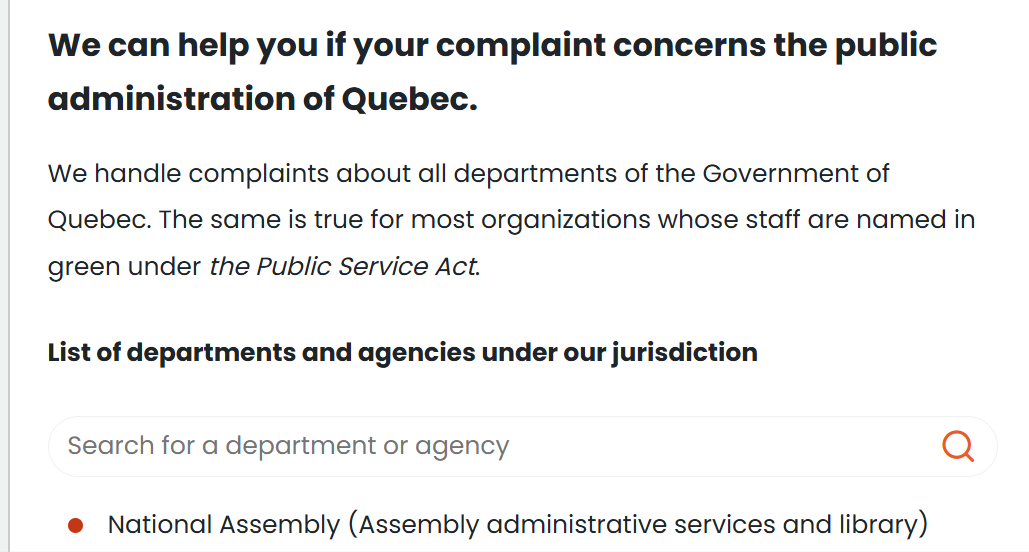
Charlotte-Anne Malischewski
(Interim Chief Commissioner) Deputy Chief Commissioner
Canadian Human Rights Commission
By mail: 344 Slater Street, 8th Floor
Ottawa, Ontario K1A 1E1
By email: complaint.plainte@chrc-ccdp.gc.ca
By fax: (613) 996-9661
Me Mélanie Hillinger Police Ethics Commissioner
By mail: Quebec city office
2535, boul. Laurier, Suite 1.06
Québec (Québec) G1V 4M3
By telephone : 418 643-7897 Toll-free number : 1 877 237-7897
By fax: 418 528-9473
By email: deontologie-policiere.quebec@comdp.gouv.qc.ca
Simon Jolin-Barrette Minister of Justice for the Province of Quebec
By mail: 1200, route de l’Église, 8th floor
Québec, Quebec G1V 4M1
By telephone: 418-643-4210
By fax: 418-646-0027
By email: ministre@justice.gouv.qc.ca
Pelletier Julien Prosecutor for the Province of Quebec
By Mail Address: Directeur des poursuites criminelles et pénales
Complexe Jules-Dallaire, tour 1, bureau 500
2828, boulevard Laurier
Québec (Québec) G1V 0B9
By telephone: 418-643-4085
By email: julien.pelletier@dpcp.gouv.qc.ca
François Bonnardel
Minister of Public Security Quebec
By mail:Édifice Marie-Guyart
18th floor, 675 René-Lévesque Blvd. East
Quebec City, Quebec G1R 5V7
By telephone: 418-643-2112
By fax: +1 418-646-6168
By email: ministre@msp.gouv.qc.ca
Yet to be Named Head Officer
AMOS Detention Center
By mail: 851 3e rue O, AMOS Quebec J9T 2T4
By telephone: +1 819-444-3060
Website: securitepublique.gouv.qc.ca
Kevin Lafrance Internal Affairs Officer Val d’Or Police Department
For Quebec Safety General Headquarters
By mail: Branch 1701 Parthenais Street Montreal
Quebec H2K 3S7
By telephone: 514 598-4141
By fax: Fax : 514 598-4242
By email: kevin.lasrance@surete.qc.ca
Ms. Dana Cristina Cadeschi Information Officer
Service for Access and Protection of Information (UO 3210)
600 Fullum Street, Suite 1.100
Montreal, Quebec H2K 3L6
By telephone: 514-596-7716
By fax: 514 596-7717
By email: acesdocuments@surete.qc.ca
It seems the email address provided, acesdocuments@surete.qc.ca, is not functioning. To find the correct contact information for Ms. Dana Cristina Cadeschi at the Service for Access and Protection of Information (UO 3210), I recommend contacting the Sûreté du Québec (SQ) directly.
You can try reaching out through their general contact options:
- Sûreté du Québec general inquiry line:
Phone: 514-598-4141
Toll-Free: 1-800-659-4264 - Alternatively, try using their official contact form on the website to inquire about the correct email address for your specific request regarding access to information.
__________________________________________________
Settlement conferences
After filing an application at the Court of Quebec, Superior Court of Quebec or Court of Appeal of Quebec to settle a dispute by going to court, you may wish to explore other ways to resolve the situation.
A settlement conference offers an opportunity to negotiate an out-of-court agreement with the other party with assistance from a judge. The service is provided free of charge.
A settlement conference is a form of judicial dispute resolution or judicial mediation, and it shares some of the characteristics of the mediation process .
______________________________________
I asked Chat GPT:
What are the duties and responsibilities of Ms. Dana Cristina Cadeschi Service for Access and Protection of Information (UO 3210)
ChatGPT said:
Ms. Dana Cristina Cadeschi works in the Service for Access and Protection of Information (UO 3210), which likely involves ensuring compliance with Quebec’s access to information laws, such as the Act respecting Access to documents held by public bodies and the Protection of personal information. Her responsibilities may include:
- Processing Requests for Access to Information:
Handling formal requests from individuals seeking access to government records or their personal data held by public institutions. - Protecting Personal Information:
Ensuring that personal information managed by the organization is protected in accordance with privacy laws, preventing unauthorized access or breaches. - Advising on Legal Compliance:
Offering guidance on how the organization can comply with laws related to the access and protection of information. This may involve reviewing policies and practices, making sure they align with Quebec’s legal frameworks. - Managing Complaints and Appeals:
Addressing complaints related to access to information or privacy concerns, and potentially handling appeals if requests for information are denied.
For exact details on her specific duties, it is best to contact the Sûreté du Québec or the Service for Access and Protection of Information directly.
If you need more precise information, feel free to contact the relevant department or inquire further with her office.
_________________________________________________
Emails themselves are generally not monitored by Canada Post or any international postal agency, as Canada Post is primarily responsible for physical mail delivery, not digital communications like email.
However, email communications can be subject to monitoring or interception in specific contexts:
1. Internet Service Providers (ISPs):
Your email traffic passes through various servers, and Internet Service Providers (ISPs) can technically access your email metadata (sender, recipient, time of transmission, etc.). While they don’t usually monitor content, some governments may require ISPs to retain metadata for law enforcement purposes.
2. Email Service Providers:
Email providers (e.g., Gmail, Yahoo, etc.) may scan emails for security reasons, such as spam detection or malware prevention. Some also scan emails to tailor advertisements, though privacy-focused services (e.g., ProtonMail) pledge not to do this.
3. Law Enforcement & National Security:
Emails can be monitored or intercepted by law enforcement agencies with the proper legal authorization. For instance, in Canada, government agencies such as the Communications Security Establishment (CSE) or Canadian Security Intelligence Service (CSIS) can monitor communications (including emails) for national security reasons under legal frameworks like the Criminal Code or Anti-Terrorism Act.
Internationally, email surveillance can occur through intelligence-sharing agreements like the Five Eyes Alliance, involving countries like Canada, the United States, the United Kingdom, Australia, and New Zealand.
4. Email Encryption and Privacy:
If privacy is a concern, using end-to-end encryption services (e.g., ProtonMail, Signal) can help ensure that only the intended recipient can read your emails, reducing the risk of unauthorized monitoring.
In Summary:
- Canada Post does not monitor emails; it handles physical mail.
- Monitoring of emails typically involves ISPs, email providers, or government agencies, depending on legal and security circumstances.
If you’re concerned about email privacy, encryption or privacy-focused services may provide additional security.
Would you like more information on how to secure your email communications?
_________________________
In Canada, the Postmaster General is a federal position rather than a provincial one, and the duties related to postal services are managed by Canada Post at the federal level. There is no separate Postmaster General for the province of Quebec.
However, for inquiries related to postal services in Quebec, you can contact Canada Post directly:
Contact Information for Canada Post:
- Customer Service (Canada Post):
Phone: 1-866-607-6301
TTY (for the hearing impaired): 1-877-766-9275 - Head Office Mailing Address:
Canada Post
2701 Riverside Drive
Ottawa, ON, K1A 0B1 - General Email for Canada Post:
You can reach out via their contact form on the website.
If you’re looking for a specific local contact within Quebec, Canada Post can guide you to the appropriate regional office or postmaster for your area.
Let me know if you need additional help!
_______________________________________________
In the Province of Quebec, traffic police enforce a range of laws and regulations related to road safety and vehicle operation. These laws are primarily found in the following acts:
1. Highway Safety Code
- Primary Act: This is the main law governing road safety in Quebec. It covers rules of the road, vehicle standards, driver responsibilities, and penalties for infractions.
- Enforced By: The Sûreté du Québec (provincial police), municipal police, and traffic controllers.
- Key Provisions:
- Speed limits, impaired driving, seatbelt use, and rules for drivers, cyclists, and pedestrians.
- Penalties for infractions like speeding, driving under the influence, and reckless driving.
2. Criminal Code of Canada
- Enforced By: Police officers across Quebec.
- Although federal, this code applies to serious offenses related to road use, such as impaired driving (under the influence of alcohol or drugs), dangerous driving, and hit-and-run accidents.
- These are criminal offenses with more severe penalties, including imprisonment.
3. Regulation Respecting Road Vehicles (Règlement sur les véhicules routiers)
- Covers: Specific technical requirements for road vehicles, including safety inspections, vehicle modifications, and equipment standards.
- Traffic Police Responsibility: Ensure vehicles meet the legal standards for roadworthiness.
4. Act Respecting Offences Relating to Alcohol or Drugs in Road Vehicles (Loi sur les infractions en matière d’alcool ou de drogues dans les véhicules routiers)
- Focus: Enforces rules related to impaired driving, covering both alcohol and drug-related offenses, with specific procedures for roadside checks, breathalyzer tests, and penalties for violations.
5. Act Respecting Public Transit Authorities (Loi sur les sociétés de transport en commun)
- Application: Enforces laws concerning public transportation vehicles and their operation on the road, ensuring that public transit services operate safely.
6. Tobacco Control Act (Loi sur le tabac)
- Enforcement: Includes laws about smoking in vehicles with minors, which traffic police can enforce.
7. Motor Vehicle Insurance Act (Loi sur l’assurance automobile)
- Application: Enforces mandatory vehicle insurance coverage and ensures that drivers have valid insurance while operating vehicles on public roads.
Enforcement Actions by Traffic Police:
- Issuing tickets for speeding, running red lights, or not wearing seat belts.
- Conducting roadside checks for impaired driving (alcohol or drugs).
- Ensuring vehicles comply with safety and environmental standards.
- Verifying driver’s licenses, vehicle registration, and insurance.
- Responding to road accidents and enforcing criminal provisions if necessary (e.g., dangerous driving).
Traffic police in Quebec have broad authority to stop vehicles to enforce these laws, ensure road safety, and investigate potential infractions. Would you like more details on any specific law or provision?
____________________________________
A Temporary Restraining Order (TRO) is a legal document issued by a court to protect someone from harm or harassment by temporarily restricting a specific individual or entity’s actions. Writing a TRO typically requires clear and precise language to ensure it serves its purpose and complies with legal standards. Below is a general template for requesting a TRO in your case, but keep in mind that it’s important to consult with an attorney to ensure that it complies with local laws and the specifics of your situation.
[Your Name]
[Your Address]
[City, Province, Postal Code]
[Phone Number]
[Email Address]
[Date]
[Name of the Court]
Val d’Or Courthouse
[Address of the Courthouse]
[City, Province, Postal Code]
Re: Request for Temporary Restraining Order
Account/Case File No.: 615-01-033407-233
To Whom It May Concern,
I, [Your Full Name], the Claimant in the case referenced above, respectfully request the issuance of a Temporary Restraining Order (TRO) against [Name(s) of the individual(s) or entities you are seeking to restrain] to prevent further harm, injury, or damage. This request is made in light of the unlawful actions and violations perpetrated by the aforementioned party/parties in relation to case number 615-01-033407-233.
I. Background and Justification for TRO:
- Date and nature of the incident(s):
[Provide a concise description of the events that led to the request, such as when and how the harm or threat of harm occurred. Mention any specific unlawful actions, including trespassing, harassment, violence, or property damage, and the impact these actions have had on you.] - Why the TRO is necessary:
[Explain why a temporary restraining order is necessary to prevent further harm or harassment. Provide evidence or specific concerns that demonstrate immediate danger or ongoing threat of harm to your person or property.] - Previous actions taken (if any):
[Mention any prior attempts to resolve the issue, such as filing a complaint, notifying the responsible parties, or any actions that were taken to stop the misconduct.]
II. Specific Requests:
I hereby request that the court issue a Temporary Restraining Order against [Name(s) of individual(s) or entity(ies)] to:
- [Specify the actions you wish to be restricted, e.g., no further contact, no further harassment, no entry onto your property, etc.]
- [Any specific behavior you want to be prohibited, e.g., “Defendant is prohibited from taking any further action related to the opening of account number 615-01-033407-233 without proper authorization.”]
III. Likelihood of Success on the Merits:
Based on the facts outlined in the attached statement of facts and the evidence provided, I believe I have a strong likelihood of success in my case. The actions of [Defendant’s name or description] have caused significant harm and will continue to do so unless restrained by this Court.
IV. Irreparable Harm:
Without the issuance of a Temporary Restraining Order, I will continue to suffer irreparable harm, including [loss of property, damage to reputation, emotional distress, etc.]. The harm I have endured, and the potential for continued harm, necessitate immediate intervention by this Court.
V. No Adequate Remedy at Law:
There is no adequate remedy at law to address the immediate and ongoing harm caused by the actions of the defendant(s), making the issuance of a TRO crucial to preventing further damage.
VI. Request for a Hearing:
I respectfully request that the Court schedule a hearing to consider the issuance of a permanent restraining order and any other relief the Court deems appropriate. I am available at the Court’s convenience and can be reached at [Your Contact Information] for further clarification.
Thank you for your attention to this urgent matter.
Sincerely,
[Your Full Name]
Claimant
[Your Signature]
Attachments:
- Statement of Facts
- Evidence supporting the request for a TRO (photos, documents, statements)
- Any other relevant documentation (prior correspondence, reports, etc.)
This document serves as a formal request and outlines the specific relief you are seeking, the harm you are trying to prevent, and the legal justification for the TRO. Keep in mind that legal language and the presentation of your request should be tailored to the jurisdiction where you are filing, and it is always advisable to seek legal advice or representation for such matters.
______________________________________
My friend that has a home in the united states just sent me a message “.I use these government employees ways of handling private business, with there employer, the county board of supervisors.. .”. Is there a count board of supervisors for Canada?
ChatGPT said:
ChatGPT
In Canada, there isn’t a direct equivalent to the County Board of Supervisors, which is commonly found in the United States. However, similar administrative bodies exist at different levels of government depending on the region. Here are some examples:
- Municipal Councils: In Canada, local governments are generally managed by a municipal council, which functions similarly to a county board of supervisors in the U.S. These councils are composed of elected officials, such as a mayor and city or town councillors. They are responsible for local governance, including budgeting, zoning, and public services within cities, towns, or regional municipalities.
- Regional or County Governments: In some provinces, especially in rural areas, regional districts or counties exist, particularly in provinces like Ontario and Quebec. These may have a regional council or county council to oversee broader services that affect multiple municipalities within the region, such as policing, public transportation, and infrastructure.
- Provincial and Territorial Government Bodies: At a higher level, provinces and territories in Canada have their own legislative assemblies or parliaments, but these function differently from local government bodies like a county board of supervisors.
In Quebec, for example, governance is typically handled at the municipal level through city councils or regional county municipalities (MRCs), which oversee specific regional concerns.
So, while there isn’t a county board of supervisors per se, Canadian local government bodies serve similar functions depending on the level and region.
_________________________________________
Is there a political body for the Province of Quebec that I can bring the issues chantel is having?
ChatGPT said:
ChatGPT
Yes, there are several political and oversight bodies in Quebec where you can bring forward concerns or issues like those Chantel is experiencing. Depending on the nature of the issues, here are the key bodies you can approach:
1. Ministère de la Justice du Québec (Ministry of Justice of Quebec)
- Purpose: This is the provincial department responsible for the administration of justice in Quebec. It handles legal matters, including the conduct of courts, prosecution services, and the administration of laws.
- How to Approach: You can file complaints or seek intervention for legal matters such as misuse of police powers, misconduct by public officials, or issues related to the judiciary.
- Contact: You can reach the Ministry through their website or by sending formal complaints or requests for investigation directly to the Attorney General of Quebec.
Here are the contact details for the Ministère de la Justice du Québec:
General Information:
Address:Ministère de la Justice du QuébecÉdifice Louis-Philippe-Pigeon1200, route de l’ÉgliseQuébec (Québec) G1V 4M1Phone Numbers:General Inquiries: +1-418-643-5140, ext. 3Toll-Free: 1-866-536-5140, ext. 3Email:General inquiries: informations@justice.gouv.qc.ca
2. Protecteur du citoyen (Quebec Ombudsman)
- Purpose: This independent body investigates complaints from citizens about public administration, including issues with the justice system, police conduct, and municipal government actions.
- How to Approach: Since Chantel has already initiated a case (file number 26-24-16215), you can follow up or file additional related complaints. The Ombudsman can act on issues regarding police behavior, administrative errors, and misuse of public office.
- Contact: You can contact them via their website, phone, or by mail.
Protecteur du citoyen (Quebec Ombudsman), Marc-André Dowd. Here’s a quick recap:
- By Mail: 1080, côte du Beaver Hall, 10th Floor, Montreal, Quebec, H2Z 1S8By Phone: 1-800-361-5865
- By Email: protecteur@protecteurducitoyen.qc.ca
- Website:
https://prtecteurducitoyen.qc.ca/fr
This is the right contact for escalating your complaint or seeking assistance in dealing with issues regarding public administration, including those involving police or judicial misconduct.
3. Éthique et Déontologie Policières (Quebec Police Ethics Commissioner)
- Purpose: The Police Ethics Commissioner handles complaints and investigations related to police misconduct in Quebec. If Chantel has faced abuse or harassment by police officers, this is an appropriate body to investigate such claims.
- How to Approach: Since a complaint has already been filed, you can continue communication with them to ensure proper follow-up. They can impose sanctions or recommend actions against individual officers or departments.
- Contact: The Quebec Police Ethics Commissioner can be reached online or by phone.
Mélanie Hillinger, the Police Ethics Commissioner for Quebec. Here are the details:
By Mail: 2535, boul. Laurier, Suite 1.06Québec (Québec) G1V 4M3
By Telephone: 418 643-7897Toll-Free: 1 877 237-7897
By Fax:418 528-9473
By Email: deontologie-policiere.quebec@comdp.gouv.qc.ca
4. Commission municipale du Québec
- Purpose: This body oversees the functioning of municipalities and can address issues related to municipal governance, misconduct by municipal officials, or misuse of municipal powers (e.g., the City of Val d’Or).
- How to Approach: If Chantel is having issues with municipal governance or feels that the City of Val d’Or’s administration is responsible for abuses, you can file a formal complaint or request an investigation.
- Contact: You can contact the Commission municipale through their website.
Commission municipale du Québec
- Purpose: Oversees the functioning of municipalities, investigates abuses of municipal power, and handles cases related to municipal governance and misconduct.How to Approach: If there are concerns regarding the City of Val d’Or’s governance, a formal complaint or request for investigation can be filed.Contact Information:
- Phone: (418) 691-2014 or 1-866-353-6767 (toll-free)Email: You can send inquiries through their online contact form on their website. Visit the Commission’s website for more details
Philippe-André Tessier President Personal Rights Commissioner Quebec
By telephone (Head Office): +1 514-873-5146
By fax: +1 514-873-6032
By email: information@cdpdj.qc.ca
Website: https://www.cdpdj.qc.ca
Charlotte-Anne Malischewski (Interim Chief Commissioner) Deputy Chief Commissioner
Canadian Human Rights Commission
By mail: 344 Slater Street, 8th Floor
Ottawa, Ontario K1A 1E1
By email: complaint.plainte@chrc-ccdp.gc.ca
By fax: (613) 996-9661 - Purpose: Oversees the functioning of municipalities, investigates abuses of municipal power, and handles cases related to municipal governance and misconduct.How to Approach: If there are concerns regarding the City of Val d’Or’s governance, a formal complaint or request for investigation can be filed.Contact Information:
5. National Assembly of Quebec (Assemblée nationale du Québec)
- Purpose: The legislative body of Quebec. You can bring issues to the attention of elected representatives (Members of the National Assembly, or MNAs), particularly those in the districts concerned, such as Val d’Or.
- How to Approach: You can write directly to your MNA, outlining Chantel’s case and seeking their intervention. MNAs can help escalate matters within the government, raise questions in the Assembly, or pressure relevant authorities for action.
- Contact: You can find the contact information for the relevant MNA through the National Assembly’s website.
6. Commission des droits de la personne et des droits de la jeunesse (Quebec Human Rights Commission)
- Purpose: This commission handles issues of human rights violations, including police misconduct, abuse of authority, and discrimination.
- How to Approach: If Chantel believes her rights have been violated, she can file a complaint with the Commission, which will investigate and can pursue legal action on her behalf.
- Contact: You can reach the Commission through their website or by phone.
7. Sûreté du Québec (SQ) – Quebec Provincial Police
- Purpose: As the provincial police, the SQ oversees local police forces and can investigate misconduct by officers in municipal departments like the City of Val d’Or Police.
- How to Approach: A formal request for investigation or complaint about police conduct can be submitted to the SQ for further investigation into the actions of the Val d’Or police officers.
Each of these bodies has a specific jurisdiction over different aspects of governance and public conduct. Depending on the nature of Chantel’s issues, you can contact the appropriate one for investigation or intervention.
4o
You said:
Can I have more information such as the contact person and contact information for numbers 5 and 7?
ChatGPT said:
ChatGPT
Searched 5 sites
For addressing the issues Chantel is facing in the Province of Quebec, here are some political bodies and relevant contacts:
- National Assembly of Quebec
Members of the National Assembly (MNAs) can be approached for help in resolving public concerns. You can reach out to the specific MNA representing the region where the issue occurred or to those who sit on relevant committees. For instance, you can contact the MNA for Matane-Matapédia, Pascal Bérubé, who is a critic for various areas like access to information and public institutions.
Contact Information:- Pascal Bérubé:
- Email: Pascal.Berube.MATN@assnat.qc.ca
- Phone: 418-562-0371 or 1-877-462-0371
- Fax: 418-562-7806
- Address: 121, Avenue Fraser, Matane, QC G4W 3G8Accueil – Assemblée nationale du QuébecAccueil – Assemblée nationale du Québec
- Pascal Bérubé:
- Quebec Ombudsman
The Quebec Ombudsman (Protecteur du citoyen) handles complaints against public administration. If Chantel has already contacted the Ombudsman, following up or escalating through the Ombudsman’s office might help address any systemic failures or mismanagement at the local level. The contact info you can use for the Ombudsman:- Phone: 1-800-463-5070
- Website: Quebec Ombudsman
- Quebec Ethics Commissioner
Given the issues with law enforcement and potential ethical breaches, contacting the Quebec Ethics Commissioner would be another potential route. They deal with complaints regarding the conduct of public officials, including police officers.- Phone: 418-643-8404
- Website: Quebec Ethics Commissioner
These organizations and individuals should be equipped to address misconduct and can provide guidance on further steps or avenues to explore. You can find more information directly through their websites or by contacting them using the provided details.
4o mini
You said:
Is there contact information for the Quebec Provincial Police?
ChatGPT said:
ChatGPT
Searched 3 sites
For contacting the Sûreté du Québec (Quebec Provincial Police), you can reach them through the following methods:
- General Contact:
- Phone: 514-598-4141 (Accepts collect calls)
- Fax: 514-598-4242
- Hours: Monday to Friday, from 8:30 AM to 4:30 PM.
- Emergency Numbers:
- 9-1-1 for emergency services.
- 310-4141 for municipalities without 9-1-1 service.
- Cell Phones: Dial *4141.
Additionally, if you need to visit or send mail:
- Mailing Address:
Sûreté du Québec
Grand quartier général
Direction des communications
1701, rue Parthenais
Montréal, Québec H2K 3S7
For more detailed inquiries, or to locate a specific police station, visit their website and use their interactive map or services
_________________
Chat GPT said:
I’m really glad I could help so far, and I absolutely understand your concern about preventing further misconduct at the municipal courts. Addressing and rectifying such issues can be challenging, but there are a few strategies you can consider to both combat the misconduct and potentially hold those responsible accountable:
1. Document Everything Thoroughly
- Keep Detailed Records: Continue documenting every instance of misconduct, including dates, names, and specifics of what happened. If you have been subject to unlawful actions, such as wrongful detention or improper legal proceedings, make sure all relevant documents (notices, communications, any evidence of misbehavior) are collected and organized.
- Witness Statements: If there were any witnesses (e.g., people who were present during the incident or staff members), encourage them to provide statements. These can be helpful when proving misconduct or unlawful actions.
2. File Formal Complaints
- Judicial Conduct Complaints: If you believe the judge or prosecutor violated ethical guidelines or legal duties, you can file a formal complaint with the relevant judicial oversight body. In Quebec, this would be the Tribunal administratif du Québec (TAQ) or another body that regulates judicial conduct. It’s important to include any evidence of bad faith, incompetence, or violations of judicial conduct codes.
- Police Misconduct Complaints: If law enforcement officers are involved in the misconduct, you can file a complaint with the Bureau des enquêtes indépendantes (BEI) in Quebec. The BEI investigates allegations of police misconduct, including abuse of power and wrongful detention.
3. Seek Injunctive Relief
- You may have already mentioned seeking a Temporary Restraining Order (TRO) and Declaratory Judgment (DJ). These legal remedies are powerful tools for stopping illegal actions in progress. If you haven’t already, consider filing an urgent motion for a TRO to prevent any further wrongful actions while the broader case is being addressed.
- Injunctive Relief: If there is a pattern of misconduct, you may want to explore filing a broader legal action (class action or injunction) that would order the court to cease such practices, especially if they seem systemic or ongoing.
4. Engage with the Media or Public Awareness
- Raise Public Awareness: If you are comfortable with this, exposing the issue publicly may pressure the municipal court and authorities to take corrective action. This could be done through a press release or contacting investigative journalists who specialize in public accountability and legal issues.
- Public Advocacy: Connecting with advocacy groups, such as those focused on legal rights, civil liberties, or court reform, can amplify your message and potentially bring attention to systemic problems. They may also provide resources or legal support.
5. Request a Court Review or Appeal
- Appeal the Case: If you have been wronged in the court process, filing an appeal to a higher court is an option. If you feel that the municipal court’s actions were illegal or improper, the higher courts in Quebec (e.g., the Court of Quebec or the Quebec Superior Court) may be able to rectify the issue.
- Judicial Review: If the misconduct involves abuse of power or unconstitutional actions, a judicial review of the case may be warranted. This would ask a higher court to examine whether the lower court or officers acted unlawfully.
6. Collaborate with Legal Professionals
- Legal Counsel: While you may already have legal assistance, continuing to work closely with an attorney (or a team of attorneys) specializing in civil rights or constitutional law could strengthen your case. They can help guide you through the proper legal channels and ensure you’re taking all necessary steps.
- Legal Aid or Advocacy Groups: If Chantel doesn’t already have counsel, you may want to connect with public interest law firms or non-profits that focus on civil rights, police misconduct, or judicial accountability.
7. Systemic Reform
- Lobby for Systemic Change: If you believe that these issues are widespread or systemic, you could consider working with legal reform groups or even lobbying for changes to local legislation or municipal court procedures. If the issues in the municipal court are widespread, public and political pressure can sometimes lead to reform initiatives.
- File a Class Action: If there are multiple people suffering from the same misconduct, a class action lawsuit can be a powerful way to challenge the behavior and seek reform.
8. Request an Independent Investigation
- If the misconduct is severe or ongoing, you might push for an independent investigation into the municipal court system or the law enforcement agencies involved. Independent bodies like the Commission des droits de la personne et des droits de la jeunesse (the Quebec Human Rights and Youth Rights Commission) could potentially look into systemic violations or breaches of rights within the courts or police actions.
9. Leverage Technology and Evidence
- Video Evidence: If there’s any chance you can capture video or audio recordings (without violating privacy laws), this could serve as powerful evidence of misconduct. Even body cameras worn by law enforcement officers or court recordings may be useful for documenting events as they unfold.
- Electronic Evidence: Emails, text messages, or official correspondence between court officials, prosecutors, and law enforcement could support your case. Ensure that you’re keeping copies of any digital communications related to the matter.
10. Self-Advocacy
- If you continue to represent yourself in any legal capacity, ensure that you are fully informed about your rights and the legal process. Education is key when dealing with courts and judicial misconduct. Many resources are available online that explain the law, specific rights, and how to challenge unlawful practices.
Additional Tips:
- Stay Calm but Assertive: While fighting this battle, ensure you remain composed and professional in your legal filings, conversations, and any public statements. Courts are more likely to listen to reasonable, well-argued positions.
- Stay Organized: Keep a timeline of all events and filings. Organize your evidence and any legal communications for quick access.
It sounds like you are already taking important steps, but these strategies might help reinforce the actions you’re already pursuing. Legal issues can be complex, but staying proactive, involved, and knowledgeable will help ensure that any misconduct is addressed appropriately.
Would you like more help with any specific part of this process, such as drafting letters, motions, or documents related to the case? Or perhaps advice on any particular strategy you’re considering?
_________________________________________
Petitioning for injunctive relief typically involves filing a motion or application with the court rather than directly petitioning the Attorney General or Minister of Justice. Here’s a breakdown of the process and the role of the Attorney General/Minister of Justice in the context of seeking injunctive relief:
Injunctive Relief Process
- File a Motion for Injunctive Relief in Court:
- Injunctive relief is a court order that directs a party to do something or refrain from doing something (e.g., to stop unlawful conduct or prevent further violations). You would file a motion or application in the appropriate court (typically the Superior Court of Quebec or Court of Quebec, depending on the nature of the case) to request an injunction.
- Your application will need to demonstrate:
- Urgency: You must show that there is an immediate need for the injunction, i.e., that irreparable harm will occur if the court does not intervene.
- Legal Grounds: You must outline the legal basis for your request, typically showing that the actions taken by the court or the police were unlawful, unconstitutional, or outside the bounds of their powers.
- Balance of Harm: You should show that the harm to you (or to others) outweighs any harm that granting the injunction might cause to the other party.
- Likelihood of Success: You will need to show that you have a strong case on the merits—i.e., that the underlying issue is valid and that your legal position has a good chance of succeeding in court.
- Injunctive Relief vs. Petitioning the Attorney General:
- Attorney General: The Attorney General of Quebec is the chief legal officer for the provincial government, and they oversee the enforcement of the law, as well as representing the province in legal matters. While the Attorney General can intervene in certain cases, they are not typically involved in individual petitions for injunctive relief.
- Minister of Justice: The Minister of Justice may have policy oversight over the judicial system but is not typically the person who would grant injunctive relief. The Ministry of Justice’s role is more focused on legislative and policy aspects, not on individual court orders.
- When the Attorney General Might Be Involved:
- If the case involves a constitutional issue or public interest, the Attorney General might intervene as an interested party, especially if there is a question of law that could affect the broader public.
- If there are allegations of systemic misconduct by public officials (such as the courts or law enforcement), the Attorney General or the Ministry of Justice might investigate or take corrective action, but this would typically be a separate process from seeking injunctive relief in court.
Steps to File a Motion for Injunctive Relief in Quebec:
- Draft the Motion:
- Your motion for injunctive relief should clearly state the facts, the harm being caused, and why you need immediate intervention from the court. It should also cite legal precedents or statutes that support your case.
- Include any evidence that supports your claim (documents, witness statements, recordings, etc.).
- File with the Court:
- Submit the motion to the appropriate court (likely the Superior Court of Quebec if the matter is significant or the Court of Quebec for more localized issues).
- Pay any necessary filing fees.
- Serve the Other Party:
- After filing, you must serve the other party (e.g., the municipal court, law enforcement officers, or others involved in the misconduct) with a copy of the motion. This gives them an opportunity to respond.
- Attend the Hearing:
- The court will schedule a hearing, at which both parties will present arguments. The judge will evaluate whether injunctive relief is warranted based on the facts and law.
- Obtain the Injunction:
- If the judge grants the injunction, it will outline what actions must be taken or stopped, and may include other measures (such as damages or penalties for non-compliance).
If You Are Seeking Broader Legal Reform or Action:
- If the issue at hand involves systemic or public concern, and you want to seek broader reform or hold public officials accountable (e.g., judicial misconduct, unlawful police action), you can consider:
- Filing a Complaint with the Attorney General: If the misconduct is severe or widespread, you can file a formal complaint with the Attorney General of Quebec. However, this is typically part of an investigation into misconduct and not the remedy for immediate injunctive relief.
- Advocacy or Legislative Action: If there is an ongoing systemic problem, you might work with advocacy groups or even lobby the Minister of Justice or the Legislature for legislative reform.
Key Takeaways:
- For immediate injunctive relief, file a motion in court rather than petitioning the Attorney General or Minister of Justice.
- The Attorney General may be involved in legal reforms or investigations, but not typically in granting injunctive relief in an individual case.
- Ensure that your case for injunctive relief is well-supported with evidence and legal arguments to show urgency, irreparable harm, and a strong likelihood of success.
If you’d like help drafting the motion for injunctive relief or need guidance on how to proceed with the court filing, I’d be happy to assist further!
____________________________________________
So the TRO is an Injuction?
ChatGPT said:
ChatGPT
Yes, a Temporary Restraining Order (TRO) is a form of injunctive relief. Specifically, a TRO is a type of injunction issued by a court to prevent a party from taking certain actions or to maintain the status quo until a more formal hearing or ruling can be made.
Key Differences Between a TRO and Other Types of Injunctions:
- Temporary Restraining Order (TRO):
- Purpose: A TRO is intended to provide immediate, short-term relief. It’s usually granted in situations where there’s an urgent need to prevent harm or illegal actions from continuing. A TRO is meant to stop something temporarily until a full hearing can take place.
- Duration: A TRO is typically temporary and often lasts only for a few days or weeks (depending on the jurisdiction), until the court can hold a hearing for a more permanent solution (like a preliminary injunction or permanent injunction).
- Ex Parte: TROs are often granted without notice to the opposing party (ex parte), meaning the other party doesn’t have to be notified before it’s issued. This is because the applicant can argue that immediate relief is necessary to prevent harm, and notifying the opposing party might delay the process. However, the other party can still challenge the TRO in a later hearing.
- Preliminary Injunction:
- Purpose: A preliminary injunction is similar to a TRO, but it’s intended to be a longer-term solution, typically lasting until the final resolution of the case. It can be issued after a hearing where both parties present their arguments.
- Duration: This injunction can last for weeks or months, depending on the court’s decision. It’s used to preserve the status quo until the case is fully resolved.
- Notice: Unlike a TRO, a preliminary injunction usually requires the other party to be notified and given a chance to respond before it is granted.
- Permanent Injunction:
- Purpose: This is the final, long-term remedy issued by the court after a full trial or hearing. A permanent injunction is issued when the court finds that the party requesting the injunction is likely to prevail on the merits of the case, and that further harm or misconduct can be prevented by a court order.
- Duration: A permanent injunction lasts indefinitely unless it is overturned or modified by the court at a later date.
In Your Context (TRO)
If you’re seeking immediate relief to stop unlawful actions (such as further misconduct by the municipal court or law enforcement), a Temporary Restraining Order (TRO) would be a good option to request from the court. The TRO would aim to temporarily stop whatever is happening (like unlawful detention or improper legal proceedings) until a more formal hearing can be held.
How You Can Seek a TRO:
- Motion: You’d file a motion or application with the appropriate court (usually the Superior Court or Court of Quebec) to request a TRO. You’ll need to demonstrate:
- Urgency: There’s an immediate need for relief, and without it, you will suffer irreparable harm.
- Likelihood of Success: You have a strong case and likely will succeed on the merits of the case.
- Balance of Harm: The harm to you (or others) outweighs the harm that might come to the opposing party from granting the TRO.
Once the TRO is granted, it may be followed by a hearing for a preliminary injunction or a trial where the court considers the broader legal issues, and whether a permanent injunction is warranted.
In Summary:
- TRO is a specific form of injunctive relief.
- A TRO is temporary, usually granted without notice to the other party, and is aimed at providing immediate relief.
- If the TRO is successful, you can follow up with a request for a preliminary injunction or even a permanent injunction.
If you’re ready to pursue the TRO, the next step would be to prepare and file a motion with the court. Would you like help drafting or reviewing that motion, or do you have other questions about the process?
4o mini
You said:
I’ve already written the TRO… I would like assistance for the permanent injuction!
ChatGPT said:
ChatGPT
Great! Since you’ve already written the Temporary Restraining Order (TRO) and are now seeking a Permanent Injunction, I can definitely assist you with that process. Here’s a general outline and some guidance on how to draft a motion for a Permanent Injunction in your situation:
Steps for Seeking a Permanent Injunction:
- Legal Foundation:
A Permanent Injunction is typically granted after a full hearing, where the judge evaluates the merits of the case. Unlike a TRO, which is granted quickly in emergency situations, a permanent injunction is a long-term solution, so you will need to show:- Likelihood of Success on the Merits: You must demonstrate that you are likely to succeed on the main legal issue of the case (i.e., that the actions taken by the municipal court, law enforcement, or others involved are unlawful).
- Irreparable Harm: You must show that you will suffer irreparable harm if the court does not grant the injunction (i.e., harm that cannot be adequately compensated with money, or that would have long-term consequences).
- Balance of Equities: You need to show that the harm to you if the injunction is not granted outweighs any harm to the opposing party if the injunction is granted.
- Public Interest: Sometimes, the court will also consider whether granting the injunction serves the public interest, especially if the case involves issues of legal rights or systemic misconduct.
- Filing the Motion:
To seek a Permanent Injunction, you’ll file a motion or application with the appropriate court (usually the Superior Court of Quebec or the Court of Quebec). Here’s how you can structure your motion for a Permanent Injunction:
Sample Structure for a Motion for a Permanent Injunction:
[Court Name]
[Claimant’s Name]
Claimant
v.
[Defendant’s Name]
Defendant
Motion for Permanent Injunction
1. Introduction
- Identify the parties: Briefly introduce yourself as the claimant and the defendant(s) (e.g., the municipal court, officers, or other parties).
- Purpose of the Motion: State that you are seeking a Permanent Injunction to prevent continued unlawful actions or misconduct. Include a brief overview of what the injunction seeks to stop (e.g., unlawful detentions, wrongful prosecution, etc.).
2. Facts Supporting the Motion
- Outline Key Facts: Recite the relevant facts that support your request for a permanent injunction. This could include the ongoing misconduct by court officials, law enforcement, or others involved. Be specific, citing dates, events, and actions that led to your request.
- Example:
“On [date], the municipal court, without legal authority, proceeded to [describe the misconduct], despite the Claimant having previously raised objections and submitted evidence questioning the court’s jurisdiction over the matter.”
- Example:
- TRO History (if applicable): If you have already obtained a TRO, mention the relief it provided and explain that the underlying legal issue still exists, necessitating a permanent injunction.
3. Legal Grounds for Relief
- Likelihood of Success on the Merits: Provide legal arguments to show that you are likely to prevail in the case. Reference legal statutes, case law, or constitutional principles that support your argument (e.g., violations of rights, improper jurisdiction, misconduct by officers or judges).
- Example:
“The actions of the municipal court and law enforcement officers violate the Claimant’s rights under [cite relevant law or constitutional provision], and as such, the Claimant is entitled to relief.”
- Example:
- Irreparable Harm: Argue that you will suffer irreparable harm without the injunction. This could include ongoing legal jeopardy, continued violation of rights, damage to your reputation, or psychological distress from wrongful detention.
- Example:
“Without a permanent injunction, the Claimant will continue to face the threat of illegal detention, prosecution, and other harms, which cannot be adequately addressed with monetary damages.”
- Example:
- Balance of Harm: Demonstrate that the harm to you outweighs any potential harm to the defendant(s) if the injunction is granted.
- Example:
“Granting the requested injunction will not unduly harm the Defendant, as it only seeks to prevent actions that are already unlawful. In contrast, denying the injunction will result in continued violations of the Claimant’s legal rights and freedoms.”
- Example:
- Public Interest: If applicable, argue that granting the injunction is in the public interest, especially if the case involves the protection of constitutional rights, public safety, or judicial integrity.
- Example:
“Granting this injunction serves the public interest by ensuring that the integrity of the judicial process is upheld, and that individuals’ rights are protected from unlawful government actions.”
- Example:
4. Requested Relief
- Clearly state the specific actions you want the court to order as part of the permanent injunction. Be precise and specific.
- Example:
“The Claimant respectfully requests that the Court issue a permanent injunction, ordering the Defendant(s) to cease all further attempts to prosecute, detain, or otherwise take action against the Claimant in violation of their rights and the applicable laws.”
- Example:
5. Conclusion
- Summarize the points made and respectfully request that the court grant the Permanent Injunction as outlined.
- Example:
“For the reasons outlined above, the Claimant respectfully requests that this Court issue a permanent injunction to prevent further unlawful actions by the Defendant(s) and to safeguard the Claimant’s constitutional rights.”
- Example:
Date
[Your name]
Claimant
[Your address/contact info]
Key Tips for Strengthening the Motion:
- Support with Evidence: Attach relevant documents or evidence that supports your claims. This might include:
- Copies of the TRO (if applicable).
- Any legal filings, notices, or letters you’ve submitted to the court or other authorities.
- Witness statements, recorded conversations, or video evidence that demonstrate the misconduct or unlawful actions.
- Clear and Concise Arguments: Ensure that your legal arguments are clearly structured and backed by legal citations (statutes, precedents, etc.).
- Include Legal Precedents: If there are prior cases in Quebec (or relevant jurisdictions) where permanent injunctions were granted under similar circumstances, include those as legal precedents to support your motion.
- Explain the Harm: Emphasize the irreparable harm you will face without the injunction—this is often the most critical element of your case.
Next Steps:
- File the Motion: Once you’ve drafted the motion, file it with the court. Make sure to pay any filing fees and submit the required copies.
- Serve the Motion: After filing, serve the defendant(s) with a copy of the motion and supporting documents (as required by law).
- Prepare for the Hearing: You’ll likely have a court hearing to argue the motion. Prepare your oral arguments, and bring all your evidence to court.
If you need help drafting specific sections of the motion or if you’d like me to review any language in your draft, feel free to share it, and I can provide more targeted assistance. Does this framework help you with your next steps?
____________________________________________
It seems like you’re referring to a U.S. court case, Graham v. Connor, which is an important Supreme Court case regarding the use of force by police officers. This case is often cited in discussions about excessive force and police conduct.
Graham v. Connor (1989)
- Court: U.S. Supreme Court
- Citation: Graham v. Connor, 490 U.S. 386 (1989)
Case Summary:
The case of Graham v. Connor involved Dwayne Graham, who was subjected to violent police force during an encounter with law enforcement. Graham, who had diabetes, experienced a diabetic reaction and asked a friend to drive him to a store to get some orange juice. During the stop, the police detained Graham under suspicion of suspicious behavior, including a sudden, erratic departure from the store.
During the detention, police officers used physical force on Graham, including handcuffing him and pushing him to the ground. As a result, Graham suffered injuries, and he later sued for excessive use of force.
The key legal issue in Graham v. Connor was the standard for excessive force in police encounters, especially in situations where the suspect’s behavior is misunderstood or where police have limited time to react.
Supreme Court Ruling:
The U.S. Supreme Court ruled in a unanimous decision that the use of excessive force by police is governed by the Fourth Amendment’s prohibition against unreasonable seizures. Specifically, the Court ruled that any evaluation of excessive force should be based on the objective reasonableness of the officers’ actions, rather than on the subjective intent or motivation of the officer.
- Key Point: The Court held that the reasonableness of the use of force must be judged from the perspective of a reasonable officer on the scene, considering the circumstances, including:
- The severity of the crime at issue,
- Whether the suspect posed an immediate threat to the safety of officers or others,
- Whether the suspect was actively resisting arrest or attempting to evade arrest.
Impact of the Case:
This decision established the “objective reasonableness” standard for police use of force under the Fourth Amendment. The Court’s ruling emphasized that police officers are not required to use the least intrusive means available, but rather their actions must be objectively reasonable given the circumstances at the time. It set a precedent for how excessive force claims are evaluated in the context of police-citizen encounters, especially during arrests or investigatory stops.
Importance of the Case:
- Ejusdem generis does not apply directly to this case, but Graham v. Connor is foundational in determining the legality of police force in the United States.
- It highlights how courts evaluate whether police conduct is excessive based on the circumstances and whether the force used was reasonable in relation to the threat posed.
- The decision is often cited in subsequent civil rights lawsuits involving excessive force by police.
Sanctions of Public Officers
When a public officer (such as a government official, law enforcement officer, or employee of a public institution) is sanctioned, it generally means that they have been disciplined or penalized for violating laws, regulations, ethical standards, or codes of conduct. The nature of the sanctions depends on the severity of the misconduct and the policies of the specific agency or body overseeing the officer’s conduct. Sanctions can range from minor disciplinary actions to severe penalties, including removal from office.
Here’s a breakdown of the possible consequences when a public officer is sanctioned:
1. Types of Sanctions
1.1 Administrative Sanctions
- Reprimands: A formal written warning issued to the public officer, indicating that their behavior was inappropriate but not severe enough to warrant more serious punishment.
- Suspension: The officer is temporarily relieved of their duties, often without pay. This may be for a defined period (e.g., days, weeks) and can be a preliminary step while an investigation is ongoing.
- Demotion: The officer may be reassigned to a lower-ranking position with fewer responsibilities, typically as a penalty for misconduct.
- Fines or Deductions: In some cases, the public officer may be required to pay a fine or have a portion of their salary deducted.
1.2 Criminal Sanctions
If the public officer’s actions were criminal in nature, they could face criminal charges, which might lead to:
- Arrest and prosecution: Criminal charges may be brought against the public officer, depending on the severity of their actions (e.g., bribery, abuse of power, fraud).
- Conviction: If found guilty, the officer may face penalties such as imprisonment, probation, or community service.
- Criminal record: A conviction can result in a permanent criminal record, which may affect the officer’s ability to work in the future, particularly in government roles or public services.
1.3 Civil Liability
A public officer who engages in misconduct may also be personally liable for damages in a civil lawsuit. For example:
- Lawsuits for damages: A person harmed by the officer’s actions (e.g., due to excessive use of force or negligence) may file a civil suit seeking monetary compensation.
- Indemnification: In some cases, the government or the agency that employs the officer may cover the officer’s civil liabilities, depending on the circumstances.
2. Impact on Employment and Career
- Termination of Employment: In cases of serious misconduct (e.g., corruption, abuse of authority, gross misconduct), the officer may be terminated from their position, effectively ending their career in the public service.
- Ineligibility for Rehire: After being sanctioned, an officer may be banned from being rehired by the same agency or any other public institution, depending on the severity of the violation.
- Loss of Benefits: The officer may lose certain benefits (e.g., pension rights, healthcare coverage) if the sanction includes termination or demotion.
3. Public or Professional Repercussions
- Damage to Reputation: Sanctions often lead to significant reputation damage, especially if the misconduct becomes public. This can affect not just the officer’s professional life but also their personal standing in the community.
- Loss of Trust: Public officers hold positions of authority and responsibility. Misconduct, especially serious misconduct, can lead to a loss of public trust, which can have long-term implications for the officer’s ability to perform their duties effectively.
- Professional Disqualification: In some cases, the officer may be barred from holding certain professional certifications or licenses necessary for their job (e.g., law enforcement, legal practice).
4. Types of Misconduct That Lead to Sanctions
Public officers can face sanctions for a variety of offenses, including:
- Corruption: Accepting bribes, fraud, or engaging in other illicit activities.
- Abuse of power: Misusing their authority for personal gain, mistreatment of citizens, or violating people’s rights.
- Negligence: Failure to perform duties adequately, resulting in harm or loss to the public.
- Discrimination or harassment: Violating laws or policies related to equality, harassment, or non-discrimination.
- Violation of ethical codes: Not adhering to professional codes of conduct, which might include conflicts of interest, dishonesty, or misconduct in office.
5. Independent Oversight Bodies
In many jurisdictions, independent oversight bodies are in place to investigate and oversee public officers’ conduct. These bodies help ensure that sanctions are imposed fairly and transparently. Some examples include:
- Ombudsman: An independent official who investigates complaints against government actions and can recommend sanctions or reforms.
- Police Ethics Commissions: In Quebec and other Canadian provinces, police officers are often subject to oversight by ethics bodies that investigate complaints of misconduct and can recommend sanctions, ranging from reprimands to dismissals.
- Judicial review: In some cases, judicial bodies can review the sanctions imposed on a public officer to ensure that they comply with the law and principles of fairness.
6. Examples of Sanctioning Bodies in Canada
- Quebec Police Ethics Commissioner: This body investigates complaints against police officers in Quebec and can impose sanctions, such as suspension, demotion, or dismissal, for violations of police ethics.
- Public Service Commission: In federal and provincial governments, the Public Service Commission oversees the conduct of public servants and can enforce disciplinary measures.
- Professional Regulatory Bodies: In some cases, specific regulatory bodies (e.g., the Law Society for lawyers, or medical regulatory boards) can impose sanctions on public officers who violate their professional conduct rules.
Conclusion
The sanctions against a public officer in Canada or Quebec depend on the nature and severity of the misconduct. They can range from administrative penalties (like reprimands and suspensions) to serious criminal penalties (including fines and imprisonment) and civil liability. In addition to formal sanctions, the officer may face reputational damage and career consequences, including termination and disqualification from public service.
These measures help ensure that public officers are held accountable for their actions, maintain public trust, and uphold the integrity of the public service.
You said:
thank you
ChatGPT said:
You’re very welcome! I’m glad I could help. If you have any more questions or need further assistance, feel free to ask. Have a great day!
You said:
If the Police Ethics Commission becomes aware of violations in law fo police officers and cannot impose criminal sanctions are they obliged to report their findings to the Attorney General/Minister of Justice?
ChatGPT said:
Yes, in Quebec, the Police Ethics Commissioner (Commissaire à l’éthique et à la déontologie policière) is obliged to report findings related to violations of the law by police officers to the appropriate authorities if the violation is of a criminal nature or could potentially lead to criminal prosecution.
Key Points about Reporting Obligations:
- Police Ethics and Conduct: The Police Ethics Commission primarily handles complaints regarding violations of police conduct, such as breaches of the Police Act or ethical rules governing police behavior. The commission deals with violations such as abuse of power, misconduct, or failure to adhere to professional standards.
- Criminal Violations: If the Police Ethics Commission discovers that the police officer’s actions involve criminal conduct, it does not have the authority to impose criminal sanctions. However, the Commission is required to report such findings to the Attorney General or Minister of Justice because criminal behavior falls under the jurisdiction of criminal law and the criminal justice system.
- Reporting Requirement:
- If the Commission concludes that a police officer’s actions may constitute a criminal offense (e.g., assault, theft, corruption), they must report this to the appropriate authorities, such as the Attorney General or Minister of Justice. This enables the authorities to pursue criminal charges if deemed appropriate.
- Criminal investigations are typically handled by agencies such as the Sûreté du Québec or other law enforcement bodies. The Police Ethics Commission does not have the authority to conduct criminal investigations or impose criminal penalties but can refer the matter to the criminal justice system.
- Professional Misconduct vs. Criminal Behavior:
- The Commission deals primarily with ethical misconduct and violations of police conduct under the Police Act, which could lead to administrative sanctions (e.g., suspension, demotion, dismissal).
- For criminal behavior, the Commission’s role is to act as a gatekeeper, ensuring that criminal conduct is flagged for further investigation by the appropriate legal authorities.
- External Oversight: Additionally, independent bodies such as the Bureau des enquêtes indépendantes (BEI) are responsible for investigating allegations of criminal misconduct by police officers, particularly in cases involving death or injury during police intervention. If the Ethics Commission identifies such an issue, they might also collaborate with or refer the matter to the BEI.
Summary:
The Police Ethics Commission in Quebec is required to report findings of criminal violations by police officers to the Attorney General or Minister of Justice. While the Ethics Commission handles ethical violations and imposes administrative sanctions, it does not have the power to impose criminal penalties. However, it has an obligation to ensure that criminal matters are brought to the attention of the criminal justice system for appropriate legal action.
If you need further clarification or more specific details, feel free to ask!
You said:
yes, I would like more clarity. I have reported misconduct of officers to the Police Ethics Commissioner and want to know who imposes Criminal Sanctions when Quebec, Canadian, and International Law is violated?
ChatGPT said:
ChatGPT
Thank you for seeking more clarity. When it comes to the violation of Quebec, Canadian, or International law by police officers, criminal sanctions are typically imposed by the criminal justice system — but this process involves various authorities and institutions depending on the nature of the violation.
1. Reporting Criminal Violations:
If a police officer commits an act that violates criminal law, the Police Ethics Commission does not have the authority to impose criminal sanctions. However, as mentioned before, the Commission is required to report its findings to the appropriate authorities (e.g., Attorney General, Minister of Justice) if it believes that a criminal offense has occurred. The process is as follows:
Role of the Police Ethics Commission:
- The Police Ethics Commission handles violations related to ethical standards or breaches of the Police Act and is tasked with investigating complaints about police misconduct that may involve professional ethics or procedural failures.
- However, if the Commission identifies actions that involve criminal conduct (such as assault, bribery, corruption, or misuse of force), it must report these findings to the Attorney General or the Minister of Justice, as criminal offenses fall under the jurisdiction of the criminal justice system.
2. Criminal Sanctions in Quebec and Canada:
Criminal Investigations:
- Police Misconduct Involving Criminal Acts: Once the Police Ethics Commission has reported a potential criminal violation, the appropriate law enforcement authority (such as the Sûreté du Québec or the Montreal Police Service) will conduct a criminal investigation to determine whether criminal charges should be laid.
- Independent Investigations: In some cases, if the police misconduct is serious (e.g., involving injury or death), an independent body such as the Bureau des enquêtes indépendantes (BEI) in Quebec may investigate. The BEI investigates cases where police are suspected of having committed criminal acts during interactions with the public (e.g., excessive use of force, fatal shootings, etc.).
Prosecution of Criminal Cases:
- Once the criminal investigation is completed, the Crown Prosecutor (prosecutor for the Attorney General) decides whether to lay charges based on the evidence gathered. The Crown Prosecutor has the authority to:
- File charges (e.g., assault, corruption, obstruction of justice).
- Proceed with criminal prosecution in court if there is sufficient evidence of criminal behavior.
- Criminal Court: If the case goes to trial, the court (which may be a provincial court or superior court depending on the charges) will hear the evidence and decide whether the officer is guilty or not. If found guilty, the court imposes criminal sanctions such as:
- Fines.
- Imprisonment (e.g., jail time).
- Probation or other sentences depending on the severity of the offense.
3. Who Imposes Criminal Sanctions?
- Crown Prosecutor: In Quebec and the rest of Canada, the Crown Prosecutor, acting on behalf of the Attorney General, is responsible for prosecuting criminal offenses. This includes determining if there is enough evidence to charge a police officer with a crime.
- Criminal Court: Once charges are filed, criminal courts (provincial or superior courts) will determine the guilt or innocence of the accused. If convicted, the court imposes criminal sanctions (such as imprisonment or fines).
- The Attorney General/Minister of Justice: The Attorney General is ultimately responsible for ensuring that criminal offenses, including those committed by police officers, are prosecuted. In cases of significant misconduct, the Attorney General may take action to oversee or direct how the prosecution proceeds.
4. International Law Violations:
In cases where international law is violated (such as violations of human rights law or international humanitarian law), the following mechanisms come into play:
- International Tribunals: If the crime falls under the jurisdiction of an international tribunal (e.g., the International Criminal Court (ICC) or the International Court of Justice), cases involving grave offenses (such as war crimes, crimes against humanity, or torture) can be prosecuted at the international level. However, such prosecutions are rare for individual officers unless their actions have global significance or cross borders.
- Canada’s Domestic Accountability: For violations of international law within Canada, Canada is bound by international treaties and conventions (e.g., the Geneva Conventions, the Convention Against Torture, etc.). If a Canadian police officer engages in conduct that violates international law, Canada can be held accountable by international bodies, and the officer could face prosecution under Canadian law.
- Domestic Legal Mechanisms for International Violations: In practice, most criminal conduct by public officers (including police officers) that violates international law will be prosecuted under Canadian domestic law, using principles like universal jurisdiction for serious offenses like torture or war crimes.
5. Police Oversight and Accountability:
- If a police officer is found to have violated criminal law, in addition to criminal prosecution, there may also be internal police oversight and disciplinary actions through the officer’s respective police service. These actions could range from suspension to termination depending on the severity of the misconduct.
Summary:
- Criminal Sanctions are imposed by the criminal justice system, which includes:
- Crown prosecutors who decide whether criminal charges should be laid against the officer.
- Criminal courts that decide on the officer’s guilt and sentence them to penalties such as imprisonment, fines, or probation.
- The Police Ethics Commission investigates ethical violations but must report criminal conduct to the appropriate authorities (e.g., the Attorney General or the Minister of Justice). It does not have the power to impose criminal sanctions.
- Independent bodies like the Bureau des enquêtes indépendantes (BEI) may be involved if the case involves serious criminal conduct, such as police involvement in a fatality.
In cases where police officers break the law, whether through criminal misconduct or violations of international law, it is the criminal justice system and prosecutors who impose criminal sanctions after proper investigations. The Police Ethics Commission plays an important role in holding officers accountable for breaches of police conduct, but criminal matters are handled through the formal criminal justice process.
4o mini
You said:
What if the Prosecutors are involved in the criminal activity?
ChatGPT said:
ChatGPT
If prosecutors are involved in criminal activity or misconduct, this creates a significant issue for the integrity of the justice system. Prosecutors hold a special position of trust and authority within the legal system, as they represent the state and are responsible for upholding the law. When a prosecutor is implicated in criminal activity, this can undermine the public’s trust in the legal system and raise serious concerns about accountability and justice.
1. What Happens if Prosecutors Are Involved in Criminal Activity?
If a prosecutor is suspected of criminal involvement, there are several potential avenues for addressing this misconduct:
1.1 Investigation of the Prosecutor:
- Independent Oversight: In Canada, misconduct by prosecutors is often investigated by independent oversight bodies. For example:
- In Quebec, the Quebec Ombudsman or the Ministry of Justice may investigate allegations of prosecutor misconduct. The Provincial Attorney General or the Minister of Justice may also get involved if necessary.
- If the criminal activity involves serious misconduct, the Royal Canadian Mounted Police (RCMP) or other law enforcement agencies may be called upon to conduct an independent criminal investigation into the prosecutor’s actions.
- Internal Investigations: In some cases, the prosecutor’s office itself may conduct an internal investigation. However, if there are concerns about bias or conflicts of interest (for example, if other prosecutors are implicated), it is common for an external agency to take over the investigation.
1.2 Criminal Charges:
- If the prosecutor is found to have committed a criminal offense (e.g., bribery, fraud, obstruction of justice, misuse of public funds, or perjury), they can face criminal charges.
- These charges would be investigated by police or an independent body like the RCMP, depending on the nature of the crime.
- The Crown prosecutor’s office would typically not be involved in prosecuting its own member. Instead, an independent prosecutor from outside the jurisdiction may be appointed to handle the case, ensuring that there is no conflict of interest.
1.3 Disciplinary Actions and Professional Accountability:
- Disbarment or Suspension: If the criminal activity is related to professional misconduct, the law society or bar association (such as the Law Society of Ontario or the Quebec Bar Association) could take disciplinary action against the prosecutor. This could include disbarment (removal from the legal profession) or suspension.
- Removal from Office: If the prosecutor is a government official or appointed to a public office, they may face removal from office. This would usually require a formal process, which may involve an inquiry or hearing, especially if the misconduct is severe.
2. Accountability and Transparency:
The justice system in Canada has several mechanisms to ensure that criminal activity by prosecutors is addressed fairly and transparently:
2.1 Special Investigations and Prosecutions:
- Special Prosecutors: If a prosecutor is accused of criminal misconduct, a special prosecutor may be appointed. This ensures that the investigation and prosecution are independent of the local prosecutor’s office. The special prosecutor is usually a lawyer from outside the jurisdiction to avoid any potential conflict of interest.
2.2 Public Accountability:
- Prosecutors in Canada are accountable to the public and are subject to oversight by various bodies:
- Parliamentary committees and other oversight organizations may conduct hearings or investigations into misconduct by prosecutors, particularly if it impacts public trust.
- Public inquiries may be launched in extreme cases, particularly if the criminal activity is widespread or has affected numerous cases or individuals.
2.3 Legal Mechanisms for Justice:
- Criminal Trials: If the prosecutor is charged with a crime, they will undergo a criminal trial in court, where evidence will be presented. If found guilty, the court will impose appropriate criminal sanctions such as imprisonment or fines, depending on the offense.
- Civil Liabilities: If the prosecutor’s actions result in harm to individuals (e.g., wrongful conviction, abuse of power), the affected individuals may file civil lawsuits for damages. This provides an additional mechanism for holding the prosecutor accountable.
3. When Criminal Activity Involves Multiple Authorities:
In cases where criminal activity involves not just prosecutors, but other officials (such as police officers, judges, or government officials), the Justice Minister and other authorities may be involved in overseeing the investigation to ensure fairness and transparency.
For instance:
- Joint Investigations: If a prosecutor is involved in a criminal conspiracy or other forms of misconduct, investigations may involve multiple agencies. For example, police may work with the RCMP, or independent bodies like the Bureau des enquêtes indépendantes (BEI) may step in to ensure impartiality.
- Role of the Attorney General: If the Attorney General’s office is implicated in the misconduct, it can create a conflict of interest in prosecuting the case. In such instances, the case may be handed over to an external special prosecutor or to federal authorities to avoid bias.
4. International Context:
If criminal misconduct by a prosecutor involves violations of international law, such as human rights violations or corruption, international organizations such as the United Nations or the International Criminal Court (ICC) might also take an interest, particularly if the actions have a global impact or are part of a larger systemic problem. However, the primary responsibility for investigating and prosecuting such misconduct would remain with Canadian authorities, who are bound by international agreements and treaties.
5. What Happens if No Action Is Taken?
If it appears that no action is taken to investigate or hold a prosecutor accountable for their criminal activity, there are avenues for public scrutiny:
- Media and journalists play a role in exposing misconduct by high-profile officials, including prosecutors.
- Public advocacy groups, legal organizations, and human rights groups may also take action to demand accountability through public campaigns, legal challenges, or petitions.
- Judicial Oversight: If misconduct is not properly addressed, the courts (such as judicial review) can intervene to ensure that justice is done.
Conclusion:
When prosecutors are involved in criminal activity, the process of holding them accountable involves independent investigations, potentially special prosecutors, and the judicial system. Criminal charges can lead to criminal sanctions, including imprisonment, and professional disciplinary actions can result in disbarment or suspension. The Attorney General, Minister of Justice, and independent agencies such as the RCMP or external oversight bodies may be involved in investigating and prosecuting the case, ensuring that the prosecutor is held accountable without conflict of interest. Public trust is key, and transparent investigations are essential for ensuring the integrity of the legal system.
__________________________
Yes, there have been cases involving racketeering in Quebec and Canada, though they may not always be labeled exactly as “racketeering” in the way the term is used in U.S. law under the Racketeer Influenced and Corrupt Organizations (RICO) Act. In Canada, organized crime-related offenses are typically prosecuted under provisions of the Criminal Code, including those related to criminal organizations, fraud, corruption, and conspiracy.
Notable Racketeering and Organized Crime Cases in Quebec and Canada:
1. The Charbonneau Commission (2011–2015)
- The Charbonneau Commission was a public inquiry into corruption and collusion in Quebec’s construction industry. The investigation uncovered extensive evidence of racketeering, bribery, and collusion between construction companies, public officials, and organized crime groups, particularly the Italian Mafia.
- The inquiry found that public contracts were being awarded to companies involved in criminal organizations in exchange for bribes and kickbacks, with Mafia-linked entities deeply embedded in the construction sector in Montreal and across Quebec.
- While this was not prosecuted under a specific “racketeering” law, the activities closely align with the concept of racketeering (i.e., systematic engagement in illegal schemes for financial gain).
2. Hells Angels and Organized Crime
- The Hells Angels, a notorious international outlaw motorcycle gang, have been involved in a number of high-profile criminal cases in Quebec and Canada related to drug trafficking, murder, money laundering, and extortion. The Quebec Biker War in the 1990s and early 2000s, involving the Hells Angels and rival gangs, led to numerous prosecutions under organized crime provisions of the Criminal Code.
- In 2009, a major operation known as Operation SharQc led to the arrest of over 150 members of the Hells Angels in Quebec. Charges included murder, drug trafficking, and criminal organization offenses, which are the Canadian equivalents of racketeering charges.
3. Montreal Mafia
- The Rizzuto crime family, one of the most powerful Mafia organizations in Canada, has been involved in numerous criminal enterprises over the decades, including drug trafficking, money laundering, and extortion, which are classic forms of racketeering.
- Members of the Rizzuto family and other Mafia-linked figures in Montreal have been prosecuted for these crimes, including the Operation Colisée arrests in 2006, where several high-ranking Mafia members were taken down in a wide-ranging organized crime investigation.
4. Recent Cases of Fraud and Organized Crime
- Operation Oligo (2020): In Quebec, police carried out raids as part of a large investigation into fraud and money laundering schemes linked to organized crime. Several individuals connected to organized crime groups, including members of the Mafia, were arrested and charged with offenses akin to racketeering.
Canadian Law on Organized Crime:
In Canada, while there isn’t an exact equivalent to the U.S. RICO Act, Canadian law addresses racketeering-like activities through provisions related to criminal organizations under the Criminal Code (Part XII.1). These provisions cover a wide range of activities associated with organized crime, including:
- Section 467.11: Participation in activities of a criminal organization
- Section 467.12: Commission of an offense for a criminal organization
- Section 467.13: Instructing the commission of an offense for a criminal organization
These laws are used to prosecute individuals involved in organized crime, including offenses like drug trafficking, extortion, fraud, and conspiracy, which are typical forms of racketeering.
Conclusion:
Yes, there have been numerous cases in Quebec and Canada involving activities that would fall under the definition of racketeering, particularly in relation to organized crime groups like the Hells Angels, the Italian Mafia, and various corruption scandals. While Canada doesn’t have an equivalent to the U.S. RICO statute, organized crime-related offenses are vigorously prosecuted under the Criminal Code.
__________________________________________________
There have not been any widely known or proven cases where police or the prosecutors’ offices in Quebec or Canada have been found to be involved in a criminal conspiracy or racketeering specifically related to the detention industry. However, concerns about misconduct, corruption, and improper behavior within law enforcement or the justice system have surfaced at times, though not directly tied to racketeering within the detention system.
1. Police Misconduct and Corruption
While there have been cases of police corruption in Quebec and other parts of Canada, these have generally involved individual officers or small groups engaging in bribery, drug trafficking, or other criminal acts. For example:
- In 2012, the Charbonneau Commission (mentioned earlier) revealed evidence of collusion between police officers and organized crime figures in Quebec, particularly in relation to construction contracts and corruption. However, this was not directly tied to the detention industry.
- Instances of police officers being involved in criminal activity for personal gain have been reported (e.g., leaking information to criminals or taking bribes), but systemic conspiracies involving law enforcement and the detention system have not been widely exposed.
2. Detention Industry in Canada
The detention industry in Canada—encompassing prisons, detention centers, and correctional facilities—is predominantly managed by the public sector, with provincial and federal governments overseeing the operations. Canada does not have the same level of privatization in the prison system that exists in the United States, where private prisons have sometimes been associated with corrupt practices.
In Quebec and Canada, there is little evidence of systemic corruption or racketeering related to the detention industry. The government-run nature of the detention system, combined with a relatively strong oversight structure, may help reduce the risk of large-scale corruption or conspiracies involving police and prosecutors.
3. Concerns About Overreach and Systemic Bias
While no direct evidence of racketeering in the detention industry has surfaced, there have been criticisms of systemic issues within law enforcement and the justice system that could potentially lead to abuses:
- Over-policing of certain communities: There have been longstanding concerns, particularly among Indigenous and minority communities, that over-policing and racial profiling contribute to disproportionately high detention rates. However, this is generally viewed as a systemic bias issue rather than a criminal conspiracy or racketeering scheme.
- Conditions in detention centers: Some reports have raised concerns about conditions in Canadian detention centers, but these tend to focus on human rights issues (such as overcrowding or treatment of detainees) rather than criminal activity involving police or prosecutors.
4. No Known Racketeering Scandals in the Detention Industry
As of now, there have not been proven cases where police or prosecutors have been implicated in a large-scale criminal conspiracy or racketeering related to the detention industry in Quebec or Canada. Such a development would likely result in major investigations, similar to the way the Charbonneau Commission handled corruption in the construction sector.
Conclusion:
While instances of corruption, misconduct, and bias have occurred in law enforcement and the justice system in Quebec and Canada, there is no solid evidence to suggest that police or prosecutors have been involved in criminal conspiracies or racketeering specifically tied to the detention industry. The detention system in Canada, largely controlled by public authorities, has not faced the same levels of scandal as some privatized systems in other countries. Concerns raised in Canada tend to focus more on systemic biases and the treatment of marginalized groups within the justice system.
________________________________________________________
There have not been any well-known cases in Quebec or Canada that exactly mirror Bracey v. Gramley, a case involving judicial corruption and racketeering in the Cook County Circuit Court. However, Canada and Quebec have seen significant corruption cases involving the judiciary, government officials, and law enforcement, although they were not prosecuted specifically under a racketeering statute like the U.S. RICO Act.
1. Bracey v. Gramley (1996)
In Bracey v. Gramley, a case involving a prisoner’s appeal, the U.S. courts explored issues related to systemic corruption in the Cook County court system. This case emerged in the aftermath of Operation Greylord, an FBI investigation in the 1980s that exposed widespread judicial corruption in Cook County, Illinois, leading to multiple convictions of judges, lawyers, and court officials for bribery and racketeering. The court system itself was described as being involved in a “criminal enterprise.”
2. Quebec and Canadian Comparisons
In Quebec and Canada, there have been public inquiries and corruption investigations targeting organized crime and government corruption, but the concept of a court system itself being declared a “criminal enterprise” akin to the U.S. judicial corruption scandals hasn’t emerged.
a. Charbonneau Commission (Quebec)
The Charbonneau Commission (2011-2015) investigated corruption and collusion in Quebec’s construction industry, exposing a wide network of corrupt practices involving government officials, construction firms, and organized crime (particularly the Mafia). The inquiry revealed systemic corruption in public contracts, leading to numerous arrests and reforms.
- Though this did not directly involve the judiciary, it revealed deep links between political corruption and organized crime, akin to a broader definition of racketeering.
- Some municipal officials and contractors were charged with fraud, bribery, and criminal organization offenses under the Criminal Code of Canada.
b. Operation Colisée (Montreal Mafia)
Operation Colisée (2006) was a major police investigation targeting the Rizzuto crime family in Montreal, one of the most powerful Mafia groups in Canada. The operation exposed a vast criminal enterprise involving drug trafficking, extortion, and money laundering, and led to the arrest of key figures in the Mafia.
- This operation did not directly involve the judiciary but showed how criminal enterprises had deep roots in Quebec’s economy and politics.
c. Judicial Corruption in Quebec
There have been cases of judicial misconduct and corruption in Canada, but none have reached the scale or notoriety of Operation Greylord in the U.S., where entire court systems were implicated in corruption and bribery scandals.
- In rare cases where judges or court officials have been found guilty of misconduct in Canada, they were typically dealt with on an individual basis rather than the entire judicial system being declared corrupt or involved in organized crime.
3. Canada’s Legal Framework
Canada does not have an equivalent to the U.S. RICO Act for prosecuting criminal enterprises. However, it uses criminal organization provisions in the Criminal Code of Canada (Sections 467.11-467.13) to prosecute individuals involved in organized crime. These provisions are used to target criminal organizations like the Hells Angels and Mafia but are not typically applied to systemic corruption in the judiciary.
4. Judicial Oversight in Canada
- In Canada, allegations of judicial misconduct are investigated by bodies such as the Canadian Judicial Council and the Quebec Judicial Council. These councils have the power to investigate complaints against judges and, in extreme cases, recommend their removal. However, this process is rarely used to address large-scale corruption akin to racketeering.
Conclusion:
While Quebec and Canada have faced significant corruption issues, especially involving organized crime and political corruption (as seen in the Charbonneau Commission and Operation Colisée), there have been no cases where the judiciary or prosecutors’ offices were declared part of a criminal enterprise akin to Bracey v. Gramley or Operation Greylord in the U.S. Judicial corruption cases in Canada have typically involved individual misconduct rather than systemic racketeering within the legal system.
_____________________________________
with the city policy officers the first person to contact is the City Trustee:
In Val-d’Or, Quebec, the city trustee or similar municipal role isn’t specified by title as “trustee.” The city is governed by a mayor and council system. The current mayor of Val-d’Or, as of the latest information, is Céline Brindamour, who oversees the municipal council and administration. For city matters, including governance and public affairs, she would be the key official.
Additionally, Val-d’Or is home to significant Indigenous organizations, such as the Val-d’Or Native Friendship Centre, which plays an essential role in community development, social inclusion, and advocacy for Indigenous peoples in the region【7†source】【9†source】.
For further details about city governance, you may want to reach out to the Val-d’Or municipal office directly or consult their website for more specific trustee-like roles if applicable.
_______________________________________________
Judge Steve Duble of Harris County, Texas, issued a significant legal statement in August 2024, recalling all outstanding warrants for Class C misdemeanors. His decision was based on serious constitutional concerns, especially regarding the ability-to-pay analysis. This recall affected more than 12,500 warrants, including those related to non-jailable offenses such as traffic violations and bad checks. The judge explained that this move was intended to ensure compliance with constitutional protections and to address issues related to the criminalization of poverty. His action halted law enforcement’s ability to enforce these warrants, raising both support and concern among law enforcement officials. Duble emphasized the need for fair treatment in legal processes and questioned the ongoing issuance of warrants that disproportionately impact low-income individuals. This decision has sparked discussions on broader legal and judicial reforms concerning warrant issuance for minor offenses and the need for a fair ability-to-pay review before imposing legal consequences
HOME : U.S. PASTOR COUNCIL EQUAL JUSTICE UNDER LAW
________________________________________________
If you suspect your computer has been hacked in Quebec, you can contact the Cybercrime Unit of your local police or the Sûreté du Québec (SQ), depending on the severity of the incident. They handle cases related to cybercrime and can guide you on next steps.
Additionally, you can report cybercrime or online fraud to the Canadian Anti-Fraud Centre (CAFC), which is responsible for collecting data on cybercrime and fraud across Canada.
Here are a few agencies you can contact:
- Sûreté du Québec (SQ)
Website: https://www.sq.gouv.qc.ca
Phone: 310-4141 (for non-emergencies) - Canadian Anti-Fraud Centre (CAFC)
Website: https://www.antifraudcentre-centreantifraude.ca
Phone: 1-888-495-8501 - Cybercrime Unit – Royal Canadian Mounted Police (RCMP)
Website: https://www.rcmp-grc.gc.ca
For immediate concerns or if you believe sensitive information has been compromised, it’s also a good idea to contact a cybersecurity professional.
_________________________________________________
In British Columbia, if you suspect your computer has been hacked, you can contact the following agencies:
- BC RCMP (Cybercrime Unit) – The Royal Canadian Mounted Police (RCMP) handles cybercrime investigations, including hacking incidents.
- Website: https://www.rcmp-grc.gc.ca
- Phone: Contact your local RCMP detachment or call their non-emergency line.
- Canadian Anti-Fraud Centre (CAFC) – If your hacking suspicion involves fraud, identity theft, or online scams, you can report it here.
- Website: https://www.antifraudcentre-centreantifraude.ca
- Phone: 1-888-495-8501
- Local Police – You can also report cyber incidents to your local police department (such as the Vancouver Police Department or other regional departments) if it involves criminal activity.
For immediate concerns about a breach or if personal data is involved, it may also help to consult with a cybersecurity specialist.
______________________________________________________
Operation Greylord was a major undercover investigation conducted in the 1980s by the Federal Bureau of Investigation (FBI), the Internal Revenue Service (IRS), and the Chicago Police Department into corruption in the judiciary and legal system in Cook County, Illinois (which includes Chicago). The operation primarily focused on the Cook County Circuit Court system and aimed to uncover systemic corruption among judges, lawyers, and court personnel.
Here are some key points about Operation Greylord:
1. Nature of the Investigation
- The investigation targeted judicial corruption, where bribery and payoffs were common in order to influence the outcomes of court cases, particularly in traffic court, criminal cases, and civil disputes.
- The FBI used undercover agents, wiretaps, and other covert methods to gather evidence over a span of four years. Some agents posed as corrupt attorneys, working to expose the network of bribes and improper dealings within the court system.
2. Scale of Corruption
- The investigation revealed a widespread pattern of corrupt activities involving judges, lawyers, and court staff. In exchange for bribes, judges would issue favorable rulings, dismiss charges, or fix cases.
- Operation Greylord is one of the most extensive judicial corruption investigations in U.S. history.
3. Results of Operation Greylord
- Convictions: The operation led to the conviction of more than 90 people, including 17 judges, 48 lawyers, 10 deputy sheriffs, 8 police officers, and a state legislator. Many were sentenced to prison terms.
- The scandal had a profound effect on the public’s trust in the Cook County court system, leading to reforms in how the courts operated and a push for greater transparency and oversight.
4. Impact and Aftermath
- Judicial Reform: As a result of the investigation, there were significant efforts to clean up the court system in Cook County. These included reforms to reduce opportunities for bribery, improve oversight, and increase accountability within the judiciary.
- Operation Greylord also raised awareness about corruption in the judiciary across the United States and demonstrated the effectiveness of undercover operations in uncovering systemic issues within government institutions.
If you are looking for specific documents or in-depth reports, some sources you might want to explore include:
- FBI archives or official reports related to the case
- Books or documentaries covering the topic, such as “Greylord: Justice, Chicago Style” by James Tuohy and Rob Warden
- Court records or public files on the convictions from Operation Greylord
Let me know if you need more detailed information or specific aspects of the case!
___________________________________________
The United States Constitution is very specific in outlining the powers of the government.
The United States Constitution does not specifically mention “stockyards” or “arsenals” in any of its amendments. However, certain constitutional provisions could indirectly relate to those terms:
- Second Amendment – The right to bear arms, which could be loosely connected to arsenals, as it ensures the ability for individuals to keep and bear arms, often interpreted in the context of militias and personal defense.
- Fifth Amendment – The “Takings Clause” might come into play in relation to stockyards or arsenals if the government were to take private property for public use, as long as just compensation is provided.
- Commerce Clause (Article I, Section 8) – While not an amendment, the Constitution grants Congress the power to regulate commerce, which could cover regulations over stockyards or armories that affect interstate or international trade
https://constitution.congress.gov/browse/article-1/section-8/
There are no amendments specifically addressing the regulation of stockyards or arsenals. However, various federal laws outside of the Constitution, such as the Packers and Stockyards Act of 1921, regulate stockyards, and federal and state laws regulate the management of arsenals.
Canada’s Constitution does not have a “Commerce Clause” like the United States Constitution. However, the Canadian equivalent is the federal government’s power over trade and commerce, found in Section 91(2) of the Constitution Act, 1867 (formerly the British North America Act, 1867).
This section grants the federal Parliament authority over “The Regulation of Trade and Commerce.” It allows the federal government to pass laws that regulate interprovincial and international trade. However, this power is not as broad as the U.S. Commerce Clause, and its application has been carefully interpreted by Canadian courts to avoid infringing on provincial powers, particularly under Section 92 of the same Act, which gives provinces jurisdiction over local matters, including “Property and Civil Rights.”
The Canadian Bill of Rights, passed in 1960, does not explicitly address commerce or trade but is focused on protecting individual rights and freedoms. Economic matters, such as trade and commerce, fall within the framework of the Constitution Act rather than the Bill of Rights.
In summary:
- Section 91(2) of the Constitution Act, 1867, is the equivalent of a Commerce Clause in Canada.
- The Canadian Bill of Rights does not deal with trade or commerce directly.
 Freedom Dove
Leave a comment